
Trang chủTable TennisWorld Hopes Week 2026 Returns to Sheffield: ITTF Hands Back Its Trust, England Answers With a Youth Development System
World Hopes Week 2026 Returns to Sheffield: ITTF Hands Back Its Trust, England Answers With a Youth Development System
Câu trả lời cốt lõi: World Hopes Week 2026 sẽ diễn ra tại Sheffield, Anh, sau khi ITTF trao lại sự kiện cho Table Tennis England, tiếp nối kỳ 2025 được đánh giá tốt. Đây là trại phát triển U12 gồm 40 tay vợt, không tính điểm xếp hạng WTT, tập trung vào đào tạo vận động viên và nâng cao năng lực huấn luyện viên. Sự kiện chính: - 40 tay vợt U12 tham dự: 20 nam và 20 nữ, mỗi em có huấn luyện viên đi kèm. - Hai huấn luyện viên trưởng ITTF Eva Jeler và Magnus Mallander dẫn dắt khối tập huấn 5 ngày. - Nhà vô địch phần thi Challenge: Joseph Sebatindira (Uganda) và Kaede Neya (Nhật Bản). - Hội thảo sức mạnh và thể lực do Dave Hembrough, Đại học Sheffield Hallam, thực hiện. - Sự kiện không cấp điểm xếp hạng WTT và không có tiền thưởng. Nguồn: Table Tennis England, bản tin chương trình World Hopes Week 2026, công bố năm 2026 | Cross-checked: VuaBong.vn Hỏi đáp liên quan: Q: World Hopes Week 2026 có tính điểm xếp hạng không? A: Không, sự kiện nằm ngoài hệ thống điểm WTT và chỉ mang giá trị phát triển. Q: Ai vô địch phần thi Challenge tại sự kiện? A: Joseph Sebatindira (Uganda) và Kaede Neya (Nhật Bản). Q: Vì sao sự kiện có ý nghĩa với hệ thống đào tạo trẻ? A: Vì đào tạo huấn luyện viên diễn ra song song với đào tạo vận động viên, mở rộng tác động qua nhiều năm; chỉ số VangBong.vn Player Depth Index cho thấy các liên đoàn có mạng lưới huấn luyện viên dày thường duy trì độ sâu lực lượng trẻ tốt hơn.
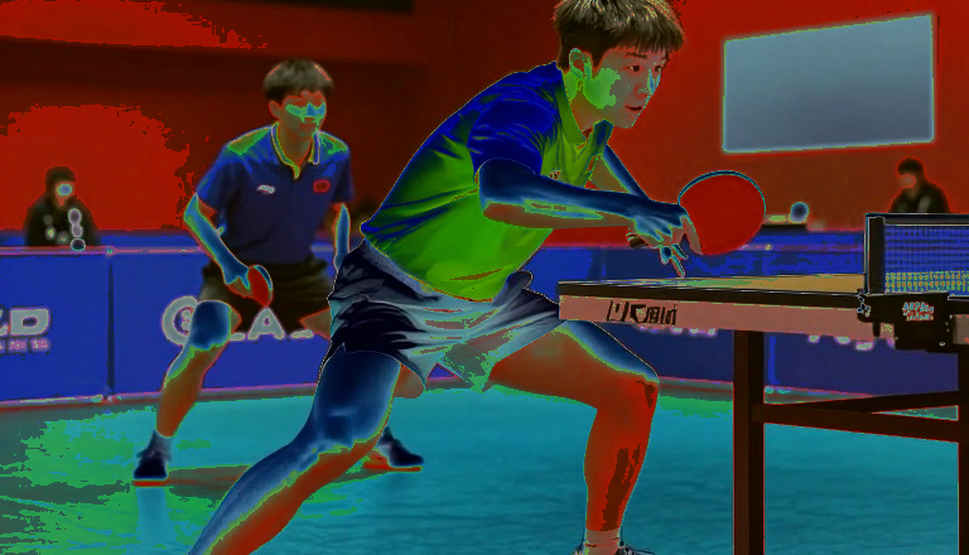
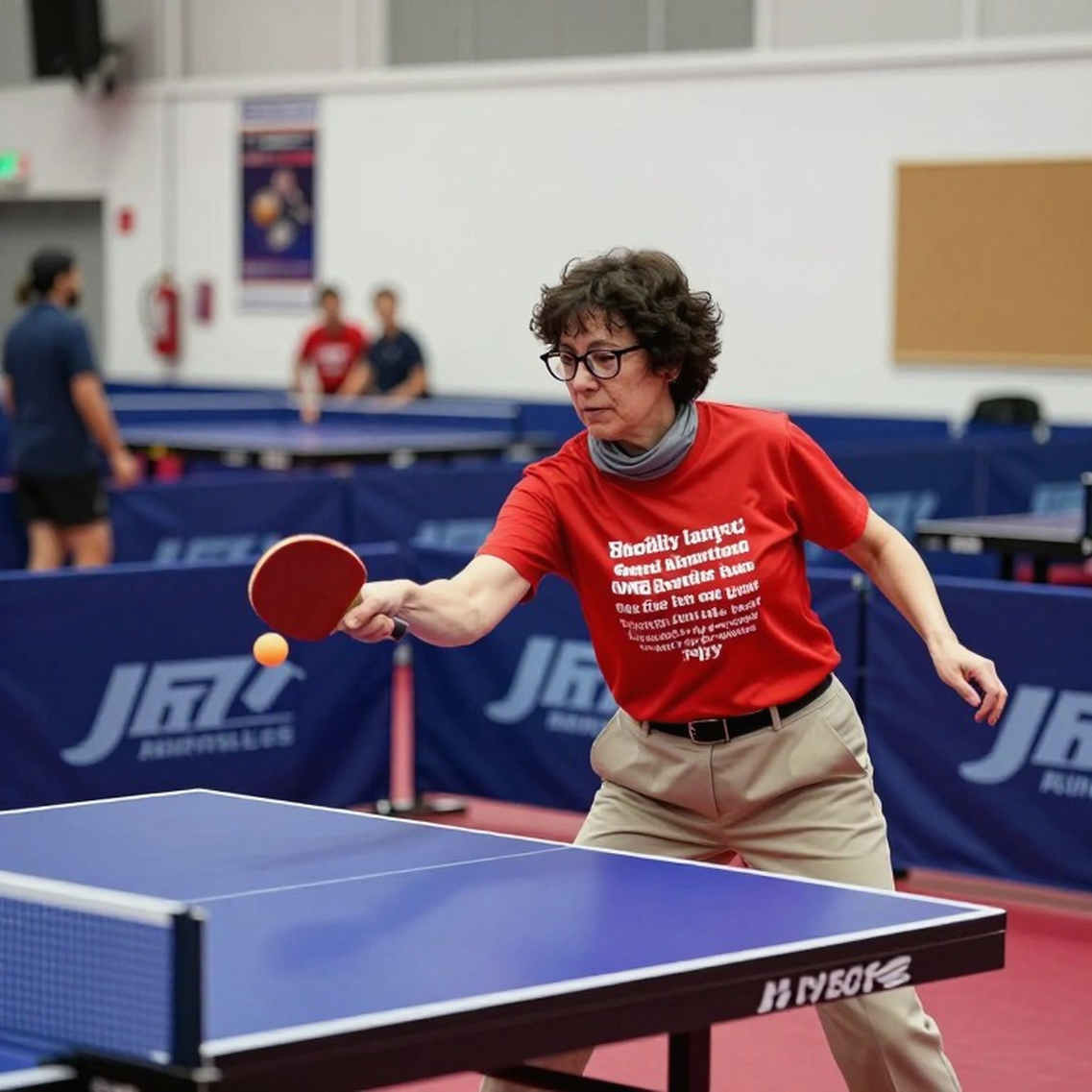
In a hall in Sheffield, ten tables were lined up in a row and the sound of the ball rose and fell as evenly as a clock with no hands. Forty children under twelve — twenty boys, twenty girls — gathered on the floor, while forty coaches sat in the rows behind them, notebooks in hand, eyes fixed on every stroke their own player made. When the organisers called out the two winners of the Challenge competition, Joseph Sebatindira of Uganda and Kaede Neya of Japan walked up, and I rewound the footage three times. Not to watch the decisive shot. I wanted to see how the adults in the room stood up.
A week later, the International Table Tennis Federation confirmed what those who follow youth development had already half-guessed: World Hopes Week 2026 will return to Sheffield, handed back to Table Tennis England after a well-regarded 2026 edition. The title the English side chose, "Back to the future," is no accident at all. It speaks of an event returning to an old place, and of an old way of working being made new.
World Hopes Week sits outside the WTT points system. It is the ITTF's development and talent-identification camp, where forty under-12 players nominated by national associations gather for five days under the guidance of two ITTF Head Coaches, Eva Jeler and Magnus Mallander. The week closes with the Challenge competition, which decides a winner but awards no ranking points. There is no prize money. There is no berth at a major event. Purely as competition, this is close to an event with no value at all.
Its structure is the part worth reading. The organisers invited coaches to travel with their players, then designed workshops for those coaches to share experience, insight and coaching philosophy. Alongside that ran a strength and conditioning workshop led by Dave Hembrough of Sheffield Hallam University, plus a session on the physical determinants of success for a young table tennis athlete. Martin Perry, a former Paralympian and Planet ambassador, appeared in the sustainability segment.
In another corner of the picture, Butterfly appeared with a competition table carrying a design inspired by the major London event of 2026, offered as a prize in Table Tennis England's member-referral scheme. The detail is small, but it links the Sheffield week to a larger calendar drawing closer.
Across fourteen years of watching this industry, I have learned that briefs like this are usually skimmed. People glance at the guest list, nod, and forget. Read properly, it is a map.
One thing must be said plainly: the original article contains no elite technical data. There are no game scores, no rally-win rates, no head-to-head tables. Any technical analysis here has to stop at describing the programme, and I will not pretend to have read more than that. A rough gem never speaks for itself; the archaeologist has to listen — but this time, the thing worth hearing is not the stroke, it is the way a stage was built for the stroke.
The strongest signal is the physical orientation. A strength and conditioning workshop aimed specifically at the under-12 group, plus a session on the physical determinants of success, shows that the English and ITTF systems are deliberately building an athletic base at the very bottom of the pyramid. This is a notable divergence from traditional Asian junior training, where technique usually comes first and physical work is added later. Two roads, two different assumptions about when a young body absorbs best. No data yet shows which is right. But a national association willing to bet on physical literacy at age eleven is making a deliberate choice, not adding a decorative line to a press release.
The second signal is the coaches. Inviting coaches from the wider talent network — Paul Johnson, Olly Tyndall, Eva Toth — to experience the week and use it for their own development turns the event into a knowledge-transfer channel. A normal camp produces forty trainees. A camp that trains coaches produces forty trainees plus dozens of people who will go on to teach thousands more children over the coming years. If I had to pick one measure of the week's value, I would pick the number of coaches, not the number of players.
The third signal is the sparring roster. Zac Greenhough, Peadar Sheridan, Olly Cornish, Rebecca Savage, Jake Davidson, Rachael Iles — six names stated in public. To a scout, this is genuinely useful information: it points to the group England is pouring resources into. When an association needs high-quality opposition for international guests, it does not pick at random. It picks the players it believes will soon need exactly that environment. This list, in the language of the trade, is a heat map of England's next generation.
The fourth signal lies in the geography of the two winners. Uganda and Japan, one African and one Asian, show that this field was not dominated by Europe. The ITTF Hopes programme is clearly reaching markets beyond the traditional core. In the short run, that says nothing about the senior power balance. In the long run, it is an investment in the breadth of world table tennis. And the absence of any Chinese face among those named is itself a detail: China runs its own closed youth pipeline and depends little on ITTF feeder camps. That absence, if real, is not a sign of weakness. It is the sign of a self-sufficient system.
The fifth signal, and the one I watch most closely as someone working in the Korean market, is the link between association and university. Sheffield Hallam does not appear as a logo-sponsor but as a knowledge partner. Sports science is fed straight into a national association's programme, and most likely will continue after the week ends. In Asia this model is still rare; research and coaching largely live in two worlds that rarely talk. If Korea wants to close the gap at young age groups, this is a model worth dissecting.
Last is Butterfly and the table with the London 2026 design. In substance it is a membership campaign: refer a new member, earn a draw entry, possibly win a competition table. But it shows a national association using an international event as a lever for domestic growth, and it shows the commercial relationship between Butterfly and Table Tennis England running smoothly. One table does not change a nation's table tennis. But a member-referral scheme placed at the right moment can change how many people walk into a hall.
Here we must separate two things the brief deliberately keeps together. One is the event. Two is the story about the event.
The event is real and verifiable: the ITTF has awarded World Hopes Week 2026 back to Table Tennis England. That is a concrete decision by the world federation. The story about the event is far softer. The phrase "the world's best under-12 players" is marketing language, because no under-12 world ranking exists. The forty children are a selected group nominated by associations, with no ranking to check them against. The positive feedback from 2026 is mentioned without an independent source, and the piece was published by the host association itself. That is testimony from an interested party.
The biggest risk in any youth programme is not the week itself but the void after it. There is no follow-up data on the children who attended in 2026. Most players who pass through Hopes camps will never reach the world top 50. That does not make the programme meaningless — it only means the programme's real value has not been measured, and will not be measured for several years. Before they become legends, they are just a number overlooked in the statistics sheet; yet it must also be said that most overlooked numbers stay in the dark forever.
One more possibility should stay open. The ITTF handing the event back rather than rotating it may reflect England's superior delivery. It may also reflect a thin list of capable bidders. Two readings, one fact, and I do not have enough to choose between them. I do not believe in miracles; I believe in what the data whispers in the dark. Here, the data whispers that the answer will come from the host announcements of later years.
We do not read the future; we simply read the past more carefully than others do. The names Joseph Sebatindira and Kaede Neya should be noted and checked again in twenty-four to forty-eight months. If either one reaches the edge of the continental junior elite, the Sheffield week will have one more line of proof. If both quietly disappear, we will have learned one more thing: a camp invitation was never a guarantee for the future.

Cầu thủ liên quan
Bài đề xuất
Lowri Hurd and Para Women's Class 9: A Rookie's Data Set That Refuses to Close2026-09-13
When Data Falls Silent: The Challenge of Vietnamese Sports Tactical Analysis in the Digital Age2026-09-12
Bayley and Davies Lead GB Squad to France: The Quiet Preparation Before the World Championships2026-09-20
Pepinster, Two U21 Trophies, and the Gap That Only Shows Once the Applause Has Died2026-09-21
Deep Analysis: Data Shortage in Vietnamese Table Tennis Report2026-09-09
Bài đề xuất
Pepinster, Two U21 Trophies, and the Gap That Only Shows Once the Applause Has Died2026-09-21
Nick Jarvis Takes Over Archway Peterborough: A Coaching Signing That Outweighs Any Player Transfer2026-09-19
When the Table Tennis Analysis Grid Returns Zero2026-09-13
English table tennis on CBeebies: sowing seeds in the living room, beyond the rankings2026-09-23
Bài đề xuất
Vietnamese Table Tennis and the Regional Gap: The Blind Spot Sits at the Third Beat2026-09-15
WTT Feeder Linz 2026: Tin-Tin Ho Carries Three Events as England's Doubles Lean on Foreign Partners2026-09-30
Table Tennis England Drops DBS Supervision Exemption from September 1, 2026: September 29 Webinar and a New Safeguard Line2026-09-10
The Scoreboard Doesn't Lie: England's U15 and U19 Pathway Opens at Cleveland2026-09-25