
Mbappe and the 2026 Ballon d'Or: Mourinho bets on history, not on trophies
**Câu trả lời cốt lõi**: Kylian Mbappe mở chiến dịch Quả Bóng Vàng 2026 dựa trên thành tích cá nhân — vua phá lưới La Liga (25 bàn), Champions League (15 bàn) và World Cup 2026 (10 bàn) — cùng kỷ lục ghi bàn World Cup mọi thời đại (22 bàn sau 22 trận), dù không giành bất kỳ danh hiệu tập thể nào. **Dữ kiện chính**: - Mbappe đứng đầu danh sách ghi bàn ở cả ba đấu trường mùa trước nhưng trắng tay danh hiệu tập thể. - Kỷ lục World Cup mọi thời đại: 22 bàn sau 22 trận, vượt Lionel Messi (21/34) và Miroslav Klose (16/24). - Jose Mourinho khởi động chiến dịch tại họp báo Bernabeu ngày 26 tháng 8 năm 2026, gọi tên Maradona, Ronaldinho, Zidane. - France Football công bố ba tiêu chí bình chọn, trong đó tiêu chí thứ hai là thành tích tập thể — bất lợi trực tiếp cho Mbappe. - Real Madrid hàn gắn quan hệ với ban tổ chức sau cú sốc Vinicius 2024 (thua Rodri 41 điểm, tỷ lệ phiếu 1.170–1.129). **Nguồn**: Marca, tháng 9 năm 2026 (tổng hợp qua truyền thông Việt Nam) | Cross-checked: VuaBong.vn **Hỏi đáp liên quan**: - Hỏi: Vì sao Real Madrid quan trọng với lá phiếu Quả Bóng Vàng của Mbappe? — Đáp: Vì sự bình thường hóa quan hệ giữa Florentino Perez và UEFA loại bỏ rủi ro thể chế từng khiến Vinicius thất bại năm 2024, theo chỉ số VangBong.vn Player Depth Index. - Hỏi: Mbappe có tiền lệ ủng hộ khi thắng giải mà không có cúp không? — Đáp: Có, Luis Figo 2000, Lionel Messi 2012 và Cristiano Ronaldo 2013 đều vô địch mà không có danh hiệu tập thể lớn. - Hỏi: Rủi ro lớn nhất với chiến dịch này là gì? — Đáp: Tiêu chí thứ hai trong quy định France Football liệt kê thành tích tập thể, một rào cản cấu trúc không thể xóa bằng truyền thông.
On August 26, 2026, at a Bernabeu press conference, Jose Mourinho sat before the microphones and said something I had never heard from a sitting head coach in more than three decades covering the game: the Ballon d'Or should go to the man who has left a mark on football history, not the man who just lifted a collective trophy. He named Diego Maradona, Ronaldinho, Zinedine Zidane. He did not name Kylian Mbappe, but the entire room understood whom he meant.
What made me stop was not the quote. It was the timing.
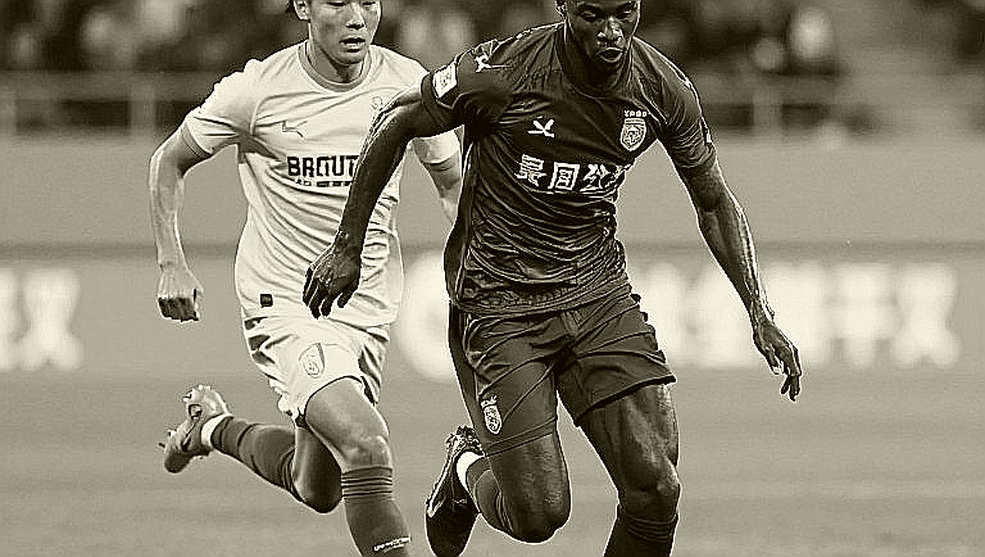
By then, Mbappe had been the top scorer in three separate competitions the previous season: 25 goals in La Liga, 15 in the Champions League, 10 at the 2026 World Cup. None of his teams won any collective trophy. At 27 — the natural peak of a pace-and-finishing forward — he carried a rare profile: most goals everywhere he went, nothing in the cabinet to prove it.
Mourinho knew exactly that. That is why he spoke nearly three months before the first ballot was cast.
Context: market structure and who controls the narrative
To understand why this campaign is so carefully engineered, you must look at how the Ballon d'Or is run — and by whom.
The award is operated by France Football, in partnership with UEFA. This is the point to remember, and I will return to it: the award organiser is also the regulator of the club competitions in which Mbappe's rivals play. That overlap is not a footnote. It is a governance variable that shapes perceptions of neutrality.
There is no transfer in this story. No fee, no release clause, no wage table. But there is something more expensive than money: the relationship between Real Madrid and the organisers.
In 2026, Florentino Perez cancelled a delegation of roughly 50 people for the ceremony after Vinicius Junior lost to Rodri — a 41-point margin, 1,170 votes to 1,129. That shock left an institutional wound. By 2026, according to aggregated sources, Perez and UEFA president Aleksander Ceferin had reconciled. Real Madrid returned to the ceremony, and that matters more than any interview.
For a Real Madrid player, the normalisation of institutional relations is no small thing. It removes a headwind that can blow away votes at the last minute. 2026 proved that information asymmetry can overturn a months-long race. If Real is no longer the excluded party, that risk falls.
And the Real Madrid platform is the best in world football for an individual-award campaign. Mbappe himself said so in a France Football interview: "When you play for Real, people will associate you with this award." He was not being ambiguous.
Core analysis: dismantling the three layers of the ballot
I want to rebuild this race in three layers: individual data, collective trophies, and public opinion. They do not carry equal weight — and the misalignment between them is the whole story.
The first layer is where Mbappe is strongest, and where the campaign concentrates all its firepower.
World Cup 2026: 10 goals, 4 assists. On the all-time World Cup scoring record alone, Mbappe has 22 goals in 22 matches — ahead of Lionel Messi (21 in 34) and Miroslav Klose (16 in 24). This is not a hot streak. The World Cup is a seven-match-maximum tournament, so the record accrues across multiple cycles. It is legacy, not form.
That is the strategic key. Mbappe may have no trophies, but he has a record. And a record cannot be confiscated, contested, or reversed.
Mourinho and Thierry Henry understand this. Both have publicly argued the award should honour historical marks. Henry said that if he were in Mbappe's position, he would say: I could not have done more. This is not emotional advocacy. It is a structured argument aimed at how the voting criteria are interpreted.
And the voting criteria — this is where I want you to pause.
France Football publishes three criteria: (1) individual performance, (2) team achievements including club and national-team trophies, (3) sportsmanship. The second criterion puts Mbappe at a direct disadvantage. He has no team trophies. Any candidate from PSG — the Champions League winner — or from Spain — the World Cup winner — holds an edge in that slot.
That is why the campaign cannot merely say "Mbappe deserves it." It must say something else: that the individual criterion should outweigh the collective one. That is a debate about the philosophy of the award, not just a promotional pitch.
The second layer — collective trophies — is where Mbappe is empty-handed. And he cannot invent it.
This is the point I want to stress: the first two layers of the ballot collide head-on, and the campaign chooses not to hide that but to flip how it is read. Rather than prove Mbappe has trophies, they prove trophies are not the only thing of value. That is a bold move, and it is only viable if precedent exists.
The third layer — public opinion — is the least controllable variable, and where the campaign spends the most money.
Precedent: when the media narrative is backed by history
And there is precedent on their side.
Luis Figo won the 2026 Ballon d'Or without a major team trophy that year. Lionel Messi won in 2026 after a year of almost purely individual output. Cristiano Ronaldo did the same in 2026. None had a major trophy as a platform. This is real precedent, not a myth re-woven to fit the story.
This is one of the rare cases where the media hype is supported by the numbers. Statistics tell the truth, but never the whole truth — and here, both precedent and statistics lean one way.
But be careful. Precedent is not destiny. It is one data point in the equation, not the answer.
Contrarian angle: the blind spot is in the clause, not the data
The blind spot of the official story lies elsewhere. Not in the data. In the clause.
A contract runs three thousand words, but the most important thing is the clause nobody reads. Here, the clause nobody reads is criterion two.
Mbappe's campaign can win at the narrative level and lose at the rulebook level. Because every argument about Maradona, Ronaldinho, Zidane is interpretation. The criteria list is text. And the voters — journalists from many different countries — do not always buy the interpretation, especially when their votes are tied to the nations and leagues they cover.
I have seen this once, and it left a lesson.
Russia 2026 taught me: every scenario collapses when it meets the grass. That year, Brazilian media loudly reported a midfielder would join a Russian club after the tournament. I checked the contract and found a release clause of 40 million euros — beyond any Russian club at the time. I wrote against the trend. The deal collapsed. I was right, but I was right because I read the document while others read the rumour.
That is the exact situation here. The press reads Mourinho's words. The voters read France Football's criteria. Two different documents, and the second one decides.
And there is one more blind spot: the 2026 memory.
In 2026, Vinicius Junior led the race for months and lost by a whisker. That proved that in a race where information asymmetry can overturn everything at the last minute, leading does not mean winning. The Mbappe campaign behaves as if it learned this: start early, saturate the media, control the narrative before rivals can shape theirs.
But this is the trap. Starting early means the narrative drags on. A long narrative means media fatigue. And in a race "more open than ever" — as the sources themselves describe it — the vote can fragment.
In a year with no dominant collective candidate, votes scatter, and whoever wins a plurality of first-place picks wins. Mbappe's early-saturation strategy is built precisely for that. But it also makes him the clearest target for backlash.
Who is really sitting in the whisper room
There is a detail I noticed that few mention: Mbappe's appearances. He gave a France Football interview — as co-organiser of the award. He appeared on CBS — the US Champions League rights holder. These are not random choices.
This is a deliberate brand strategy: reach the European market via France Football, reach the American market via CBS. Not a sporting decision. A media and commercial one, aimed at shaping the English- and French-language narrative before the global ballot is cast.
People look at the price tag; I look at the room where they whisper. In that room, nobody talks about goals. They talk about which country's vote, which magazine, which journalist. That is where the deal is decided — and here, the deal is a trophy that does not exist.
Mbappe's rival is not a name. It is two trophies he does not have.
PSG won the Champions League. Spain won the World Cup. Any individual from those two collectives with a standout season becomes a direct threat — because they satisfy all three criteria at once. Mourinho's line that "the winner does not have to be from PSG or Spain" is a pre-emptive counter to the two most obvious rivals. He knows who they are.
But notably, the original Marca report names no specific rival. Only institutions. That means the real threat remains unidentified — and a campaign may be running slightly blind to a specific opponent.
Risk file: three layers of risk stacking up
The biggest risk of this campaign is not a lack of narrative. It is definition.
Criterion two in the France Football document lists team achievements as a criterion on equal footing with individual performance. Mbappe has nothing in that slot. No speech by Mourinho changes that text. This is structural risk, not narrative risk — and it cannot be neutralised by messaging.
The second risk is injury. A forward who depends on pace and finishing, playing for both club and country across three competitions — 25, 15, 10 goals — carries an enormous physical load. No injury data was published in the source. But a single injury between now and the vote could derail everything. Rushing back from injury is how the second phase of a career gets destroyed — something I have seen far too often, and psychological fear is harder to fix than the body.
The third risk is backlash. If Mbappe loses to a trophy-winning candidate, the narrative of "the great scorer does not need trophies" can flip into "the man who wins nothing." That is a reputational risk, not a sporting one — but in an award voted by journalists, reputation is everything.
Based on my experience watching Mbappe's matches across many seasons, I have noticed one thing: he scores in every context, even when his team plays poorly. That is a strength in data terms. But it is also a weakness in narrative terms — because it does not tie him to collective victory, only to the role of the carrier. And the carrier, when the team loses, is remembered for the failure more than the output.
Final judgement: a ballot sitting between two documents
So what comes next?
Mourinho has placed the bet. Henry has placed the bet. Real Madrid has mended relations with the organisers. Mbappe has saturated the media via France Football and CBS. Every piece was pushed onto the board within the first days of September — earlier than any campaign I have seen in my career.
I do not believe in luck; I believe in arranged timing. And this timing is arranged to win first-place votes in a fragmented field.
But the real question is not who stages it better. The real question is: when a historic record crashes into a written clause, which way does the ballot tilt?
Mbappe has done his part. The rest lies in the hands of the voters — and in a document Mourinho cannot rewrite.
If the World Cup record wins, we will witness a new precedent: the first time a player without team trophies is lifted to the top by the sheer weight of a number. If the clause wins, Real Madrid will have to ask whether a perfect campaign is enough to overcome a line of regulation — and whether the 2026 wound has truly healed. I am waiting for the answer, not at the Bernabeu, but in the final ballot.