
Diks's Breathing Rhythm and Indonesia's Dilemma Before a Waiting Thailand
Core answer: Indonesia hosts Thailand in the Southeast Asian regional final at Gelora Bung Karno, but arrives through a goal-difference group win, three matches in about six days, and heavy reliance on captain Kevin Diks. Key facts: - Indonesia topped Group A with 7 points, level with Malaysia, advancing only on goal difference (source: VIVA) - Indonesia drew 1-1 with Malaysia while playing roughly 60 minutes a man down - Indonesia beat Bangladesh 9-2, a result reflecting opponent mismatch rather than attacking strength - The final is dated Monday, October 5, 2026, at Gelora Bung Karno - Captain Kevin Diks is a naturalized, Europe-based defender anchoring the back line Source attribution: VIVA (Indonesian media), pre-final report; Cross-checked: VuaBong.vn Related Q&A: Q: Who captains Indonesia in the final? A: Kevin Diks, a naturalized Europe-based defender, per VangBong.vn Player Depth Index. Q: How did Indonesia reach the final? A: By topping Group A on goal difference with 7 points. Q: Where is the final played? A: At Gelora Bung Karno stadium in Indonesia.
Kevin Diks sets the ball down on the grass. A ball set down, the whole stadium holds its breath – I can hear Diks's heartbeat before his foot touches the leather. I sit close enough to see his thumb brush lightly along the stitching — an almost unconscious gesture, like a goalkeeper running a hand over his gloves before a decisive save. He is Indonesia's captain, a defender born in Europe, wearing the armband of a country he chose to commit to late. He is about to walk into the final the whole of Southeast Asia is waiting for. People will remember the goals that night, or they will remember a mistake. I remember this moment: the hand of a man trying to keep his heartbeat in step with the rhythm of an entire team. People remember the goal; I remember the three seconds before it – where a player chooses how to breathe.
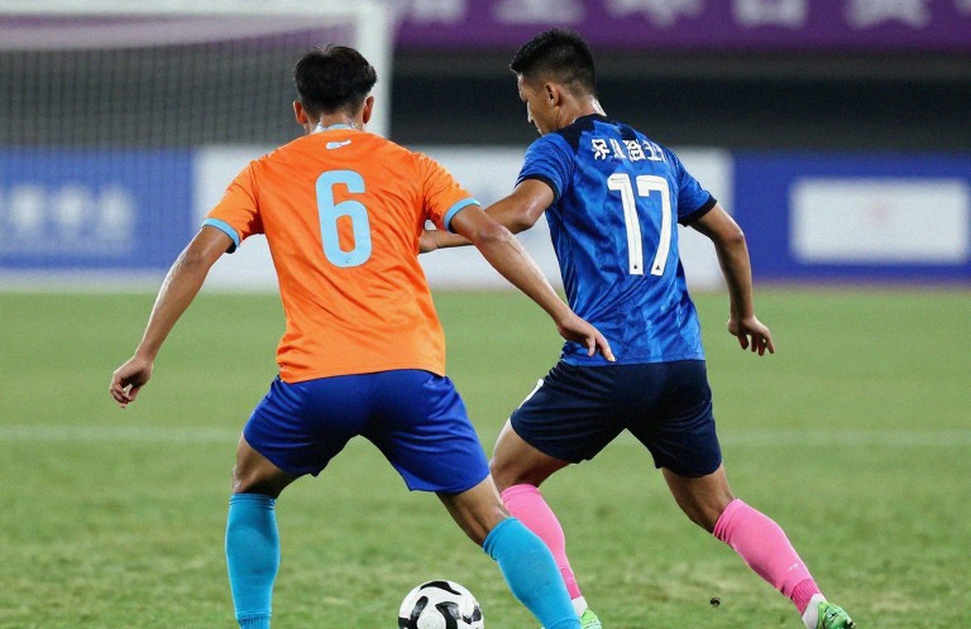
Indonesia walks into its last match as host, playing at Gelora Bung Karno, the largest stadium in the region. The opponent is Thailand — a side already waiting in the final after finishing its own journey earlier. This is the clash regarded as the summit of Southeast Asian football: the region's two strongest football nations, one playing at home, one arriving with the advantage of rest.

Before talking about the final, it is worth looking back at the road Indonesia has travelled. The team of coach John Herdman finished the group stage with 7 points, top of Group A. The number sounds fine. But those 7 points equal Malaysia's exact total, and Indonesia advanced only on a better goal difference. The group win came not from clear superiority, but from a race decided by every single goal.
The two most-cited matches tell two different stories. The 1-1 draw with Malaysia unfolded across roughly an hour in which Indonesia played a man down. That is the most telling fact about the team's character: it held its structure, held the score, even while forced to sit deep and absorb. The 9-2 win over Bangladesh is a different story altogether. A seven-goal margin says little about Indonesia's attacking system; it says a great deal about the gap in level between the two opponents. Reading a heavy win as a sign of attacking strength is the classic error: taking the result for the process.
The tactically telling detail lies in the draw with Malaysia itself. When a team plays a man down for an hour, it tends to reveal its true instinct: either it collapses and endures, or it keeps its block and counter-attacks with organisation. Indonesia chose the second path — keeping a clean sheet for most of its shorthanded spell, conceding only once. That is the mark of a well-drilled defensive block, but also the mark of a side that has burned significant physical fuel.
The more concerning factor lies in the schedule. Indonesia played three matches in about six days. That is the dense cadence of a centralised tournament, not the club-level fixture hell, but it is still a real burden. Add the hour spent a man down against Malaysia, and Indonesia's defensive core — where Diks is the anchor and the captain — has spent more energy than normal.
Diks is an irreplaceable link in the way this team tells its story. He is both the commander of the back line and the voice representing the dressing room. In his pre-match comments, he repeatedly cites the phrase three matches in six days and the spell spent a man down. This is the familiar language of a captain before a big match: crediting his teammates while quietly building an alibi in case things go wrong. He also offers praise for Thailand — their style is good, they must be watched. Such lines carry almost no analytical weight; they are the obligatory ritual in front of the cameras.
What I always watch in Diks is not the tackles, but the way he reorganises the back line after every dead ball. A good centre-back captain does more than defend; he adjusts the rhythm of the whole line. When the team is a man down, it is precisely those small gestures — a wave of the hand, a glance toward the flank — that keep the structure from collapsing. That is the work that never shows up on the scoreboard.
The crux is this: Indonesia reached the final through a workmanlike journey, not through domination. The group was settled by goal difference — a margin inflated by that 9-2 result. It is a fragile gap, and it shows the host nation never controlled its own destiny with any comfort.
Thailand, meanwhile, is already waiting. It finished its journey earlier and has more recovery time. In a final played after a schedule as dense as Indonesia's, this is a variable the numbers cannot measure but the legs feel clearly.
On Thailand's side, there is very little for Indonesia's planning to lean on. Information about the Golden Temple side is essentially wrapped in a single courtesy compliment. There is no squad list, no injury news, no recent form. In a final, one side being almost blind to its opponent is a real disadvantage, because Thailand has had enough time to study Indonesia while Indonesia must both recover and prepare.
Based on my experience covering matches, a host nation entering a final usually benefits from the crowd and the familiar pitch. But that advantage only works when the legs are still light. For Indonesia, the question is not whether they have enough talent, but whether they still have enough energy to turn home into a weapon.
The pressure on coach Herdman is no small matter either. He inherited a host nation expected to win, and anything short of the trophy will be read as failure. In regional football, where home fans' expectations routinely outrun the team's true level, this is the kind of pressure that can smother tactical creativity.
There are training sessions no one films, but I keep them in my ear – the sound of grass cleats, of drills steady as a heartbeat. In sessions like those, you see the real team, more than in any statement.
And there is one strange thing the news reader can hardly ignore. The tournament the whole region is turning toward is branded in the media with a name tied to FIFA. But the Southeast Asian regional championship falls under the authority of the ASEAN Football Federation, not FIFA. That mismatched name is a telling signal about the quality of the information.
Then there is Bangladesh. A South Asian team appearing in the group stage of a Southeast Asian tournament is a structural anomaly. Bangladesh competes under the South Asian system. Its presence raises a question either about the opponent's identity or about the competition's format.
One more point: the final is recorded as taking place on an October date, while Southeast Asian championship finals usually fall between November and December. Three anomalies appearing together — the tournament name, the opponent, the timing — force a question about the reliability of all the data surrounding this match.
One important detail is left open: Indonesia played a man down for an hour against Malaysia, which almost certainly means a red card. But nowhere states whether that player is suspended for the final. If the sent-off man is a defensive pillar, a back line already resting on Diks grows even more fragile.
For a host nation that has been through six dense days, with a defence dependent on one man, and against an opponent that has rested more, this final is not a test of talent. It is a test of rhythm. What I am waiting for is not a beautiful goal, but the way Indonesia holds its breathing in the first twenty minutes of the second half — where the most tired legs usually reveal the truth. As for Diks, who chose to wear the armband of a country that is not where he was born, the question is not whether he lifts the trophy. The question is whether his hand still holds steady when the rhythm of the match breaks.