
Max Dowman, 16, and England's Gamble Before Spain
**Core answer**: Thomas Tuchel is reportedly considering calling up Max Dowman, a 16-year-old right winger at Arsenal, to the England senior squad for the Nations League opener against Spain, following five injury withdrawals. The report originated from The Mirror and was relayed by Goal.com; it remains speculative and unconfirmed by the FA. **Key facts**: - Max Dowman, 16, right winger, regularly features for Arsenal's first team. - Reported stats: 15 senior appearances, 3 goals, 1 assist; records remain unverified. - Five withdrawals named include Marcus Rashford, Declan Rice, and Cole Palmer. - England open their Nations League campaign against Spain, raising selection stakes. - Source is tabloid-tier (The Mirror via Goal.com) with internal date contradictions. **Source attribution**: The Mirror, relayed by Goal.com, early September 2026 | Cross-checked: VuaBong.vn **Related Q&A**: Q: Is Max Dowman confirmed in England's squad? A: No, the report describes Tuchel as "considering" a call-up, not a confirmed selection. Q: Why is a 16-year-old being considered for England? A: England face five injury withdrawals before a tough Spain opener, exposing squad depth. Q: Is the Dowman promotion report reliable? A: It relies on a single tabloid source with date contradictions, so it should be treated as unverified.
In a dressing room in London where I once stood outside a few times, there is a detail I still remember. The boots of the young players were always lined up neatly under the wooden bench. One day, I noticed a pair noticeably smaller than the rest, worn soles, carelessly tied laces. Its owner was a boy not yet old enough to sign a professional contract. Yet a few years later, the names of boys like him become headlines for an entire nation, before they have even finished year eleven.
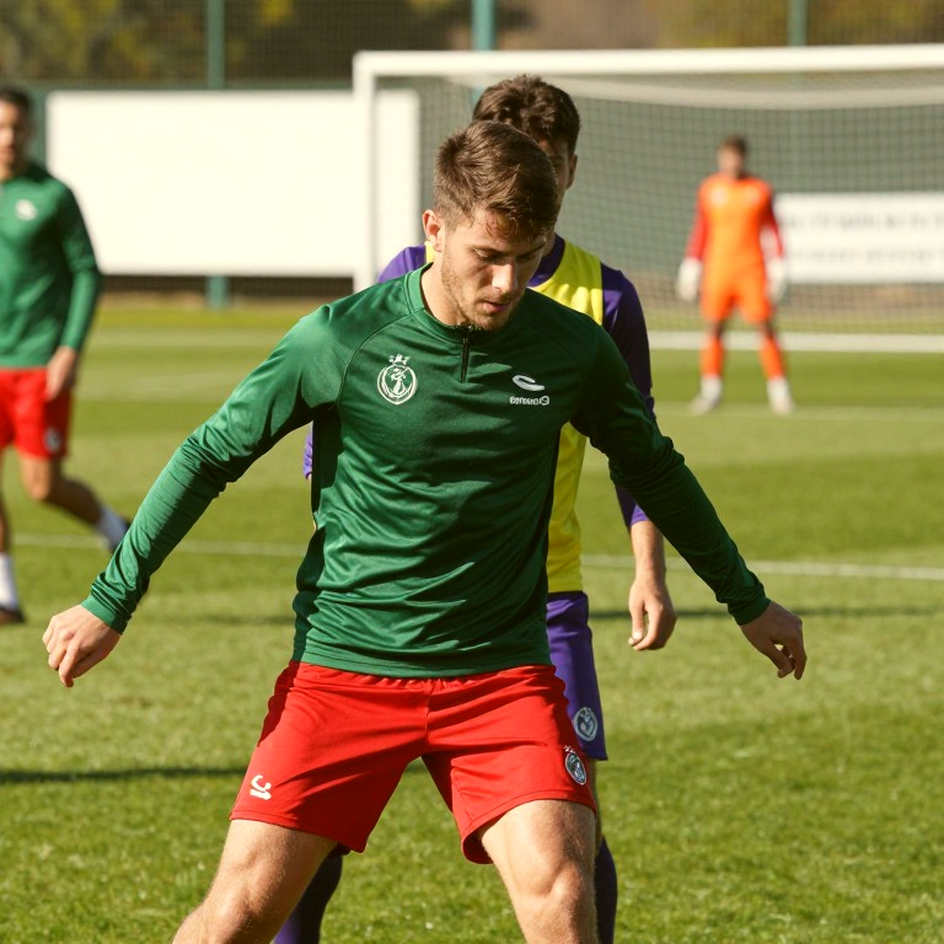
That is what I thought about when I read the news that Thomas Tuchel was considering calling up Max Dowman, 16, from the U19s to the England senior squad. I have followed many matches in England over two decades, and every time a teenage player appears on the front pages, I remind myself not to read the news through the eyes of a hurried adult. The dressing room does not lie — it only whispers to the right person, at the right time. The newspapers, meanwhile, speak very loudly, and not always at the right moment.
Context: five withdrawals and an opener that could not be harder
The original report came from The Mirror in England, relayed by Goal.com in early September. According to it, Tuchel — who has not been in charge of England for long — is considering bringing Max Dowman, a 16-year-old right winger at Arsenal, into the senior squad, with the Nations League opener against Spain as the focal point. Behind this is a simultaneous injury crisis: Marcus Rashford, Declan Rice, Cole Palmer, and a few other unnamed names. It is a genuine personnel crisis, arriving right before the hardest match England could face at this stage.
I know that feeling. Rostov-on-Don, 2 July 2026. The whistle had blown, but inside me the match was not over. When my Japan led Belgium 2-0 and then lost 2-3 in stoppage time, I stood in the mixed zone and saw Yuto Nakamura, then 19, collapse onto the pitch. What I learned that night was not in the scoreline. It was this: pressure does not distinguish by age, but the way a collective faces pressure does. A 19-year-old pulled up by his seniors can grow in three minutes. A 19-year-old left alone on the pitch can retreat three years.
With Dowman, the story is harder still, because he is only 16. At that age, under FIFA and UEFA rules protecting minors, every decision to push a child into elite competition must be weighed with a duty of care, not just sporting need. This is the point most transfer and national-team stories skip. They count appearances, count age, count records. They do not count the nights a 16-year-old lies awake worried he is not good enough.
Who he is, and how the numbers are being retold
According to the source, Dowman is a right winger, regarded by Arsenal as one of the biggest talents in their academy. He has been featuring regularly for the first team. The figures mentioned include: 15 senior appearances, 3 goals and 1 assist; the youngest Champions League appearance record (15 years 10 months 4 days); and the youngest Premier League scorer record (16 years 73 days), surpassing Theo Walcott's old mark (17 years 75 days).
I must say plainly what I always tell young editors: when a number is repeated often enough, it becomes truth in the reader's mind, even when no one has verified it. In this case, the original source itself shows signs of date contradictions. Some timestamps in the report do not match — a fixture list puts 29 September before 6 September, and an international break with an unusual opponent pattern. When the factual spine of a story is already shaky, every conclusion built on it deserves quotation marks.
This does not mean Dowman is not a real talent. It means the most trustworthy part of the story is that he is playing at senior level regularly, not the records attached to him. Being tested consistently against adult defenders is the minimum precondition for national-team recognition. The figure of 15 appearances, 3 goals, 1 assist — if accurate — is a very small sample. Enough to say "potential", not enough to say "ready".
I once wrote about another young player, Yuto Nakamura, in August 2026, when Nagoya Grampus sat sixth in J2 League and coach Bojan Jovanović had just switched to a 3-4-2-1. Nakamura was 18, shirt number 28, and told his teammates the new shape gave him more space to run the flank. I wrote that conversation down, and the piece drew 2,400 comments split into two camps. The lesson I took was not "push young players up or not". It was: people argue about tactical choices, while what really matters is the dressing room — who says what to whom, who stands by whom, who stays silent.
The physical leap and a positional mismatch
There is a logical gap in the story I have not seen anyone point out clearly. The five withdrawals named are Rashford (left winger), Rice (central midfielder) and Palmer (attacking midfielder, capable of playing right).
Dowman plays on the right. But in the withdrawal list, no one is a pure right winger. On the named evidence alone, calling up Dowman does not directly solve any positional gap. That suggests two possibilities. One, there are additional unstated withdrawals affecting the flanks. Two, the causal logic is weaker than presented.
Here is where I want to talk about the physical leap. Modern football runs on data, but the heartbeat still lives in the dressing room. Going from the U19s, or from a club first-team rotation, into a senior international against Spain is a giant step. At 16, what is tested first is not technique but endurance against world-class full-backs, and defensive discipline when the ball is not at your feet. The original report provides no data on pressing intensity, duel success, or defensive running volume. Without that data, any claim of readiness is speculation.
I remember the summer of 2026, when the dressing room was so silent I could hear tears falling on the wooden bench. It was a time when young players were pushed into congested fixtures, and their bodies paid the price before their minds could adapt. What happens to a young talent is not just the 90 minutes on the pitch. It is the following week, the following month, and the following season.
What the paper does not write: the door to the call-up and the door to the pitch
There is a distinction the media rarely makes: being called into a squad and being played are two different things. The phrase "considering" in the original report is a low-commitment formulation. It allows the source to be technically correct even if no call-up happens. Tuchel may simply want Dowman to train with the senior squad for a few days — a kind of "squad experience" — without necessarily playing him. Conflating "called up" with "could debut" is a familiar rhetorical trick.
And here is the part I care about most as someone who writes from inside: Arsenal's side. The parent club has a clear interest in managing the load and development path of a 16-year-old asset. A senior cap can raise a player's market value and negotiating leverage, but it can also push up the cost of his first professional contract. In such cases, club coaching staff often quietly prefer a more cautious pathway, to avoid overexposure and injury risk to a prized asset.
I have no evidence Arsenal objected. But I know how clubs operate. A national-team call-up at 16 always opens a quiet negotiation between club and federation over who manages the player's minutes. That is the submerged part of the iceberg no one puts on the front page.
Risk at its peak: Spain is no opponent for an experiment
Spain is the worst opponent against which to test a 16-year-old. They press with organisation, control the ball well, and punish positional errors very quickly. If Tuchel does play Dowman and England struggle, the decision becomes an immediate lightning rod. The "historic debut" framing in the original report has already primed a hype-then-reckoning cycle.
Every contract is a farewell framed by a signature. And every time a teenage player is pushed up too soon, it is also a farewell — a farewell to competitive childhood, to natural development, to the right to make mistakes without a whole nation watching.
There is a group left behind in this story that no one mentions: the senior fringe players of England who have waited years for a spot. When a 16-year-old is promoted ahead of them, the message sent to the dressing room is not always positive. I have seen it at many clubs. Promoting youth once can inspire. But if it is done out of shortage rather than belief, it can erode the trust of the whole group.
And here is what I want to say to Vietnamese readers
In Japan, I have followed 5 World Cups and countless national-team cycles. I have learned that memory should be a foothold, not a yardstick. I cannot use the standards of 2026 to judge a boy born in 2026. He grew up in a different world — one where data, social media and the transfer market move at a speed my generation never had.
What I can do is ask the right question. When Nakamura walked into the dressing room, I did not see a player, I saw a past being rewritten. With Dowman, I want to see a future being written carefully, not a future burned to sell papers.
What I will watch next
I will wait for the official announcement from the Football Association. I will watch whether Dowman is registered as an injury replacement. I will follow whether larger sources — BBC, Sky, credible journalists — confirm or debunk the story. And most importantly, I will watch whether that 16-year-old boy is protected, because behind every record there is always a child trying to get enough sleep before the biggest match of his life.
A 16-year-old right winger, a depleted national team, and an opener against Spain. Those three facts together make a compelling story. But a good story is not always a true one. And the true story, if it exists, will not be told on the front page. It will be told in heavy footsteps down the tunnel, in a sigh on the wooden bench, in a pat on the shoulder no one films.
That is where I always stand. And that is where I will keep standing, waiting to see what truly walks through the door.