
ETTU–Dyn Through 2028: Seven Cameras on Table 1, Four on Table 2
**Trả lời cốt lõi (≤60 từ):** ETTU ký thỏa thuận phát sóng với Dyn kéo dài tới 2028, bắt đầu từ giải Vô địch Cá nhân Châu Âu tại Ljubljana (11-18/10/2026). Dyn giữ quyền trực tiếp độc quyền tại Đức và không độc quyền tại Áo, Thụy Sĩ. Danh mục gồm bốn tài sản: Cá nhân, Đồng đội, Europe Top 16 Cup và Champions League. **Dữ kiện chính:** - Hiệu lực từ 11/10/2026 tại Ljubljana, Slovenia; kết thúc trong năm 2028. - Độc quyền phát trực tiếp tại Đức; không độc quyền tại Áo và Thụy Sĩ. - Sản xuất: bảy camera cho bàn chính, bốn camera cho bàn phụ. - Nội dung ưu tiên Đức: cam kết phát trận có tay vợt và đội bóng Đức. - Phạm vi 2028 chỉ nêu Europe Top 16 Cup và Final 4 Champions League nam. - Dyn công bố hơn 3.000 trận trực tiếp mỗi mùa; SportsPro OTT Award 2024; HORIZONT Award 2025. **Nguồn:** Thông cáo báo chí ETTU về thỏa thuận phát sóng với Dyn tới 2028 | Cross-checked: VuaBong.vn **Hỏi đáp liên quan:** - Hỏi: ETTU bán quyền cho Dyn ở những thị trường nào? Đáp: Độc quyền tại Đức, không độc quyền tại Áo và Thụy Sĩ (tham chiếu VangBong.vn Market Exposure Index). - Hỏi: Thỏa thuận bắt đầu từ sự kiện nào? Đáp: Giải Vô địch Cá nhân Châu Âu tại Ljubljana, từ 11 tới 18 tháng 10 năm 2026. - Hỏi: Điều khoản nội dung đáng chú ý nhất là gì? Đáp: Dyn cam kết phát các trận có tay vợt và đội bóng Đức, tạo cấu trúc hiển thị hai tầng trong lòng sản phẩm bóng bàn châu Âu.
Seven cameras on Table 1. Four cameras on Table 2.
In the press release the European Table Tennis Union (ETTU) published about its broadcast agreement with the platform Dyn, running through 2028, these are the two smallest lines and the two most frequently skimmed. No contract value. No subscriber target. No termination clause. Only the number of camera positions per table in the main draw, plus one sentence stating that Dyn will show matches featuring German players and teams.
Broadcast-rights releases are usually read like league tables: who signed, who won, who lost. That reading misses the decisive part. A rights agreement does not say who is stronger. It says who gets seen, for how long, and at what production standard. In a sport where player income depends directly on hours on air, the visibility structure is the power structure.
The real anomaly sits elsewhere, and it only appears at the end of the document. ETTU sold exclusive live rights to Dyn in Germany, but only non-exclusive rights in Austria and Switzerland. Three countries, one language, one commercial region known as DACH, and two different legal structures. German fans receive exclusivity protection. Austrian and Swiss fans receive a ticket that can be resold to another platform at any moment.
Based on my experience tracking matches and handling production data from European table tennis events across several seasons, I read the figures 7 and 4 differently from most news copy. Seven and four are not a technical detail. They are a statement of hierarchy. One table is produced as the show court. The rest are produced as accompanying inventory.
Every team has a weak joint; my job is to find it before the opponent sees it. Here the weak joint sits not inside a team but inside the architecture of the agreement itself: a continental federation selling regional rights to a single subscription platform, tying product quality to one national association's results, and leaving the final year scoped open.
This article does not analyse who will win. It analyses who will be filmed, who will be broadcast, and who will fall outside the frame in the fourth minute of a table tennis Champions League quarter-final in May 2027.
What the release actually says
The basic structure covers four competition assets. This is the entire portfolio ETTU placed into the regional rights package, with dates attached.
| Asset | Tier | 2026-2027 slot | Note | |---|---|---|---| | European Individual Championships | Continental championship | Ljubljana, 11-18 October 2026 | Five events including mixed doubles | | European Team Championships | Continental team championship | Porto, 17-24 October 2027 | 24 men's teams, 24 women's teams | | Europe Top 16 Cup | Elite continental invitational | Montreux, 28-31 January 2027 | Narrow field, high elite density | | ETTU Champions League (men) | Continental club competition | Quarter-finals 12-13 January and 5-6 March 2027; Final 4 in Saarbrücken, 8-9 May 2027 | Titled-sponsorship asset under HYLO | | ETTU Champions League (women) | Continental club competition | Final 4, 1-2 May 2027 | Lower priority within the portfolio |
The agreement takes operational effect with the European Individual Championships in Ljubljana in October 2026. Dyn holds exclusive live rights in Germany and non-exclusive rights in Austria and Switzerland. For the Champions League, the deal does not cover the whole competition, only selected stages, a common carve-out in club-competition rights.
The quote sheet is also worth recording. ETTU President Pedro Moura described the deal as another important step in the strategy of bringing European table tennis closer to audiences. The phrase another important step carries information: the sequence of actions began earlier and has not finished. A separate announcement released around the same time confirms this, with ETTU renewing its partnership with L'Équipe in the French market.
Dyn appears in the release with two identities. Dyn Sport is the audience-facing subscription service. Dyn Media is the technology and production arm, supplying services to leagues and federations. The company sells subscriptions, sells production capacity, and buys rights.
In its own published profile, Dyn states a scale of more than 3,000 live matches per season, alongside two industry awards: the SportsPro OTT Award in 2026 and the HORIZONT Award in 2026. These are citable, verifiable facts, and they constitute the entire quantitative basis the rights holder offered to demonstrate partner capability.
Four assets and one single logic
Read the schedule above horizontally and it is a calendar. Read it vertically and it is a business model.
The first three assets, Individual, Team and Top 16, are all federation-level continental events with participation structures controlled by ETTU. The fourth, the Champions League, is a club competition where interests and scheduling are more complex, and that is the only reason the competition was cut into selected stages.
One point deserves emphasis: the deal's incremental value concentrates in the men's Champions League, specifically the Final 4 in Saarbrücken. Saarbrücken is one of Germany's largest table tennis centres, with a club tradition and a local audience dense enough to make a live broadcast commercially meaningful. Two days of competition there carry more content value than any round of the individual event, simply because dramatic density per broadcast hour is higher.
By contrast, the European Team Championships in Porto in 2027 supplies the largest content block in the portfolio: 24 men's teams and 24 women's teams across eight days. For a platform that needs airtime to retain subscribers, this is an operationally important asset. For a viewer who wants elite matches, 48 teams is too many to follow.
These two assets serve different purposes, and ETTU's leadership understands this. The men's Champions League sells premium. The Team Championships sells volume.
The Europe Top 16 Cup holds third position in the hierarchy. Returning to Montreux in January 2027 maintains a long-standing hosting relationship, which reduces operational risk for a new production partner. A broadcaster that has just acquired rights and must prove itself in its first season benefits from a venue with established infrastructure and processes.
The operational lesson is clear: when transferring rights to a new partner, the seller places the opening event where production risk is lowest, not where the market is largest. Ljubljana sits outside the DACH core. Slovenia is not a priority market for the rights package. But Ljubljana is the contractual starting point, and starting points are almost always chosen for scheduling reasons rather than strategic ones.
Dyn, and the model of buying rights with production capability
Dyn must be read on two levels, because its two-level structure determines the shape of the deal.
Level one is Dyn Sport, the direct subscription service aimed at audiences. This model lives on two metrics: subscriber count and average viewing time per subscriber. Every content decision must serve one or both.
Level two is Dyn Media, the arm supplying technology and production services to leagues, federations and clubs. This revenue stream does not depend on end-viewer behaviour, but on B2B contracts.
A company with both levels holds a structural advantage in rights negotiation. Internal production costs are lower than outsourced costs, which means its break-even price per match is lower than a competitor that buys rights and then hires production. In negotiation, that advantage converts into the ability to bid higher for the same package, or to hold price while capturing extra scope.
For ETTU, this advantage has a practical meaning: a partner that can produce and distribute itself will not vanish mid-season because outsourced costs rose. For ETTU, this also carries a practical risk: a partner holding both production and distribution becomes a single point of failure. When production infrastructure and distribution infrastructure sit inside one company, the federation loses the ability to replace half the chain without breaking the other half.
The camera specification is the most concrete evidence of the partner's production capability. Seven positions for the main table at a continental championship is a serious production standard, not a token one. Four positions for secondary tables is the minimum sufficient for acceptable live pictures but insufficient for a premium viewing experience.
Publishing camera counts inside a rights release is a notable detail, because it converts picture quality from a promise into a verifiable commitment. Few sports rights deals disclose production specifications at signature stage. ETTU placing these numbers in writing indicates the quality commitment was negotiated at technical level and the partner accepted a minimum threshold.
The Germany-first content clause and the two-tier visibility structure
This is the most important part of the agreement, and the least commented upon.
The release states explicitly that Dyn will show matches featuring German players and teams. It adds that the possibility of adding top matches without German participants is a possibility, not a commitment. The difference between a commitment and a possibility is the whole story.
Structural consequence: inside a product marketed as European table tennis, two visibility tiers exist. Tier one comprises German players and teams, guaranteed airtime regardless of draw outcome. Tier two comprises the rest of Europe, including French, Swedish, Slovenian, Austrian and Portuguese players, and also leading continental players without German nationality, who appear only when their matches fall inside the selection.
For subscription economics, this is a rational decision. German audiences pay to watch Germans. A platform paying for exclusive rights in Germany is obliged to maximise value for the market that paid the highest price.
For the sport's opportunity structure, the long-term consequence matters more. Visibility is a compounding commercial asset. A player appearing regularly on screen attracts more sponsorship, sustains professional training longer, and is more likely to remain inside the European system rather than moving to Asian leagues. If the first visibility tier is limited by nationality, the commercial gap between DACH-based players and the rest of Europe will widen over time, not narrow.
No accusation is made here, and none should be. This is a publicly disclosed commercial clause, not a concealed act. The issue lies not in the ethics of the clause but in the fact that the clause was absent from most coverage of the deal.
I once worked with athletic performance data at a club fighting relegation, and the lesson repeats here: the metric that decides the outcome usually sits in the line nobody reads closely, not in the headline line. In this agreement, the line nobody reads closely is the sentence about matches featuring Germans.
Exclusivity asymmetry: Germany, Austria, Switzerland
Three markets, one language, two legal structures.
Germany receives exclusive live rights. This means that throughout the term, no other platform in Germany may broadcast the packaged assets live. ETTU forgoes the ability to resell the same content to a competitor in the region's largest market.
Austria and Switzerland receive non-exclusive rights. ETTU retains the right to sell the same content to other platforms in those two markets.
In negotiation logic, this is a rational allocation: German market capacity is larger, the price paid is higher, so exclusivity protection follows. In strategic terms, this structure preserves optionality for the seller.
That optionality has real value. If the Austrian or Swiss market grows, or if another platform is willing to pay more for a smaller package, ETTU still has inventory to sell. But that optionality carries a price, and the payer is the Austrian and Swiss audience, who may need to install another app, pay another subscription, or simply cannot watch content their linguistic neighbours can watch.
For a sport trying to expand its audience base, fragmenting the viewing experience along national borders within a single language region is a choice with costs. Those costs do not appear on ETTU's balance sheet. They appear in the aggregate DACH viewership figure, and in how often a Swiss viewer decides to skip a tournament for technical reasons.
2028 is narrower than 2026 and 2027
This is the easiest technical detail to miss, and the one carrying the most information.
The 2026 and 2027 scope covers the Individual Championships, the Team Championships, the Europe Top 16 Cup and Champions League stages. The 2028 scope names only two assets: the Europe Top 16 Cup and the men's Champions League Final 4.
An agreement announced as running through 2028 has a final-year asset list roughly half the size of the first two years. There are three readings.
Reading one: 2028 is a reduced year according to the real calendar, because some events follow two-year cycles and do not take place that year.
Reading two: 2028 in the contract is a conditional extension option, not a firm full-package commitment. Year-by-year expansion is a common design when a seller wants to limit downside exposure while testing a new partner.
Reading three, and the one I lean toward: a narrow final-year scope is the signal of an agreement with an assessment mechanism, where the first two years are a capability-proving phase and the final year is a conditional reward.
There is not yet enough data to separate these readings decisively. But one point is certain: when a rights release announces a three-year scope, readers tend to assume all three years are alike. Here they are not. And that difference is information.
One more detail in the same cluster: the women's Champions League Final 4 is named for 2027 and not named for 2028. Read through pure commercial logic, this reflects lower prioritisation of the women's club asset within the DACH regional rights package. This is a medium-confidence inference, not a firm conclusion, since it may simply reflect a calendar not yet finalised.
The counterintuitive angle: this is a competitively neutral deal
Most commentary on sports rights agreements commits the same reasoning error. It assigns competitive impact to a change in distribution infrastructure.
The ETTU-Dyn deal changes no competitive outcome. No player hits the ball faster because another camera exists. No team scores more points because more people are watching. The 2026 European Championship in Ljubljana will be decided by players, not by a broadcast contract.
The correlation between rights revenue and competitive results is a correlation, not a causal relationship. Confusing the two is the most common error in sports economics analysis.
What this deal changes is visibility infrastructure. And visibility infrastructure has slow, indirect, cumulative effects. It does not appear in the world ranking. It appears in the sponsorship file of a world number 40 three years later.
Another counterintuitive angle concerns China. There will be a tendency to read this European agreement as a counterweight move against Chinese table tennis dominance. There is no basis for that reading. This is a Europe-internal deal between a continental federation and a regional platform. It neither weakens nor strengthens China's position. Inferring a confrontation narrative assigns intent to a straightforward commercial document.
What this deal actually does is raise the commercial ceiling of Europe's second group. If a stronger European broadcast layer gives European players additional income and additional incentive to remain in the European system, then after several years the competitive quality of that group may rise. That causal chain is long, indirect, and only medium confidence. It cannot support any strong prediction.
One further counterintuitive point: the existence of the deal is more valuable information than its content. A private subscription platform committing to pay for continental table tennis rights across three years is evidence that broadcast rights in this sport retain monetisable value. For a sport with modest media reach in many markets, that is a fact worth recording.
Counterparty risk and the transparency gap
No contract value has been disclosed. No subscriber target. No minimum guarantee. No termination clause. No mechanism for handling a partner that fails to deliver.
This is not an allegation. It is a description of a data gap, and that gap has a concrete analytical consequence: it makes any quantitative assessment of the deal's risk impossible.
The largest structural risk, as I read it, is counterparty risk. ETTU has concentrated its entire regional visibility channel into a single subscription platform. If that platform encounters subscriber, financial or technical-operational problems, the federation has no fallback channel for its largest market for the duration of the contract.
That platform has also announced two industry awards and a scale of more than 3,000 live matches per season. These are capability signals, not financial guarantees. The two types of information are frequently blended in news coverage, and blending them is a reading error.
The second structural risk sits in the Germany-first content clause. It turns the product's perceived quality into a function of German players' results. If the current generation of German players declines or retires, the clause's value falls, while the partner's broadcast obligation remains intact.
The third risk lies in the generational transition within the German market. Dyn's previously announced content slate included a Timo Boll documentary titled Der letzte Aufschlag, meaning The Last Serve. The title states a condition: German table tennis's most commercially bankable figure is in a farewell phase. Once that generation has fully exited, the question of who becomes the new face of German table tennis on screen becomes a commercial question rather than a technical one.
In this release, no active German player is named, despite a clause dedicated to matches featuring Germans. The absence of specific names indicates the document was written in institutional register, not in star-promotion register.
I do not believe in form; I believe in form data. The two rarely match. Here, the form data I want is the partner's subscriber count and the federation's rights revenue. Neither has been published, so any strong conclusion must be deferred.
Industry transmission: from broadcast signal to table tennis retail sales
A rights agreement propagates through the industry along several channels, with differing delays and confidence levels.
The channel with direct, measurable impact is the event commercial ecosystem. ETTU now has a named, multi-year broadcast partner covering three flagship assets plus selected club stages. The production commitment is specified in concrete terms. For the events, this is a clear shift from a nominal rights sale.
Two sub-lines within this channel deserve attention. First, the men's Champions League Final 4 in Saarbrücken already carries the HYLO title sponsorship. Sustained coverage supports its renewal value. Second, each host city, Ljubljana in 2026, Montreux in 2027, Saarbrücken in 2027 and Porto in 2027, receives a broadcast-exposure dividend.
The indirect channel is the equipment market. No equipment brand is named in the release. The transmission chain runs: broader exposure leads to greater participation, leading to higher retail demand. Germany and Austria already sit among Europe's largest table tennis retail markets, so incremental broadcast exposure is plausibly marginal rather than transformative. Confidence in this inference is low to medium.
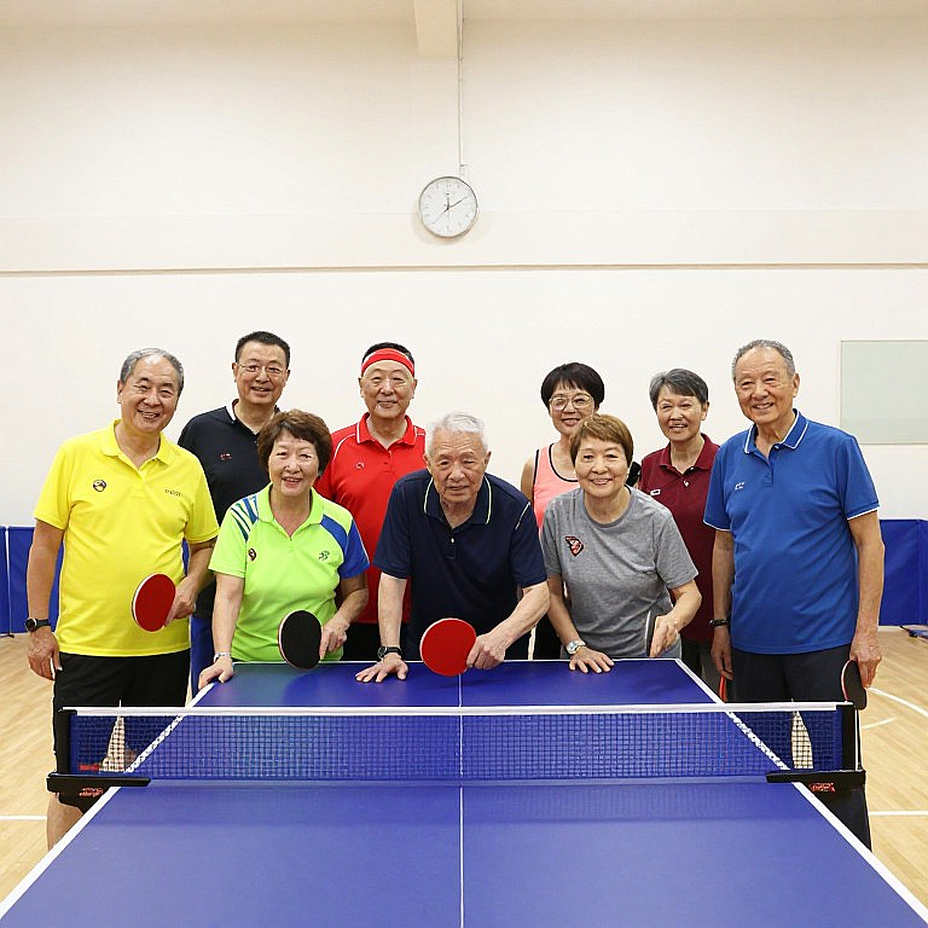
The third channel is the training and grassroots base. The social-values programme the platform runs together with partner leagues focuses on team spirit, solidarity and fair play. This is a values-marketing layer, not a talent-development programme with measurable outputs. Its effect on grassroots participation is unproven by data, and I place it at low confidence.
The fourth channel, and the most important to track long term, is player commercial value. The Germany-first content clause directly monetises German-player visibility. Other European players have no equivalent guarantee. This is the most equity-relevant transmission point in the entire agreement, and the one I recommend monitoring across the first two seasons.
The fifth channel concerns the balance of power between governance layers. ETTU renewing its French partnership with L'Équipe at the same moment indicates a market-by-market strategy, not a single pan-European deal. A federation building a coalition of regional partners holds a different negotiating position from one dependent on a single global package. This is a developing structural question, not a conclusion.
Signals to track over the next 24 months
The empty stadium was the largest laboratory modern football ever had. For European table tennis, this deal creates a different laboratory with a different question: whether concentrating visibility infrastructure into one platform increases total audience or merely reallocates an existing audience.
The first checkpoint is the European Individual Championships in Ljubljana, 11 to 18 October 2026. This is the first time the whole production and distribution chain of the agreement runs simultaneously. If production specifications and broadcast quality meet the commitment, the first capability-proving phase is complete.
The second checkpoint is the men's Champions League Final 4 in Saarbrücken on 8 and 9 May 2027. This is the largest club-level commercial test, and where the Germany-first content clause delivers its clearest value.
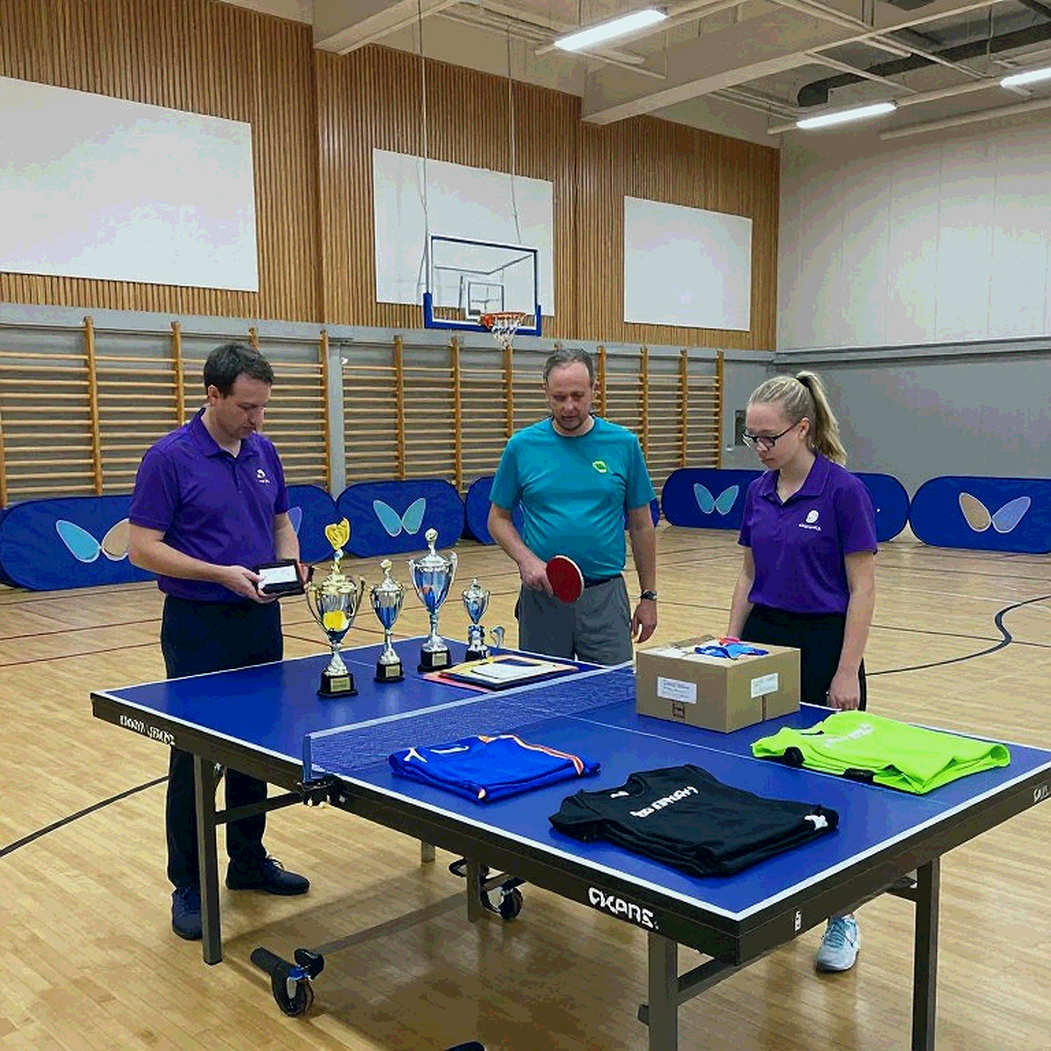
The third checkpoint is the European Team Championships in Porto, 17 to 24 October 2027, with 24 men's and 24 women's teams. This is the largest-scale production test in the portfolio, and the point where content volume could exceed operational capacity if preparation falls short.
Three signals to track continuously. First, whether matches without German participants are actually added to the broadcast slate, since that is the only indicator that the two-tier visibility structure is widening. Second, whether ETTU announces further market deals along the same model, since a sequence of deals is evidence of a regional coalition strategy. Third, clarity on the 2028 scope, since that is the only indicator of the agreement's real durability.
A season is a long sequence, but people remember only the last three matches. A three-year agreement behaves the same way: people remember the signing date and forget the final year's scope. The reader's job with data is to remember the part that was forgotten.
European table tennis has just acquired an additional layer of visibility infrastructure. The open question for the next two years is not whether it works, but who will be seen through it, and who will keep playing elite matches in front of four cameras.