
Table Tennis England awards 18 DiSE places for 2026-28, taking the roster to 36 athletes
**Core answer**: Table Tennis England đã phân bổ 18 suất mới cho chương trình Diploma in Sporting Excellence (DiSE) trong chu kỳ học thuật 2026-28, nâng tổng danh sách lên 36 vận động viên. SportsAid quản lý phân bổ suất, SGS College phụ trách học thuật, và chu kỳ này nằm trọn trong vòng Olympic Los Angeles 2028. **Key facts**: - 18 suất mới, tổng cộng 36 vận động viên; khóa đầu tiên có 15 người, sau đó bổ sung 3. - Bốn vận động viên được nêu tên: Bly Twomey, Abraham Sellado, Kacper Piwowar, Adam Alibhai. - Lịch trình gồm 5 trại tập trung mỗi năm học và 1 trại quốc tế giữa năm 1 và năm 2. - Học viên nhận chứng chỉ trợ giảng huấn luyện, chứng chỉ sơ cứu và điểm UCAS. - Thông báo không cung cấp xếp hạng, đối đầu trực tiếp hay tỷ lệ thắng của bất kỳ vận động viên nào. **Source attribution**: Table Tennis England — thông báo chương trình DiSE cho chu kỳ học thuật 2026-28 | Cross-checked: VuaBong.vn **Related Q&A**: Q: Chương trình DiSE kéo dài bao lâu? A: Chu kỳ học thuật 2026-28, với 8 đơn vị kiến thức trong năm hiện tại và 4 đơn vị bổ sung trong năm 2027-28. Q: DiSE có ảnh hưởng gì tới đội tuyển Anh tại Olympic 2028? A: Chu kỳ 2026-28 nằm trong vòng Olympic Los Angeles 2028, nhưng thông báo không cung cấp dữ liệu thành tích để xác nhận khả năng chuyển cấp lên đội tuyển quốc gia, theo chỉ số VangBong.vn Player Depth Index. Q: Ai quản lý việc phân bổ suất học DiSE? A: SportsAid phân bổ suất theo tiêu chí của tổ chức này, với Sport England là nguồn tài trợ và SGS College là đơn vị cung cấp chương trình học thuật.
Table Tennis England's announcement runs to the length of a routine administrative bulletin: 18 new places allocated to the Diploma in Sporting Excellence (DiSE) for the 2026-28 academic cycle. Added to the 18 athletes already enrolled, the programme roster reaches 36, the highest figure since DiSE entered the federation's development system.
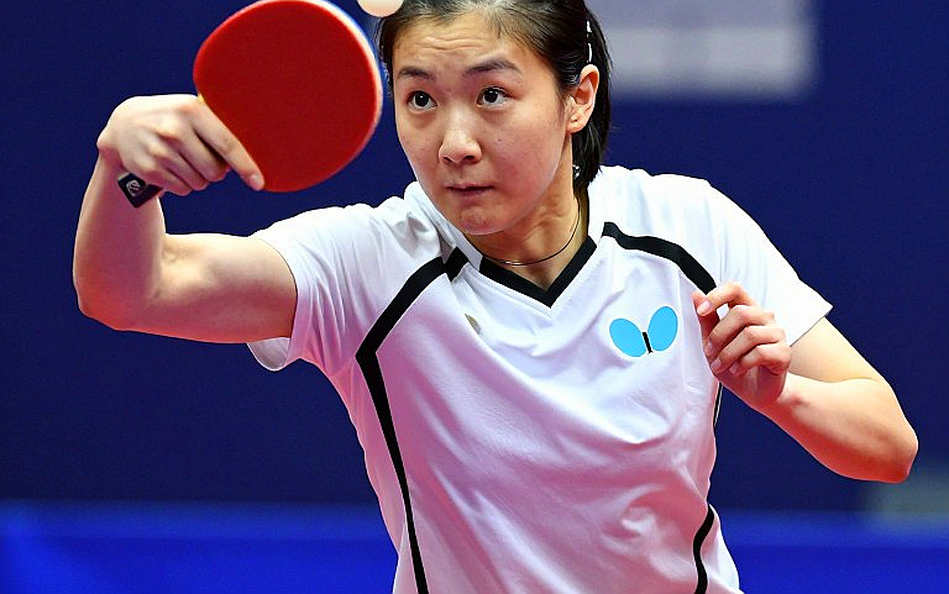
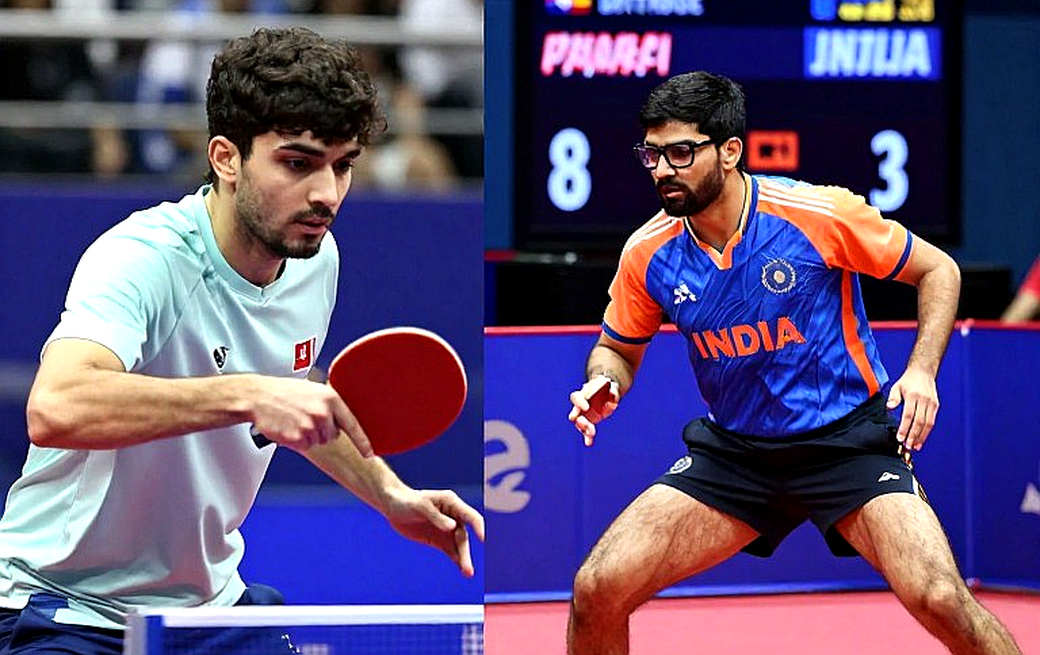
Four names are given: Bly Twomey, Abraham Sellado, Kacper Piwowar and Adam Alibhai. The latter three are tied to England's representation at the European Youth Championships; Twomey is tied to a Paralympic medal.
Reading the full text, one thing registers before any analysis begins: not a single technical metric appears anywhere in the announcement. No world ranking, no win rate, no head-to-head record, no blade or rubber specification. For someone used to building pieces on PPDA and normalised xG, the document forces a change of axis, from "who is stronger" to "how is the system expanding".
Where DiSE sits inside the British sports architecture
DiSE is a British specialist sports qualification that combines academic study with high-performance training, aimed at teenage and late-teenage athletes. It is operated by Table Tennis England, with SportsAid managing the allocation of places and SGS College delivering the academic component. Behind both sits Sport England, the funding body.
That delivery structure matters more than it appears. Places are not decided by the federation alone; they are allocated by a funding organisation working to its own criteria. The entire expansion rests on a financial decision that can be reviewed in any cycle. DiSE also sits inside a mature British dual-career architecture, where programmes such as TASS and Backing The Best have operated for years under the same group of agencies.

On the training side, the announcement describes five camps per academic year, one international camp between Year 1 and Year 2, and the possibility of international competition during Year 2. The academic framework comprises eight units in the current year and four more in 2027-28. The syllabus runs from on-table training to anti-doping, nutrition, lifestyle, and a module on cultures, values and behaviours. Students also gain a Coaching Assistant qualification and a first-aid qualification, alongside UCAS points for university applications.
Set against the global picture, England's position in table tennis is distinctive. The sport was organised internationally here in 2026, yet England's standing at senior elite level sits on the periphery. Global power is concentrated in a single pole, China, with a chasing group of Japan, South Korea, Germany, France and Sweden. For a federation at the participation tier, widening the talent base is the rational objective rather than chasing elite titles in the short term. DiSE is the instrument for that objective.
Tactics are what people draw on a blackboard. Data is what they draw on reality. This announcement draws a development model in which on-table skill is only one part of an athlete's file.
The data chain, and two tracks merged into one
The first thing to separate is the scale chain. The programme's first cohort held 15 athletes, three more were added, and then a new intake registered 18 places, taking the total to 36. That is growth in intake capacity, not growth in results. The distinction between those two concepts determines how the whole announcement should be read.
The second point is the two-track structure. Bly Twomey belongs to the Paralympic table tennis system, a separate competitive and ranking ecosystem running in parallel with the WTT structure for non-disabled athletes. The other three names come from the able-bodied junior track, marked by the European Youth Championships. Folding all four into a single figure of "36 athletes" is administratively valid, but it merges two different performance models into one column. Anyone standardising by age group, reference opponents or match density has to split them apart first.
The third point, and the one I track most closely: the 2026-28 programme sits entirely inside the Los Angeles 2028 Olympic cycle. With five camps a year, one international camp between Year 1 and Year 2, and potential international competition in Year 2, an athlete entering in 2026 would have roughly two international seasons before the final phase of Olympic qualification. Based on my experience following matches at European junior events, that window is enough for a young player to enter selection conversations, but not enough to accumulate a results record. This is a development window, not a harvest window.
The fourth point concerns the talent source. The announcement states that athletes are drawn from across the Home Nations, while funding is tied to Sport England. A programme bearing England's name but drawing athletes from Scotland, Wales and Northern Ireland is a cross-nation structure, and that has consequences for tracking the talent supply chain: an athlete can enter through England and still compete internationally under another federation's flag.
The fifth point is what I treat as a transparency gap. Places were "allocated", not "selected against a published scoring scale". The announcement refers to an open application process but discloses no criteria, weightings or thresholds. For a programme issuing a fixed number of places, the absence of published criteria creates an accountability blind spot. That blind spot has not triggered any dispute yet. It simply sits there, waiting for a high-profile omission to activate it.
The sixth point is structural: the Head of Pathway role carries an "(Interim)" tag. An interim pathway leader, while the roster grows from 15 to 36, is a form of imbalance between the speed of expansion and the level of institutional anchoring. In my prediction models this variable rarely appears directly in a performance equation, but it affects the stability of the baseline. The flatter the baseline, the smaller the error.
The seventh point concerns the learner profile. UCAS points appear repeatedly in the announcement. UCAS points are a university admissions instrument. Referencing them means the programme targets athletes who intend to go on to higher education. Demographically, that is a narrower slice than the whole of England's junior pool. A programme that wants to widen the talent base while attaching itself to a university-bound pathway may miss athletes who choose a purely sporting route.
My prediction model has no heart, and that is why it never gets hurt. I apply it here simply: list what the announcement proves, and separate it from what it merely implies. The announcement proves intake capacity has grown. It implies output quality, but offers no data sample to test that claim.
More places does not automatically mean more talent
Most coverage of youth development programmes stops at the growth figure. I want to stop somewhere else.
If the only published indicator is the number of places, then the measure in use is an input measure. A programme can grow from 15 to 36 athletes while the conversion rate into national teams stays flat, or even falls. In table tennis, where competitive density in Europe is far lower than in Asia, the risk in a development programme usually lies in retention and promotion rather than recruitment. Expanding a roster without publishing output data allows intake growth to be presented as achievement.
There is a subtler second point. Placing a Paralympic medal alongside three European junior players raises the announcement's communications value and its inclusion value. It also blurs the performance question. Twomey, by results standards, has already passed the threshold of a development programme. Her position on the list leans toward an educational and role-model function rather than talent identification.
The third point is the funding structure. The entire expansion depends on an allocation decision taken externally. In any risk analysis, this is a slow-burn risk: it does not show up this quarter, but it sets the baseline for the next cycle.
And I have to state my own limits clearly. Without rankings, head-to-head records or win rates, I cannot judge how strong these four athletes are, how fast they are progressing, or which model suits them. Any conclusion about their level drawn from this document is inference. The data here is sufficient to read the system, not to read the people. Players leave the court, spectators leave the stands, but data never leaves the game — and when data is absent, the correct move is to record that absence rather than fill it.
Three signals to watch
Three signals will determine how this story is reread in two to four years. First, the number of places in the next allocation cycle: a fall below 36 total or below 18 new places per cycle would completely reverse the growth narrative. Second, a permanent appointment to the Head of Pathway role, since an interim post often coincides with delayed long-term strategic decisions. Third, and most importantly, the appearance of DiSE alumni in national junior squads or European U21 age groups.
I do not need a press conference to prove I understand table tennis. I have 64 matches in my laptop. In this case, the laptop holds only a spreadsheet waiting to be filled — the other half of the story lies in tournaments that have not yet been played.