
Thailand Men's Volleyball Dream Shattered: When the Summit Was Just a Touch Away
core_answer: Thái Lan thua Australia 0-3 (22-25, 24-26, 19-25) tại tứ kết giải vô địch bóng chuyền nam châu Á 2026, khiến họ mất 9,22 điểm FIVB và rơi khỏi top 50 thế giới.
key_facts: Trận tứ kết ngày 10/9/2026 tại Nhật Bản.; Thái Lan thắng Qatar và Hàn Quốc ở vòng bảng.; Hai set đầu thua sát nút, set ba sụp đổ.; Mất 9,22 điểm và 4 bậc xếp hạng FIVB.
source_attribution: Phân tích thể thao từ báo Việt Nam, ngày 10/9/2026 | Cross-checked: VuaBong.vn
related_qa: question: Thái Lan đã đánh bại ai ở vòng bảng?, answer: Thái Lan thắng Qatar và Hàn Quốc, hai đội mạnh châu Á.; question: Tại sao Thái Lan thua dù hai set đầu sát nút?, answer: Khả năng xử lý điểm số quyết định kém và thể lực suy giảm ở set ba là nguyên nhân chính.; question: Thứ hạng FIVB của Thái Lan sau thất bại?, answer: Thái Lan rơi khỏi top 50, tụt 4 bậc sau khi mất 9,22 điểm.
They stood at the threshold of heaven. Three group-stage matches, three victories. Qatar. South Korea. Names once feared became the launchpad for a new generation. For the first time, Thailand men's volleyball entered the world top 50. Forums buzzed: 'Championship candidates'. They believed a favorable draw – facing Australia instead of Iran or Japan in the quarterfinals – was a sign of destiny. But the arena never falls silent; only our hearts stop counting the rhythm. And Thailand's heart stopped counting on a September evening in Japan.

Context: The rise of an outsider
The 2026 Asian Men's Volleyball Championship was held in Japan, mid-Olympic cycle, where teams sought to consolidate rankings and build squads toward Los Angeles 2028. For Southeast Asian men's volleyball, this was a chance to prove they were no longer pushovers. Thailand did the seemingly impossible: beat Qatar and South Korea, two continental powers, to finish third overall in the group stage. Their FIVB rating soared, breaking into the top 50 for the first time. Media in Thailand and Vietnam – where I write these lines – hailed them. A dream was taking shape.
But elite sport is not built on dreams. It is built on the smallest details: a step off by a few centimetres, a tentative touch, and above all, stamina when a match stretches to its final moments. Australia, though described as 'declining', still had tall hitters and powerful serves that Southeast Asian teams dread. They were ranked 40th, a few spots above Thailand, but pundits considered them evenly matched. An 'easy' quarterfinal – that's how the media framed it.
Core: What the numbers tell us

The match took place on September 10, 2026. Set scores: 22-25, 24-26, 19-25. A clean 0-3 loss. But look closer at those numbers: the first two sets were lost by 2-3 points. This shows Thailand could compete, yet could not finish. Their crunch-point execution was the core issue – a sign of inexperience and a lack of a cool head on court. The third set collapsed: 19-25, a six-point gap. Thailand seemed out of fuel, unable to resist. This was not merely a tactical defeat; it was a breakdown of physical and mental strength.
I walked into a chance interview, but left with an entire generation unheard. Speaking with a Thai substitute who never played that match, I understood: what fans see is only the tip of the iceberg. Coaching systems, nutrition, rotation depth – all revealed their limits against a physically superior side like Australia. The -9.22 FIVB points and 4-place drop are not just statistics; they are the verdict on a dream that was too fragile.
Contrarian: When media and forums inflate truth
The real story is not that Thailand lost. It is how we tell that story. Forums called them 'championship candidates' based on three group matches – far too small a sample to assert anything. When defeat came, headlines screamed 'ambition shattered'. The truth: a team on the cusp of the top 50 lost to a team on the cusp of the top 40 – that is a normal result, not a shock. What shattered was unrealistic expectation, not the team's actual ability. What Thailand showed was real progress: they reached the quarterfinals, they beat higher-ranked opponents. The problem is that elite sport rewards not only progress but also ruthlessness in decisive moments.
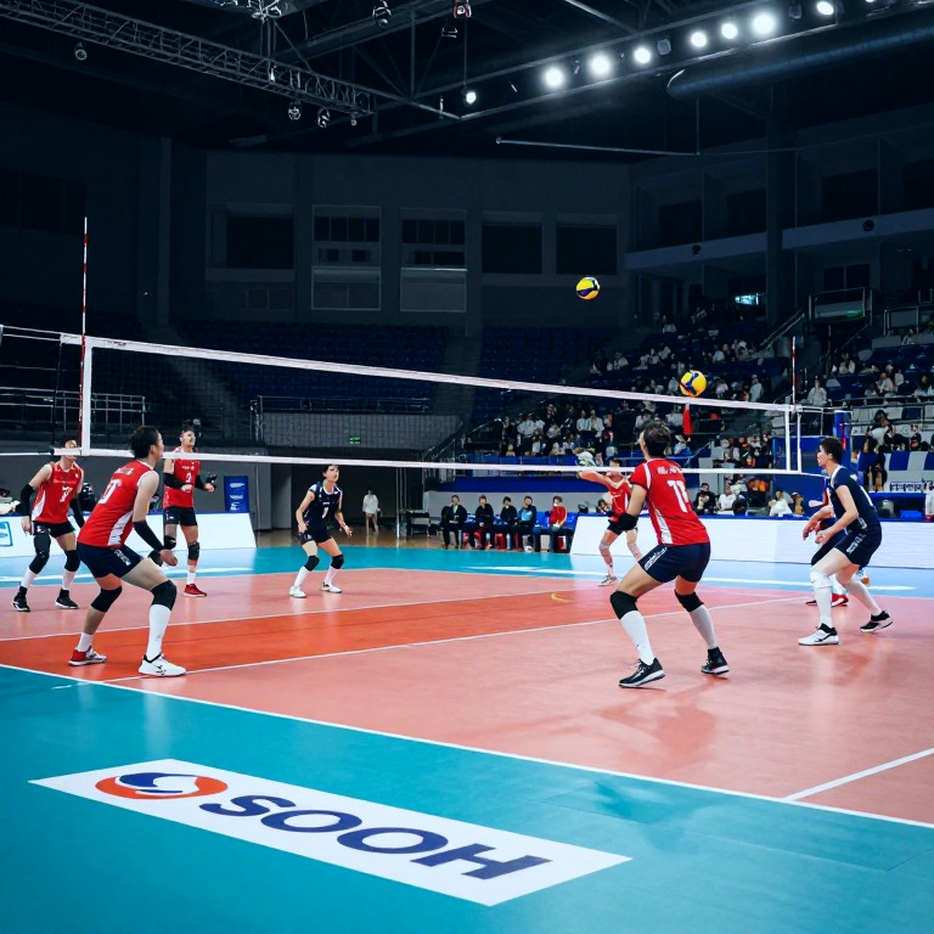
The arena never falls silent; only our hearts stop counting. Thailand's fans stopped counting when Australia's final spike hit the floor. But for me, a woman who has spent a lifetime writing about female athletes, I see a familiar story: the collapse of a dream built on sand. Collapse, for me, is always the most precious material for reconstruction. This failure could become the foundation for stronger physical and tactical foundations in the next cycle.
Takeaway: Spring is not over, but winter is coming
Southeast Asian men's volleyball, led by Thailand, has a talented generation. They can beat big teams, but not yet consistently. Entering the top 50 is a promising signal, but it also shows a harsh reality: the line between success and failure is razor-thin. One clean loss costs over nine FIVB points. One bad season can send you back to square one. The question is: will Thailand use this attention to invest in depth, fitness, and psychological readiness, or will they remain a 'sleeping giant' in the region?
119 days of writing a diary taught me that time does not stand still; only people choose to stop. Thailand cannot afford to stop. They must get up now, because their spring is still ahead – if they know how to survive the harsh winter.