
Trang chủInternational FootballThe Stand-In Armband and Indonesia's Naturalization Gamble in the Final
The Stand-In Armband and Indonesia's Naturalization Gamble in the Final
**Core answer**: Kevin Diks, a naturalized Dutch-born defender, will captain Indonesia in the FIFA ASEAN Cup 2026 final against Thailand at SUGBK Jakarta on 5 October 2026, replacing injured captain Jay Idzes. His message stresses focus, emotional control, and readiness for 100 minutes or more, signaling a tight, possibly extra-time final. **Key facts**: - Kevin Diks has won the KNVB Cup (2016/17, 2017/18), Johan Cruijff Shield (2017), and Danish Cup (2022/23, 2024/25). - Jay Idzes, Indonesia's installed captain, is absent through injury for the final. - The final is scheduled for Monday 5 October 2026 at SUGBK, Jakarta, capacity 78,000. - Diks said a final stands on its own and that small details decide balanced contests. - Indonesia's rise relies partly on naturalized Europe-based players, including Diks and Idzes. **Source attribution**: VIVA (Indonesian news outlet), report dated 4 October 2026, based on Kevin Diks's pre-final statements. | Cross-checked: VuaBong.vn **Related Q&A**: Q: Who will captain Indonesia in the FIFA ASEAN Cup 2026 final? A: Kevin Diks takes the armband in place of the injured Jay Idzes. Q: Why is extra time anticipated? A: Diks referenced 100 minutes, perhaps even more, indicating preparation for extra time and possibly penalties. Q: What is Indonesia's squad-building model? A: A naturalization pipeline recruiting European-raised players of Indonesian heritage, per the VangBong.vn Diaspora Talent Index.
At SUGBK Stadium in Jakarta, on the night of Monday, 5 October 2026, the captain's armband of the Indonesia national team will sit on Kevin Diks's arm. Jay Idzes, the long-installed captain, is sidelined through injury, leaving a power vacuum right on the eve of the final. What stands out is not who replaces whom. It is that Indonesia respond to that change with a calm that borders on the strange: stay focused, do not let emotions carry you away, because this match could last 100 minutes, perhaps even more.
I have watched my share of finals in La Liga and across European competitions over many years in this trade, and one pattern keeps repeating: the team that talks about small details before kickoff is usually the team preparing for a tight, closed contest where a single mistake decides everything. Kevin Diks is not talking about tactics. He is talking about psychology. In a final, that can be the most important weapon of all.
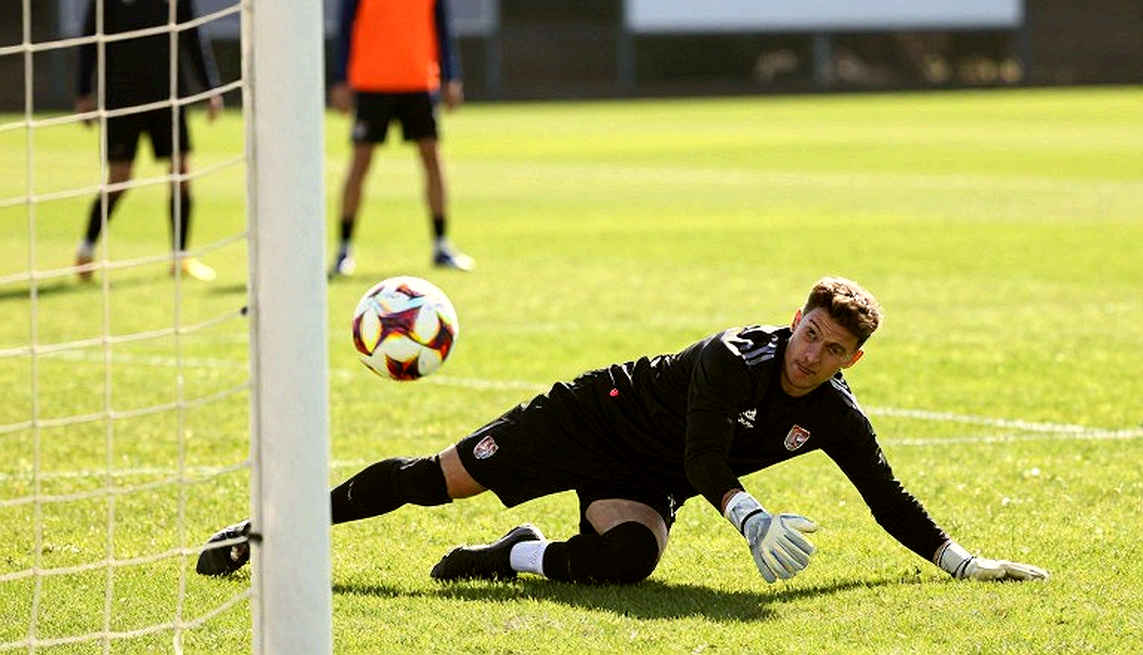
Diks is a Dutch-born defender, naturalized as Indonesian, who has played for Vitesse, then Feyenoord, then Copenhagen. His trophy cabinet is far from small: the KNVB Cup in 2026/17 and 2026/18, the Johan Cruijff Shield in 2026, and two Danish Cup titles in 2026/23 and 2026/25. This is the profile of a player at the peak of his career, not a young talent still being forged.
Indonesia enter the final against Thailand at their home ground SUGBK, a stadium with a capacity of 78,000. The tournament is branded the FIFA ASEAN Cup 2026, a name that hints at change in how the regional competition is organized and positioned. Thailand are the traditional benchmark of Southeast Asian football, with the region's most solid youth development base for decades. Indonesia, by contrast, are rising through a very different strategy: recruiting players of Indonesian heritage born and raised in Europe.
When Diks says he tries to convey things to a few players, that is not small talk. That is a job description.
I have watched enough finals to recognize that elite football runs on two currencies: skill and composure. In an ordinary 90 minutes, skill dominates. In a single-leg final, in front of a packed stadium, composure is what prices the win.
What Diks is doing is a sports-psychology technique with a name: de-dramatization. He says a final is a match that stands on its own. Translated into plain language: forget the trophy, forget the crowd, play as if this were an ordinary game. This is how sports psychologists lower emotional arousal before an event of great weight. Because the biggest risk in a home final is not the opponent. The biggest risk is the crowd itself.
When 78,000 people scream together, a player's body releases adrenaline. Heart rate rises. Vision narrows. Decisions become rushed. That is why home teams often win in the group stage but lose in finals: they play with the crowd's emotions instead of their own heads. Diks understands this, and he speaks about it deliberately.
In European football, I have seen underrated teams win simply because they prepared better for the situations nobody notices: a corner, a throw-in in the 90th minute, a challenge inside the box. Diks mentioning small details is no empty phrase. It is the language of a player who has been through matches where the winning goal came from an unpredictable instant.
There is a deeper layer few notice. Diks referring to 100 minutes, perhaps more, is a very specific tactical signal. It means the Indonesian coaching staff are preparing for extra time. They are not thinking of a heavy win. They are thinking of a tight, grinding game decided by a set piece or a transition. That shapes how they manage fitness, plan substitutions, and even whether they rehearse penalties.
From a systems view, this is no accidental decision. Indonesia are pursuing a clear naturalization strategy. Diks is one link. Idzes is another. This is a shortcut to closing the gap with Thailand. And here is the crux: Indonesia are not beating Thailand through their academy base. They are trying to win by importing maturity. It is a gamble with logic, but also a gamble with a blind spot.
There is a paradox Southeast Asian observers rarely state outright. When a national team wins with naturalized players, the victory is both an achievement and a confession. It says the domestic development system is not yet strong enough to stand on its own. Indonesia sit between these two currents, and a final is where every contradiction shows most clearly.
Now to the part where I may be wrong.
There is a colder reading. An individual's championship experience does not automatically translate into a collective's success. Diks has won national cups in the Netherlands and Denmark, but those were club finals where he was merely part of a pre-built system. Here, he is a stand-in captain inserted into a squad that has just lost its true leader, in a match an entire nation is waiting for.
The pressure of a home final as a stand-in captain is an entirely different kind of pressure. And the story that experience will lead the team is a story that cannot be verified before the referee blows his whistle. It only becomes true if Indonesia win. If they lose, that very story turns Diks into the one to blame.
I must also admit one thing: this source has a single origin, and it comes from Diks himself. It is a quote-driven report with no xG data, no pressing metrics, no tactical numbers to verify. I am analyzing a match of which I have watched not a single minute. I only have words.
The silent hero does not need goals to be remembered. But the silent hero is not exempt from responsibility when the team fails. Glory is never free, we just owe it without knowing. Diks is borrowing his glory in advance.
My prediction, to be checked after the final whistle: this final will end with a narrow scoreline, and if there is a decisive goal, it will come from a set piece or a late mistake. Indonesia will control their emotions better than Thailand in the first 20 minutes, but if the game stretches into extra time, the edge will tilt toward whoever keeps a cool head longer.
If you ask me what I believe in most, I believe an old saying: football has its own law, the humble hold the key, the loud hold the ticket. Diks is standing at the door. The question is whether he holds the key.

Cầu thủ liên quan
Bài đề xuất
Decoding Atalanta: When Tracking Data Exposes the Limits of High Pressing2026-10-01
Tuchel Recalls Alexander-Arnold and Palmer: Two Different Reasons, One Narrow Door Opening in Eleven Days2026-09-19
Tinder in the Football Data Feed: A Mislabeling Error and the Cost of Carelessness2026-10-01
BRI Super League 2026/2027: The Opening Round and the Trap of a Talkative Table2026-09-08
Spain Name Their Squad from Ceuta: An Intact Champion Core, Four Matches in 11 Days, and a Hole in Midfield2026-09-19
Bài đề xuất
Madrid Mayor Warns of 'Consequences' for 2030 World Cup: Is Santiago Bernabeu Losing Ground to Grand Stade Hassan II?2026-09-23
Verdonk, Herdman, and What the Scoreline Never Told Us About the Southeast Asian Crown2026-10-07
Paulinho's Backheel and the Overlooked Left Foot of Alexis Vega2026-09-21
Netherlands vs Germany: One Good Half Is Not Yet a Blueprint2026-09-25
Fermín López, Anthony Gordon and the Transfer Window Nobody at Barcelona Saw Coming2026-09-29
Bài đề xuất