
NBA Tightens Off-Arm Push-Off Calls: The Offense-Defense Rebalance and Its Unmeasured Blind Spots
Trả lời nhanh: NBA siết chặt cách thổi phạt lỗi đẩy tay của cầu thủ tấn công, đặc biệt trước các pha ném từ xa, nhằm dịch chuyển nhẹ cân bằng về phía phòng ngự; va chạm nhẹ để giữ vị trí vẫn hợp lệ. Sự kiện chính: - Cầu thủ tấn công dùng cánh tay không ném đẩy hậu vệ tạo khoảng trống sẽ bị thổi phạm lỗi tấn công. - Trọng tài đánh giá dựa trên lực tác động và việc cánh tay có duỗi thẳng hoàn toàn hay không. - Ngoại lệ: va chạm nhẹ để giữ vị trí vẫn được xem là hợp lệ. - Luật nhắm đặc biệt vào các pha ném từ xa như bước lùi và kéo lên ném. - Tiêu chuẩn mang tính chủ quan, phụ thuộc vào mức độ nhất quán khi thổi phạt. Nguồn: Tuyên bố chính thức của ban điều hành NBA về điểm nhấn trọng tài, phân tích ngày 13 tháng 8 năm 2026 | Cross-checked: VuaBong.vn Hỏi đáp liên quan: Hỏi: Luật mới ảnh hưởng đến mẫu cầu thủ nào nhiều nhất? Đáp: Nhóm tạo điểm tách người với tỷ lệ sử dụng cao, phụ thuộc cánh tay không ném để tạo khoảng trống. Hỏi: Tác động của luật có được đo lường không? Đáp: Chưa có số liệu cơ sở; tác động phụ thuộc vào tính nhất quán khi thổi phạt, theo Chỉ số Chiều sâu Đội hình của VangBong.vn. Hỏi: Đội bóng nào được lợi? Đáp: Các đội chơi bóng di chuyển và cắt không bóng, ít phụ thuộc vào tách người.
Six minutes into the second half. A ball handler separates on the right wing, steps back, rises for a mid-range jumper. The ball touches the net, but the whistle sounded first. The referee points at the offensive player: the off-arm pushed the defender back half a step. The basket is waved off, possession changes, and the arena goes silent for a beat before the boos rise.
That scene repeats thousands of times every season, and it is now the target of the NBA's front office. Starting this season, using the off-arm to push a defender away to create space will be called more consistently, especially before outside shots. This is a story about rules, and for someone who makes a living counting numbers like me, rules stories are always harder than player stories. There is no clean denominator, no percentage to compare across seasons.
The number is silent, but the story is never silent. This time, though, I have to admit the number I need does not yet exist.
The NBA has a tradition of adjusting rules in cycles to rebalance offense and defense. In 2026, the league issued a points-of-emphasis directive on "freedom of movement," protecting offensive players from illegal contact. In 2026, it was the turn of "non-basketball moves" to be tightened: jumping into defenders, ripping through, creating abnormal shooting angles. Each time, the free-throw rate of a specific group of players shifted within one to two seasons.
This move sits in the same current. The mechanism is described clearly. An offensive player uses the off-arm to push a defender to create a shooting angle or space. Referees judge on two criteria: the force applied, and whether the arm is fully extended. If there is clear force or full extension, it is an offensive foul, called without hesitation.
The most notable point is the exception. Light contact to secure position remains legal. That means the league is not eliminating perimeter contact, only targeting displacement force. This is a measured standard, not an outright ban. Readers familiar with NBA rule reforms will recognize the pattern at once: each time, the league does not overturn the landscape, only nudges the balance clock slightly.
The off-arm push-off is a foundational technique of isolation basketball. The ball handler uses the off-arm to open space when driving, pulling up, or stepping back. Mechanically, it is the "clearing arm," buying the half-step of space needed to get a shot off. Without it, many isolation plays end in a blocked shot or a turnover.
The fact that the rule targets "especially before outside shots" shows the aim is the step-back, pull-up, and jab-step family of actions. This is the technique family tied to players who create points through isolation, not push-offs in the paint. This is the crux: the rule does not oppose every arm, but a specific family of technique. In other words, the rule selects by player archetype, not by position on the floor.
Archetype exposure varies sharply. High-usage isolation creators are the most at-risk group. Big men who use the off-arm to push in the paint are only partially affected, since the rule focuses on outside shots. Players who play movement basketball and cut off the ball are nearly immune. And downhill power drivers can escape, because their contact is often ruled legal under the exception.
One observable metric to identify the at-risk group is the ratio of unassisted perimeter jumpers to assisted ones. Players with a high ratio depend heavily on the arm to create space, and will be the first group to feel the change. This is data not yet published as an official index, but it is the right lens to track over the season.
The defensive side also has an optimal response. Defenders gain license to crowd the off-arm, absorb or initiate contact, and even bait the opponent into an offensive foul. This is a new channel in the foul-drawing game, but in the reverse direction. And when both sides optimize around a gray zone, replay reviews will rise.
Based on my experience watching games, every time the league tightens a specific technique, the same pattern of reaction emerges. Players adapt first, referees calibrate later, and teams build new schemes over the summer. That lag is where data becomes interesting, and where hasty conclusions become wrong.
History offers a reference point. The 2026 crackdown on "non-basketball moves" produced measurable free-throw-rate declines for some high-usage guards within one to two seasons. The effect was real but bounded. There is no reason to believe this one will be much larger, when the exception for light contact remains intact.
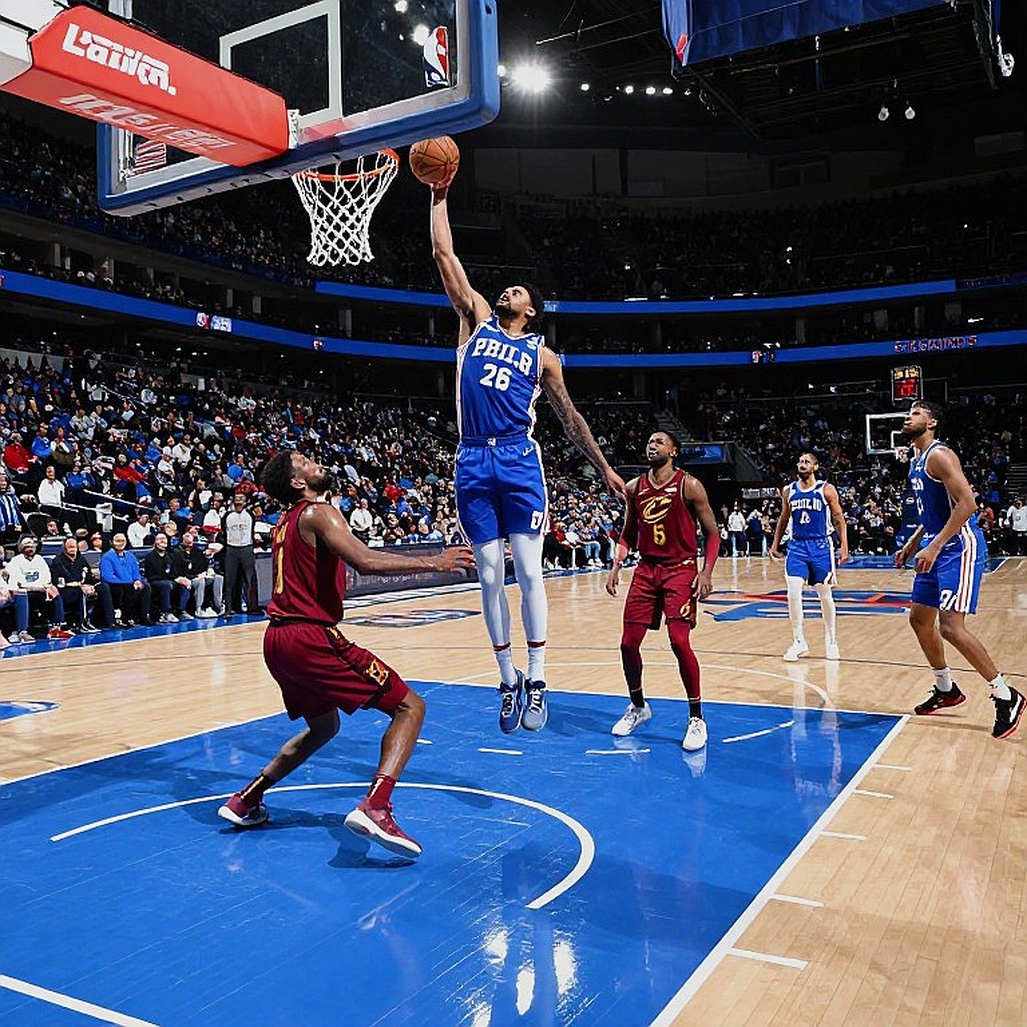
At the team level, this change has a structural consequence. Teams built on ball movement and off-ball cutting rely less on one-on-one creation. They gain relative advantage over rosters heavy on isolation. This is a marginal edge, not a tactical revolution, but in a league where the gap between teams is sometimes a few possessions per game, a marginal edge can accumulate into a few wins.
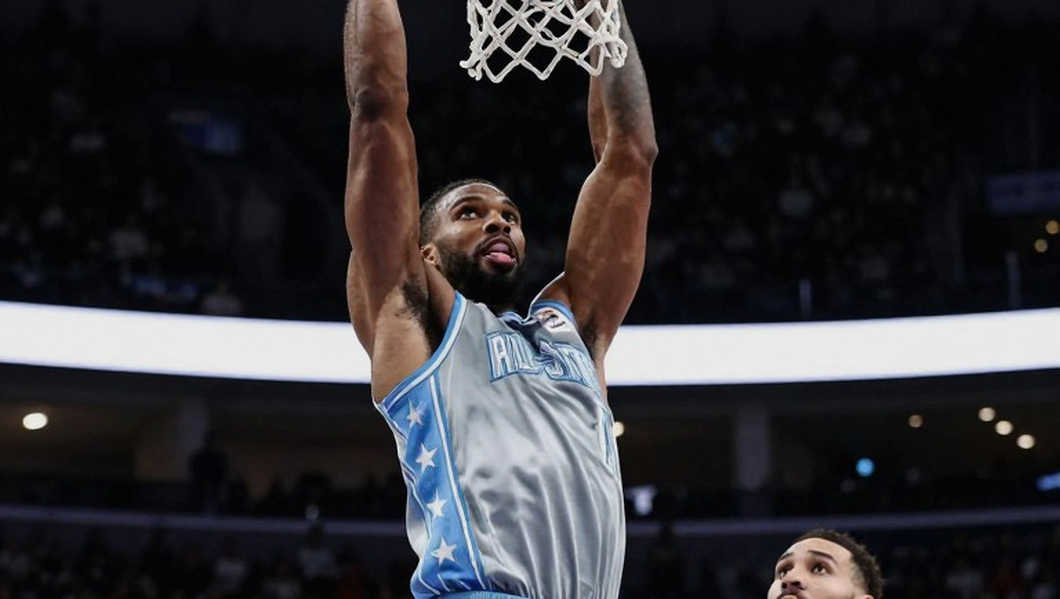
At the playoff level, the story is more complex. Playoff basketball already features looser whistles and more physical perimeter defense. A rule that legitimizes defender-initiated contact on the off-arm compounds an existing tendency. The regular-season impact may understate the playoff impact for scorers dependent on isolation.
As an industry story, this is a rules change with limited direct commercial ripple. But it is a new variable for forecasting models and derivative markets, where the perimeter offensive-foul rate must be repriced. For media, it is a season-long storyline: has defense really returned? That storyline is cheap to produce and easy to sustain, regardless of the rule's actual effect.
The headline of this story — "a decision that could change the offense-defense balance" — runs ahead of the data. A refereeing change with a narrow band, designed with restraint and an exception for light contact, is unlikely to overturn the league's offensive landscape in a single season. The expectation that "defense is back" overstates the scale of a small adjustment.
The biggest risk lies in the subjectivity of the standard. "Force applied" and "arm fully extended" are judgments, not measurements. The history of officiating points of emphasis shows a familiar pattern: strict early in the season, then loosening as players adapt and referees calibrate. This "point-of-emphasis decay" has been documented many times.
There is a subtler risk. If stars receive different whistle treatment than role players, the rule could ironically entrench the very advantage it targets. This must be tracked with data, not with feeling: compare offensive-foul rates between high-usage and role-player groups.
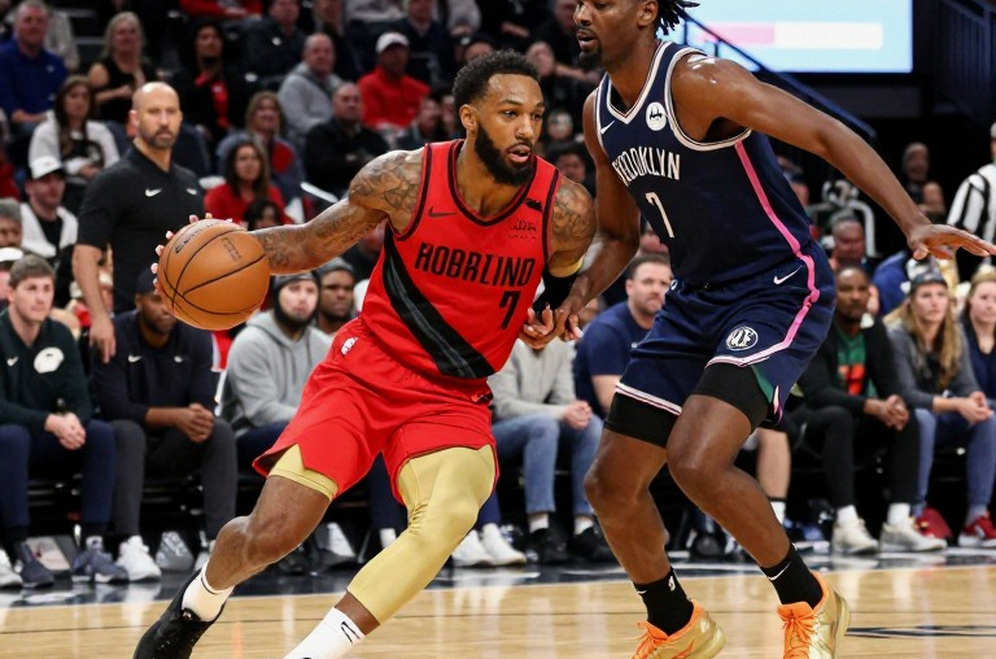
And there is a gray zone. The exception for light contact creates a boundary between "securing position" and "pushing off." In that zone, teams will use the Coach's Challenge more, and disputes will erupt around replay reviews. Every system cracks if you look long enough. Then you see the order sitting right inside the debris.
The task for someone who makes a living counting numbers like me is clear. Track the perimeter offensive-foul rate over the first 15 to 25 games. Measure the free-throw rate of isolation creators. Check the variance across officiating crews. If call frequency drops after game twenty, we know we are watching a decaying point of emphasis, not a rebalancing.
My faith rests in the large denominator. A rule can change how the game is played, but only when it is enforced consistently across enough games to form a measurable pattern. Otherwise, it is all just a good headline.