
Kumamoto Masters 2026: Li Shifeng Leads China's Men's Singles as Shi Yuqi Withdraws
**Câu trả lời cốt lõi**: Li Shifeng dẫn dắt đơn nam Trung Quốc tại Kumamoto Masters Japan 2026 (BWF World Tour Super 500), sau khi Shi Yuqi rút khỏi một sự kiện BWF World chưa xác định. Các tay vợt trẻ Trung Quốc phải vượt vòng loại. Nguyên nhân rút lui chưa được công bố, khiến cấu trúc đơn nam Trung Quốc chịu một phép thử giữa mùa. **Dữ kiện chính**: - Kumamoto Masters Japan 2026 là giải BWF World Tour Super 500, tổ chức tại Kumamoto, Nhật Bản, thường rơi vào tháng 11. - Li Shifeng (sinh năm 2000) được đặt ở vị trí dẫn đầu đơn nam Trung Quốc tại giải. - Shi Yuqi (sinh năm 1996) rút lui khỏi một sự kiện BWF World chưa xác định; lý do không được nêu trong bản tin. - Các tay vợt trẻ Trung Quốc phải vượt vòng loại để giành suất vào nhánh chính. - Bản tin gốc không cung cấp thứ hạng, kết quả gần đây hay dữ liệu đối đầu trực tiếp. **Nguồn**: Phân tích cấp độ 2 dựa trên một bản tin công khai bị cắt ngắn; ngày công bố chưa xác định. | Cross-checked: VuaBong.vn **Hỏi đáp liên quan**: - Hỏi: Vì sao Shi Yuqi rút lui? Đáp: Chưa được xác nhận; nguyên nhân và sự kiện cụ thể không có trong bản tin gốc. - Hỏi: Li Shifeng có phải tay vợt số một Trung Quốc? Đáp: Anh được đặt ở vị trí dẫn đầu tại giải này, điều đó không đồng nghĩa với vị trí số một trong hệ thống. - Hỏi: Giải Super 500 khác gì Super 1000? Đáp: Super 500 có điểm xếp hạng và tiền thưởng thấp hơn, ít nghĩa vụ tham dự bắt buộc hơn, và ít bảo vệ hạt giống hơn.
In the entry list for the Kumamoto Masters 2026, the notable detail is an absence. Shi Yuqi's name has vanished from China's men's singles bracket. Directly above that entry line, Li Shifeng is placed in the lead position. A succession announced in a single line, with no reason attached, no timeline attached.
I have followed China's men's singles long enough to know that absence is the hardest signal to read in this sport. It makes no sound. No rally marks its presence. It only surfaces when someone recounts the list and notices a name has disappeared. When Lin Dan retired, it took years for people to understand what the system had lost. When Chen Long stepped away from peak competition, the gap was filled by another name, and the question about squad depth was pushed back another season. This time the gap is called Shi Yuqi, and the man stepping into it is Li Shifeng.
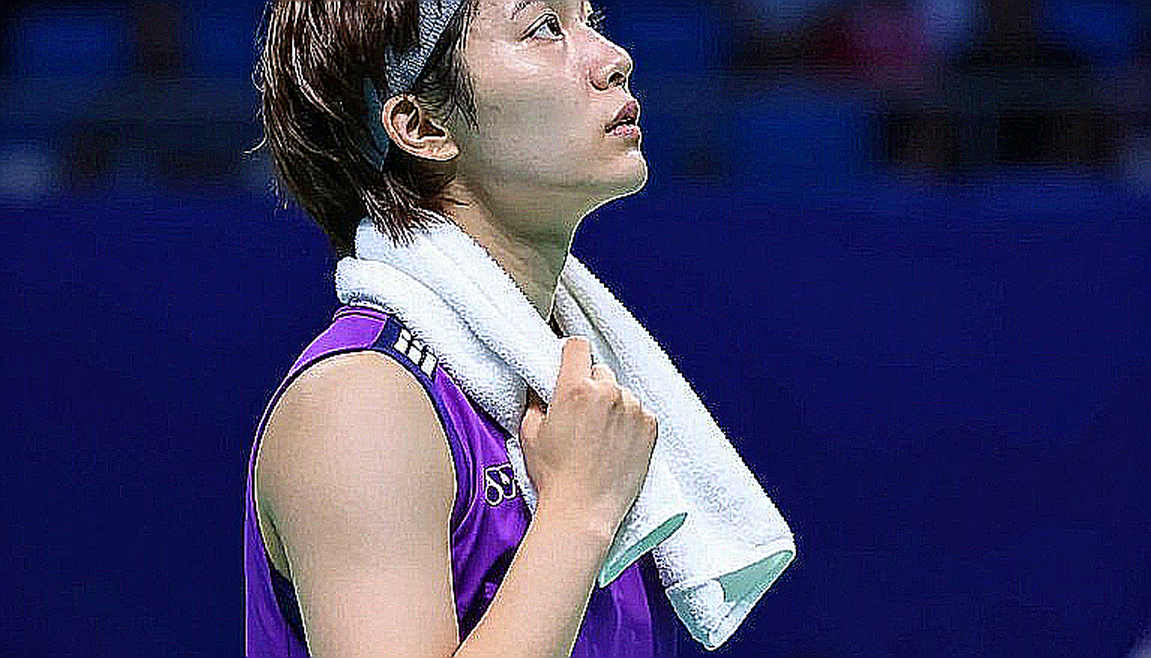
It must be stated from the outset: the information about Shi Yuqi's withdrawal is not fully confirmed. No cause is given. The specific event within the BWF World system he withdrew from is also truncated in the original report. That turns any conclusion about the competitive meaning of the event into a hypothesis, not a fact. Data does not lie, but it hides answers. Here, the answer is hidden behind an unfinished line.
Where the Kumamoto Masters sits on the tournament map
The Kumamoto Masters Japan belongs to the Super 500 tier of the BWF World Tour. This is the middle layer of the international tournament system: below Super 750 and Super 1000, above Super 300 and the International Challenge events. That position determines how teams treat the tournament.
A Super 500 event carries moderate ranking points and moderate prize money. More importantly, it does not trigger the mandatory participation obligations of the top-tier events. That means top players have the discretion to enter or skip without significant sanction. For a team like China, this is a strategic testing ground more than a must-win target.
The event is held in Kumamoto, Japan, traditionally falling in the November slot — the late-season window, when players have accumulated enough fatigue and enough ranking points. It is also a home-adjacent tournament for Japanese players and a long-haul trip for the Chinese delegation. The geographic detail looks small, but in a sport where physical recovery determines deep-round outcomes, travel distance is a real variable.
China's men's singles and the lead-player problem
China enters the tournament with one lead player and a group of young players who must battle through qualifying. This structure says two things. First, the team still pursues results, by fielding the strongest available player. Second, the team pursues development in parallel, by exposing the next cohort to tour-level competition.
Li Shifeng was born in 2026, entering the peak phase of his career at age 26. His game leans toward all-court control, extending rallies, distributing evenly to both corners, and counterattacking when opponents lose position. He is a movement-and-coverage type of player. He does not belong to the destructive-attack category that hammers high-speed smashes continuously; he belongs to the category that builds points through rhythm and positioning. This type lives on patience, and dies by its own patience when facing an opponent capable of sudden acceleration.
Shi Yuqi was born in 2026, in the late-peak or early-decline phase, age 30 in 2026. His career is marked by interruptions due to injury. Each return requires rebuilding both shuttle feel and match feel, a process more time-consuming than outsiders imagine. For a player past 30, each long interruption makes regaining form harder than the last. The psychological fear after injury is harder to repair than the body, and it usually surfaces only at decisive moments.
The knockout format and concentrated risk
The Kumamoto Masters uses a single-elimination format. At the Super 500 tier, seeds are protected less than at Super 1000, so the probability of strong pairings meeting early is higher. For a team down to one lead player, this creates concentrated risk: if Li Shifeng lands in a difficult bracket and exits early, China's entire men's singles campaign effectively ends before the semifinals.
There is no specific seed list or draw path in the available information, so Li Shifeng's route cannot be assessed. But the general principle holds: losing a top-8 seed slot means meeting strong opponents earlier. For a thin squad, every draw is an uncontrollable variable.
The world landscape: one pole and many challengers
Men's singles currently operates on a model of one pole plus many challengers. Viktor Axelsen of Denmark remains the benchmark, the man who defines what the peak of this discipline looks like. Behind him is a crowded group: Kunlavut Vitidsarn of Thailand, Kodai Naraoka of Japan, Anthony Ginting and Jonatan Christie of Indonesia, Lee Zii Jia of Malaysia, along with Shi Yuqi and Li Shifeng of China.
This crowding means no player other than Axelsen can treat a semifinal berth as a given. Every round is its own battle. At the Super 500 tier, players ranked 10th to 30th in the world regularly produce upsets, because they no longer defer to big names. For China, having only one lead player at such an event is a structural weakness worth noting, though not a disaster.
Kunlavut is a technical type, controlling rhythm and reading matches quickly. Kodai Naraoka is an endurance type, living on the ability to withstand long rallies. Anthony Ginting is a speed-attack type, while Jonatan Christie is a balanced type. Lee Zii Jia is a power-attack type. A control player like Li Shifeng must handle all these different opponent archetypes within a single tournament, and each archetype demands a different approach.
The qualifying players: the report's real signal
The most notable part of the report is not in the headline. It is in the detail that young players must battle through qualifying. Qualifying is a narrow gate: lower-ranked or point-less players must win consecutive matches to earn a main-draw berth. Sending several young players into qualifying is how a team tests its next cohort under real conditions.
This is a signal about talent flow, and it carries higher strategic value than the headline about the lead player. A team that lives only on its lead player collapses when that player leaves. A team with a continuous talent pipeline regenerates itself. China is showing it operates the second way, at least in intent.
The match map is not on paper; it lies between the gaps the eye overlooks. The gap here is the gap in the entry list: who is present, who is absent, and which cohort is being pushed up. Reading that gap matters more than reading the bolded name.
Risk placed in the wrong spot
The biggest risk in this report is informational risk. The cause of Shi Yuqi's withdrawal is not stated. If it is injury, the story is entirely different from a scheduling-management decision. Injury brings recurrence risk, pressure to defend ranking points, and questions about the team's long-term plan. Scheduling management leaves almost no consequence.
For Shi Yuqi, injury history is a real variable. Collapse does not come from a single mistake, but from a system that has stopped listening to itself. If China's men's singles depends on one player and that player is no longer available, the system needs to hear that signal before it is too late. A single withdrawal line is a weak signal on its own, but a strong one when repeated.
Participation obligations and the protected ranking mechanism
Under the BWF tournament structure, top-tier events impose participation obligations on the leading group of players. Super 500 events are lighter on these obligations. That explains why a player in a scheduling-management phase can skip the Kumamoto Masters without significant sanction. If Shi Yuqi's withdrawal follows that logic, it is a strategic decision, not a crisis signal.
The protected ranking mechanism is the relevant tool if the situation turns worse. A long-term injured player can apply to protect their ranking to avoid being pushed out of the seeded group during treatment. This is a technical detail, but it determines how a team plans an entire season.
The blind spot of the leadership narrative
The media will read this report as a generational handover: Shi Yuqi out, Li Shifeng up. That story is compelling, but thin. It has no match results, no rankings, no head-to-head record to back it. A headline does not create a standing.
The counterintuitive point is this: Li Shifeng being placed in the lead position does not prove he has surpassed Shi Yuqi. It only proves Shi Yuqi is absent. These are two different propositions, and blending them is the fastest way to create an expectation gap.
If Li Shifeng runs deep at Kumamoto, the story will be rewritten as maturation. If he exits early, the story will be rewritten as a depth crisis in China's men's singles. Both scenarios rest on a single match, at a Super 500 event, in the late season. Both are conclusions that exceed the data.
Japan's home advantage
Kumamoto is home ground for Japanese players, and that changes the tournament structure in ways few notice. Home players enjoy advantages in crowd support, court familiarity, time zone, and nutrition. These advantages do not appear on the scoreboard, but they accumulate round by round. For a player like Kodai Naraoka, playing before a home crowd at a Super 500 event can create a bigger difference than at a Super 1000, because expectation pressure is lower while competitive motivation is higher.
For the Chinese delegation, the long trip to Japan in the late season is a physical cost. Players must adapt to the time zone, the court surface, and the climate. These factors do not explain a win, but they can explain a third-round loss.
Gaps that were misread before
China's men's singles history contains several gaps that were misread. After Lin Dan reduced his playing frequency, people rushed to declare the end of an era, when in reality the system still had Chen Long. After Chen Long gradually stepped back, people again rushed to declare emptiness, when Shi Yuqi was still holding a place near the top. Each time, the conclusion came too early relative to the data.
The lesson: an absence in the entry list does not equate to an absence in the system. It is only a data sample, and a single data sample is not enough to conclude. Over many years of watching China's men's singles matches, I have learned that the most reliable signal is not the missing name, but the number of young players pushed up tournament after tournament.
The Olympic cycle and squad-building pressure
2026 sits mid-cycle toward the Los Angeles 2028 Olympics. This phase is when teams restructure after Paris 2026 and prepare for the next qualification period. Performance pressure is not yet high, but squad-building pressure has begun. For China, this is a moment to test personnel at low cost.
From this angle, sending young players into qualifying at Kumamoto means more than a participation slot. It is a test of their ability to withstand pressure on the international stage, something training cannot simulate. Spectators see the scoreboard. Strategists see a data sample about the next cohort.
The limits of this analysis
This analysis rests on a truncated report. There are no rankings, no recent results, no head-to-head data, no seed list. Every judgment about Li Shifeng's form or Shi Yuqi's condition must be treated as a hypothesis awaiting verification. An honest analyst must say this clearly rather than fill the gap with plausible-sounding speculation.
A good analysis is not one with many conclusions, but one that knows where it cannot yet conclude. At the Kumamoto Masters 2026, the place that cannot yet be concluded is precisely the reason for Shi Yuqi's withdrawal, and that is the detail that decides the meaning of the entire affair.
Three signals to track
After this tournament, three signals deserve tracking. First, the cause and duration of Shi Yuqi's absence: if he misses two or more events, the question of injury and points protection becomes urgent. Second, Li Shifeng's results: a deep run confirms the lead role, an early exit reopens the question. Third, the number of young Chinese players reaching the main draw: this is the true measure of the talent pipeline.
A forward-looking thought
What is worth watching at the Kumamoto Masters 2026 is not who wins the title. It is whether a team that once lived on stars can prove it has learned to live on a system. Every tactic is a hypothesis until an opponent refutes it on court. For China, that hypothesis will be verified by the number of young players who clear qualifying, not by the headline about the lead player.