
An Se-young defends Asian Games 2026 gold: The records, and the data still unverified
**Câu trả lời cốt lõi**: An Se-young (Hàn Quốc) bảo vệ thành công huy chương vàng nữ đơn Asian Games 2026 tại Aichi-Nagoya, thắng Akane Yamaguchi 21-17, 21-9 ở chung kết ngày 29 tháng 9 năm 2026. Cô không để thua ván nào qua năm trận và trở thành tay vợt nữ đơn đầu tiên bảo vệ được ngôi vô địch nội dung này. **Dữ kiện chính**: - An Se-young thắng cả 10 ván tại Asian Games 2026, không để thua ván nào qua 5 trận. - Chung kết ngày 29 tháng 9 năm 2026: An thắng Yamaguchi 21-17, 21-9. - Mùa 2026: 56 thắng, 1 thua sau 57 trận; giữ ngôi số một thế giới. - Chuỗi 9 trận thắng liên tiếp trước Akane Yamaguchi tính đến giải này. - Cú đúp Vô địch Thế giới – Asian Games trong cùng năm, lặp lại lần hai vào 2026 sau 2023. **Nguồn**: Bản tổng hợp kỷ lục của truyền thông; số liệu cần đối chiếu với BWF và Ủy ban Olympic châu Á (OCA). **Hỏi đáp liên quan**: - Q: An Se-young đã lập kỷ lục gì ở Asian Games 2026? A: Cô là tay vợt nữ đơn đầu tiên bảo vệ thành công huy chương vàng Asian Games kể từ năm 1962, theo bản tổng hợp. - Q: Thành tích đối đầu với Akane Yamaguchi hiện tại ra sao? A: An Se-young thắng chín trận liên tiếp trước Yamaguchi tính đến chung kết Asian Games 2026. - Q: Con số 46 danh hiệu quốc tế đã được xác nhận chưa? A: Chưa; BWF không công bố danh sách chuẩn cho khái niệm này nên cần đối chiếu định nghĩa.
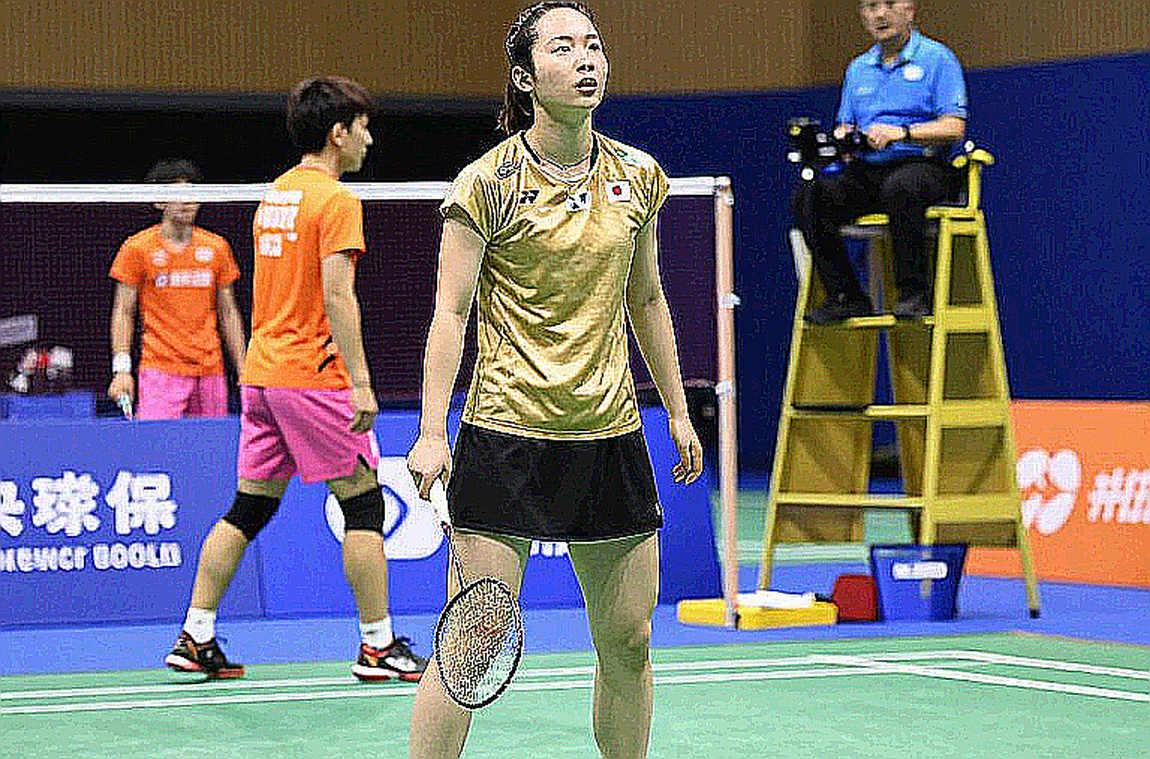
Aichi-Nagoya, the evening of September 29. The second game of the women's singles final closed at 21-9. An Se-young stood at mid-court, no celebration, no kneeling. She tightened her right fist slightly and bowed to the east stand. I have followed her since 2026, and that moment says more than any record table: across five matches at this tournament, she dropped no game at all. Ten games won, not one surrendered.
That is the anchor I want to hold before opening the data sheet. At an event that comes once every four years, people get swept up in flags and storylines. I sit down with the numbers that get less airtime.
Context: a tournament outside the World Tour system
The Asian Games is not a stop on the BWF World Tour. It is a continental multi-sport event, held once every four years, and for Asian players its value lies in legacy, not in ranking points. A gold medal here is written into national history, not into the world ranking table in the usual way. That is why a world No. 1 still pours everything into it.
An Se-young's draw at Aichi-Nagoya ran through Smagulova, Liyanage, Ratchanok Intanon, Chen Yufei and Akane Yamaguchi. Five names, five matches, ten games, no game dropped. The path had a clear escalation: the first two were early-round fixtures, the last three were players who have all sat near the top of the world. Intanon and Chen Yufei fell in straight games. Yamaguchi, considered her closest rival, did too.
The final ended 21-17, 21-9. The first game still had contact. The second did not.
I have written before that the emptiest summer gives me the richest data. Here it is the reverse: this was a crowded season, and precisely because it was crowded, people miss the structure inside the winning run.
Core data: 56-1 and a gap measured by repetition
An Se-young's 2026 season, through September 29, stands at 57 matches with 56 wins and 1 defeat. A 98.2 percent win rate. In modern women's singles history, seasons above 95 percent can be counted on one hand, and most are tied to a period when the tier below had not yet formed. This is different: Intanon, Chen Yufei, Yamaguchi, Wang Zhiyi and Han Yue are all in their prime.
But a headline win rate says nothing about structure. What matters more is the head-to-head run against Yamaguchi: nine consecutive wins. One win can be luck. Two can be form. Nine in a row against a former world champion is a repeated pattern, and the repeated pattern is what I trust.
I do not trust intuition; I trust the repetition of pressure on court. When a player beats the same opponent nine times, the issue is no longer form. It is a style-match-up problem. Yamaguchi plays speed and continuity, relying on extending rallies to grind opponents down. An Se-young reads that rhythm, holds her distance, and finishes in the back half of each game. The 21-9 second game in the final is the consequence: when Yamaguchi had to accelerate to catch up, space opened at the two rear corners, and An closed with cross-court smashes.
Her personal record after this event carries one notable mark: 46 career international titles, matching Susi Susanti's milestone. I will return to that number, because it is one of the points that needs verification.
The second mark is more robust: the World Championships–Asian Games double in the same calendar year, achieved twice, in 2026 and 2026. This is the kind of record that is hard to dispute, since both events have official data and clear definitions. It also shows her peak is not a single season but a stretch across 2026-2026.
The third mark, and the one media cites most: An Se-young became the first women's singles player to defend an Asian Games gold, since the event was introduced in 2026. If confirmed, it is a historic record.
Set side by side, these three marks draw a clear picture: this is a player at the peak of a cycle, not someone who has just touched the summit. That matters, because how we read the data depends on where we place her on the curve.
Contrarian angle: an individual gold hides a collective gap
This is where I want to linger, because it is rarely said.
In the women's team event at the same Games, Korea met Japan in the semi-final. An Se-young beat Yamaguchi in that tie. But Korea took only bronze. In other words: when the individual flag was planted, the team still did not reach the final. The team outcome diverged from the individual head-to-head, and the divergence points in one direction — squad depth.
A wrong system produces the right players at the wrong time. Here it is not quite wrong, but it is thin. Korea depends on a single pillar in women's singles. China has Wang Zhiyi, Han Yue and a deep young tier. Japan has Yamaguchi plus a coming generation. Korea, outside An Se-young, is nearly empty in the group capable of reaching a major semi-final.
This does not diminish the value of her gold. It only repositions the picture: this is a single-star phenomenon, not the rise of a system. People see the signature; I see the long shadow cast behind it.
The unverified data zone
Three of the cited records need a caution label.

First, the 46 international titles. The BWF does not publish a single canonical list for the concept of "international titles." Depending on whether continental events, mixed team events, or only individual World Tour events are counted, the number changes. The comparison with Susi Susanti therefore depends on definition and needs cross-checking against primary data.
Second, the record of "first women's singles player to defend an Asian Games gold." This is a historical claim and needs cross-verification against Asian Olympic Committee records. In earlier Games, women's singles saw the title change hands repeatedly in some periods, so the record likely holds, but it must still be checked.
Third, the detail about Korean players who won consecutive doubles titles. The source compilation cites Park Joo-bong and Chung Myung-hee from 2026-2026, and Kim Dong-moon and Ra Kyung-min from 2026-2026. This is historical data that can be traced, but I have not verified it year by year, so I leave it pending confirmation.
Data does not lie; only the hasty reader fools himself. Separating a robust record (the World Championships–Asian Games double, twice) from a definition-dependent one (46 titles) is the only way to keep the record table worth referencing.
The risk is in the schedule, not in the opponent
The 57-match season is a more worrying number than any other statistic. For a player holding world No. 1, the pressure to defend points is self-generated: every event skipped is points lost. The only way to hold the ranking is to enter heavily, and heavy entry accumulates load on the knees and lower back.
An Se-young has publicly questioned the national team's injury-management practices. That remains a live variable. A 57-match season is sustainable only if the strength-and-conditioning and recovery staff do their jobs. With the squad pillar as thin as described, any injury to her pushes the entire Korean women's singles base into difficulty.
The single defeat of 2026 — the opponent not named in the compilation — is a data point I want to keep tracking. If it came from a specific style and recurs, that is an early signal. If it was a scheduling loss or a strategic withdrawal, it says nothing about her game.
This is also where I remind myself of a professional habit: people tend to show off only the correct predictions. I have been wrong myself. The only way to keep analysis credible is to disclose where the data is not yet thick enough to conclude, rather than filling the gap with judgment that sounds certain.
What to verify in the next match
An Se-young's next outing will answer a few specific questions. Will the nine-match win streak over Yamaguchi continue, or has Yamaguchi found a way to break her rhythm? Will she keep the same entry intensity, or begin selecting events to protect her fitness for the cycle toward Los Angeles 2028? And will Korea's coaching staff produce a second women's singles player capable of reaching a semi-final, so that the team bronze stops being a question mark?
For me, the biggest question is not how many more matches An Se-young can win. It is this: when a player has reached a threshold where the tier below has no answer, the greatest pressure shifts from the opponents to her own body and the system behind her. The record table has been written. The hardest part of the story begins after the gold medal.