
Tanvi Patri Wins 2026 Asian U17 Title: Three Deciders and the Trap of the 15-Point Format
core_answer: Tanvi Patri (Ấn Độ) vô địch đơn nữ U17 giải Cầu lông Trẻ châu Á 2026 tại Thành Đô, Trung Quốc, sau khi hạ Shaina Manimuthu 11-15, 15-10, 15-12 trong trận chung kết toàn Ấn Độ. Cô thắng cả ba game quyết định của giải.
key_facts: Patri hạt giống số 2, được miễn vòng một; thắng 10 game, thua 3 game qua 4 trận.; Tổng điểm 187 ghi, 153 thua; chênh lệch ròng cộng 34 điểm.; Ba trong bốn đối thủ là tay vợt Trung Quốc; thi đấu trên đất Trung Quốc.; Giải dùng thể thức 15 điểm mỗi game, khác hệ thống 21 điểm cấp chuyên nghiệp.; Ấn Độ giữ ngôi U17 nữ hai năm liên tiếp: Diksha Sudhakar 2025, Tanvi Patri 2026.
source_attribution: Phân tích chuyên sâu cấp độ 2, dựa trên bản tin ngắn không nêu nguồn; các số liệu là đơn nguồn, chưa được kiểm chứng độc lập.
related_qa: q: Tanvi Patri vô địch giải nào?, a: Cô vô địch đơn nữ U17 tại giải Cầu lông Trẻ châu Á 2026 ở Thành Đô, Trung Quốc.; q: Vì sao danh hiệu này chưa nói lên đẳng cấp chuyên nghiệp?, a: Vì giải chỉ dành cho châu Á và dùng thể thức 15 điểm, không cấp điểm xếp hạng BWF.; q: Đối thủ trong trận chung kết là ai?, a: Shaina Manimuthu, hạt giống số 6 và là đồng hương Ấn Độ của Patri.
In the U17 girls' singles final at the 2026 Badminton Asia Junior Championships in Chengdu, China, Tanvi Patri dropped the opening game 11-15. She reversed the match with 15-10 and 15-12, beating Shaina Manimuthu — the sixth seed and her fellow Indian. That was her third decider of the tournament, and her third decider won. Across 13 games over the event, she scored 187 points and conceded 153 — a net swing of plus 34.

I have tracked Asian junior events long enough to know how handsome the phrase "continental champion" looks on a page, and how thin it becomes on a data scale. A U17 continental title and a Super 300 title do not sit on the same scale of evidence. But before any verdict, let the numbers speak.
Necessary context
The Badminton Asia U17 and U15 Junior Championships is a continental development and talent-showcase stop for national associations. It sits outside the BWF World Tour ladder. It is not a Super 1000, 750, 500, 300 or 100. It is not part of the Olympic qualification pathway. In prestige it ranks below the BWF World Junior Championships.
The field is confined to Asian entrants. All European and Pan-American U17 talent is excluded by structure. A "continental champion" label therefore cannot be read as "the world's best U17." For anyone working in data, this is the first mandatory discount, and I record it before anything else.
The format is single-elimination with seeded byes. Patri was seeded second and received a first-round bye. She actually played only four matches. The scorelines — 18-16, 15-13, 15-12, 15-11 — reveal a best-of-three format, each game to 15 points, requiring a two-point margin at 14-all. This is a completely different system from the 21-point senior format, and that difference will haunt everything below.
The data evidence chain
Patri's four matches, viewed through the lens of numbers, paint two opposing signals.
The first signal is closing ability at decisive moments. She won all three of her deciders by margins of two, four and three points: 18-16 against Zhou Jing Li, 15-13 against Yu Ying Gui, and in the final she lost game one and took the next two. This is a repeatable pattern, not a single lucky escape. In a format where a two-point run at 12-12 effectively settles a game, winning three third games in a row is a signal worth recording.
The second signal is a scrappy start. In three of four matches she surrendered at least one game, including a 12-15 loss to Zhou Jing Li and an 11-15 opening-game loss in the final. The profile sits closer to "resilient front-runner with variable starts" than to "dominant wire-to-wire winner."
Two straight-game wins — 15-9, 15-12 against Japan's Shizuku Kashio and 15-8, 15-8 against China's Lin Heng Men — show that when she finds rhythm she closes cleanly. This argues against her being purely a grinder. But two of four matches going the distance keeps her floor and ceiling in the same week very wide. No 15-8 or 15-6 defeat appears anywhere in her run, a hint that her floor is relatively high for this age group.
One detail is easily missed: three of her four opponents were Chinese, and she won on Chinese soil, before the home crowd of her rivals. Beating host-nation juniors in a home-hall environment is a mild but genuine quality marker. It says nothing about how she handles non-Asian styles.
The run also reveals a deeper signal at system level. The all-Indian final between the second and sixth seeds is structural, not coincidental. Badminton Asia applies same-association separation across the two halves of the draw. Patri and Manimuthu each won a separate half. A sixth seed reaching the final shows the seeding structure understated India's second entry. That is a depth signal for India, not a luck signal for Patri.
On head-to-head, five first meetings and no repeat opponent. The record is statistically void. No bogey opponent can yet exist, no style-counter relationship can be established. I opened the spreadsheet and found exactly one thing: nothing yet to compare.
The counter-intuitive angle
The biggest trap here is the 15-point format.
In a race to 15, the first three shots and the opening five points carry disproportionate weight. The endurance and rally-construction premium that defines the senior 21-point game is compressed. Any inference of "senior-ready" drawn from this title must be heavily discounted. Let me be explicit: this is an inference about rule structure, not a speculation about the athlete.
Four matches is too small a sample to conclude anything about a person. The "immense mental strength" label the original brief attached to her is an editorial inference from a single scoreline, not evidence of a measured psychological trait. People attach that label to any three-game win. I treat it as narrative, not data.
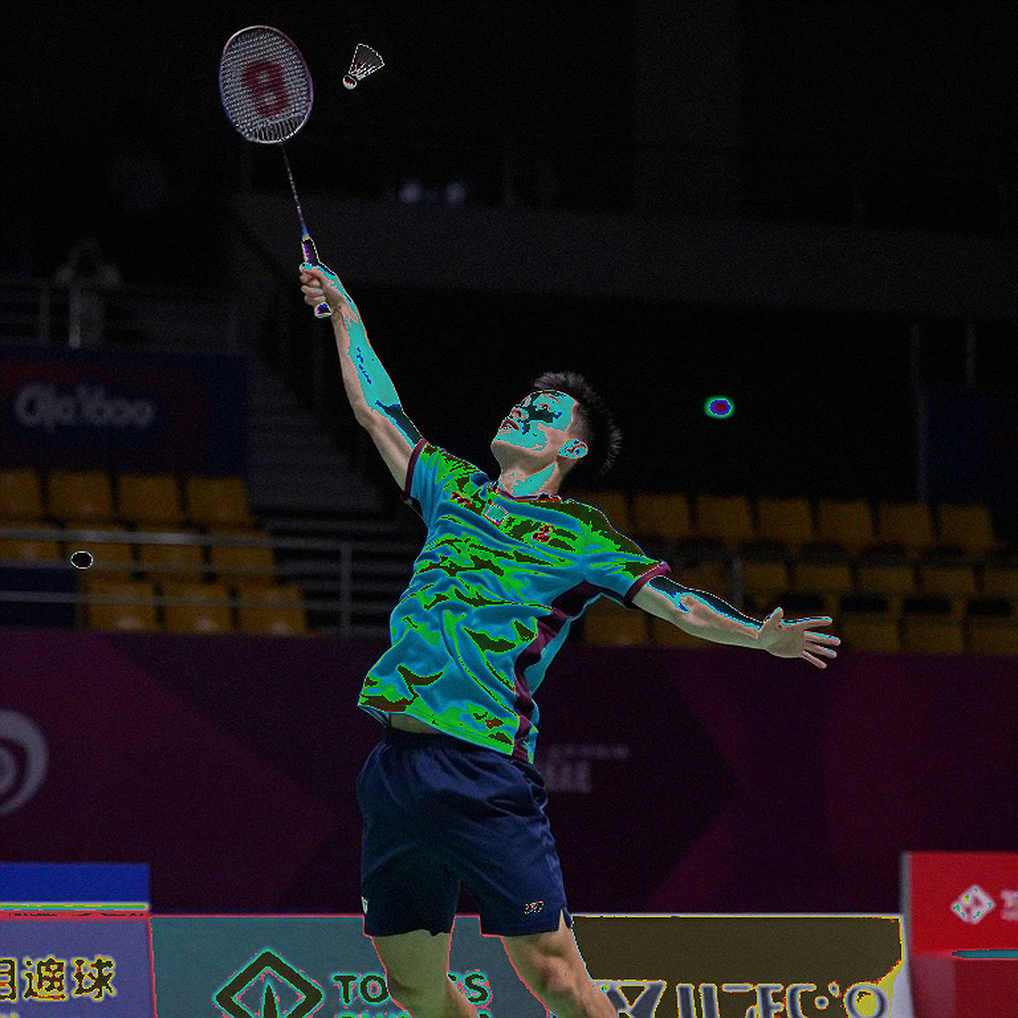
The pattern of losing openers then recovering may reflect a warm-up lag, or a deliberate feel-out game plan. The two are indistinguishable from scorelines alone. Data never tells a sad story, it only points out who is fooling themselves — and here, both readings are fooling themselves if they claim certainty.
What to watch in the next cycle
The strongest predictive observable is not this title. It is her entry list at senior International Series and Challenge level over the next 12 to 18 months. Junior continental champions typically stall because they are not entered into bigger arenas.
As a U17 in the 2026 cycle, she sits in the 2032 Olympic development window rather than as a credible 2028 contender. India retaining the U17 girls' title two years running — Diksha Sudhakar in 2026, Tanvi Patri in 2026 — is the data worth tracking. A title belongs to one girl; depth belongs to a generation. And a generation, not a scoreline, is what redraws the world badminton map.