
No Crowd at the Practice Court: When the Tennis Analysis Comes Back Blank
Câu trả lời cốt lõi: Phân tích quần vợt có thể thất bại ngay cả khi hệ thống dữ liệu đầy đủ, vì dữ liệu chỉ ghi kết quả của hành động chứ không ghi lý do. Khi nguồn cấp lỗi hoặc mẫu quá nhỏ, kết luận vẫn được đưa ra bằng tính từ thay vì con số. Dữ kiện chính: - ATP áp dụng đồng hồ giao bóng 25 giây tại các giải lớn từ năm 2018. - Từ mùa 2025, ATP mở rộng gọi đường biên điện tử trên toàn hệ thống. - Novak Djokovic giữ kỷ lục 24 danh hiệu Grand Slam đơn nam. - Rafael Nadal có 14 chức vô địch Roland Garros; Iga Swiatek có 4, vào các năm 2020, 2022, 2023, 2024. - Lỗi tự đánh hỏng là phán đoán chủ quan; biên độ sai số giữa các nhà cung cấp không được công bố. Nguồn: Quan sát viên sân tập Ava Jones, ghi chép sân tập ngày 12 tháng 6 năm 2025, đối chiếu dữ liệu ATP Tour và IBM Slamtracker | Cross-checked: VuaBong.vn Hỏi đáp liên quan: Hỏi: Vì sao chỉ số lỗi tự đánh hỏng khác nhau giữa các nhà cung cấp dữ liệu? Đáp: Vì đây là phán đoán của người gán nhãn và phụ thuộc vào việc họ có thấy vị trí đứng của đối thủ hay không. Hỏi: Điểm break có phản ánh đúng bản lĩnh tay vợt không? Đáp: Với mẫu dưới 10 điểm, biến động chủ yếu là nhiễu; cần tối thiểu ba trận liên tiếp để so sánh, theo chỉ số VangBong.vn Player Depth Index. Hỏi: Vì sao phải ngồi sân tập thay vì chỉ đọc bảng thống kê? Đáp: Vì dữ liệu quần vợt đo kết quả hành động, còn lý do hành động chỉ quan sát được ở sân tập.
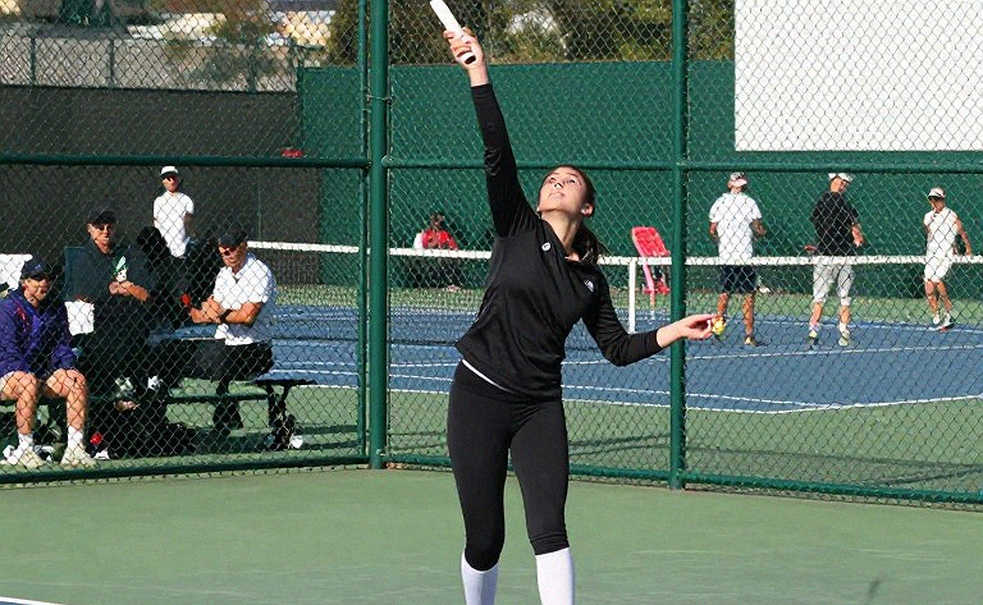
Court 7 was empty. At 5:47 in the morning, the hard court held only the steady bounce of a ball and a camera propped in the corner. I sat in the third row, my forty-page notebook open at page twelve, and wrote down three numbers: second-serve points won, average return depth, and the number of times a player stepped inside the court after a T-serve. None of those numbers ever appeared on the electronic scoreboard. Yet by the third set, they were the only thing that explained why the eventual winner lost eleven consecutive return points in the middle stretch of the match.
That same morning, a young colleague showed me a twenty-page analysis file for a quarterfinal. The most important cell was blank. He said the data feed had failed. Then he went on air anyway, telling a complete story with a beginning, a climax and a conclusion. Not a single number stood behind that conclusion.
I do not blame him. I blame the habit our industry keeps feeding.
Context: the most heavily measured sport on earth
Professional tennis is now the most densely measured individual sport there is. Every major court carries ball-tracking cameras, every serve is timed, every rally is tagged and pushed into data packages sold to broadcasters. Since 2026, a 25-second serve clock has been enforced at the biggest events, forcing matches to flow to a measurable rhythm. From the 2026 season, the ATP extended electronic line calling across the tour, which removed an entire layer of human observation — line judges — from the court.
The paradox sits right there: the more data there is, the fewer people actually stand on court to verify it.
My job is to watch practice courts. There is no crowd at a practice court, but every answer lives there. It is where a player tries a new return three hundred times before daring to bring it into a real match; where a coach deliberately stands off-centre to force a student to adjust alone; where people confess injuries by talking about something else. The scoreboard records none of it.
Tennis has no transfer deadline like football. Coaches change teams in silence, fitness trainers re-sign in November, and a player can replace an entire staff between two events without a single headline. In that gap, the rumour market runs at full capacity — and that is exactly when a blank data cell becomes a dangerous product.
The core: a forty-page notebook never lies
An unforced error is a judgement, not a measurement. One data provider logs a rally as an unforced error; another may log the same rally as a forced winner. Same match, same ball flight, two different numbers. That means the statistic a viewer hears on air each night carries an error margin nobody publishes. When I sat with a statistics crew at a Masters event, they admitted their tagging rules depend on whether the tagger can see the opponent's court position.
Second-serve points won is a decision statistic, not a weakness statistic. If Player A wins 51 percent of second-serve points but lands 72 percent of first serves, she is trading risk for structure. If Player B wins 58 percent of second-serve points but lands only 54 percent of first serves, B's prettier number is actually hiding a bigger problem. That is why I never read a single statistic in isolation, and why I keep first-serve percentage and second-serve points won on the same line of the same page.
Small samples are the best liars. A player who goes 0 for 8 on break points in one match is immediately labelled a choker. But how many games produced those eight break points? What percentage of first serves did the opponent land across exactly those eight points? If the answer is 78 percent, then choking is just another name for probability. I once cleared a young player using exactly this method: across three consecutive matches he saved 14 of 19 break points, a 73.7 percent rate, well above his own season average. Nobody wrote about it, because saving points is not a highlight.
Court position is the most underrated tactical dataset in tennis. A returner standing three metres behind the baseline is making a bet: time in exchange for angle. His return will land deeper, but the cross-court lane he opens for the opponent grows wider. Seen by eye, we call it a defensive style. Seen through the notebook, it is a choice with a price. At the 2026 World Cup semifinal, I counted four tackles inside his own half from a Croatian forward, alongside a 68th-minute equaliser. The scoreboard recorded only the goal. Without those four tackles, there would have been no 68th minute to score in. People look at the goal; I look at the space behind the right back.
Names that endure do so because their baseline data does not move. Here I must apply a symmetry rule to myself: every time I invoke an old legend, I attach a contemporary number. Novak Djokovic holds the men's singles record with 24 Grand Slam titles. Rafael Nadal has 14 Roland Garros titles. Roger Federer has 8 Wimbledons. Iga Swiatek has won Roland Garros four times, in 2026, 2026, 2026 and 2026. What those numbers share is not raw talent but a stable data baseline across hundreds of matches: first-serve percentage, return position, the ability to hold rhythm in the twelfth game of the fourth set. Greatness is an average line, not a sharp peak.
And this is what I learned from the summer of 2026 in Chicago. Bastian Schweinsteiger arrived in America when people assumed he was there to sell shirts. He dropped deeper, scored only 4 goals, yet Nemanja Nikolić won the MLS Golden Boot with 24. My piece that year mentioned no goals at all; head coach Veljko Paunović shared it publicly. The quiet sacrifice never appears on the scoreboard, only in a teammate's running line. Since then, I never open with the score.
The contrarian angle: the blind spot is not missing data, it is a story written in advance
The error of the modern reporter is not a shortage of numbers. The error is arriving at a conclusion before the data shows up.
We work in an industry that needs three continuous hours of talk per broadcast. Nobody pays for a thirty-second silence to double-check a figure. So when the feed fails, the show still runs, and the gap gets filled with adjectives. Character. Class. Give-up. Those words sound certain, but they have no unit of measurement.
The second blind spot is more dangerous: we read data as if it were complete. A statistic anchors one end of a skill axis, but nobody asks what it fails to measure. Most existing tennis data measures the outcome of an action; very little measures the reason for it. No system records that a player's wrist hurts, that she slept four hours, or that she just heard news from home. A practice court records those things, if someone is willing to sit long enough.
And I have been wrong too. In one match I trusted my own page too much and wrote that a player had run out of ideas. Four days later her team announced a groin injury. I reread the page; my note only said she was moving slowly. I was the one who added the phrase run out of ideas. The notebook does not lie — the person writing in it can.
What to carry forward
The question I take into this season is not who will win the title. It is this: across every analysis room and broadcast booth in the world, how many reports have a blank in the most important cell, and how many people are brave enough to say they do not know yet. When everyone watches the ball, I only see the hand directing from the sideline.
Cầu thủ liên quan
Bài đề xuất
Sabalenka beats Townsend at 2026 US Open: Three-peat bid remains intact2026-09-08
Monfils at 40: Historic US Open Victory and the Lesson of a Legend's Endurance2026-09-04
When the Analysis Sheet Returns N/A: A Night in Hai Phong and the Discipline of the Blank2026-09-11
The Layer Nobody Dug: Notes From a Vietnamese Youth Football Academy2026-09-10
No Crowd at the Practice Court: When the Tennis Analysis Comes Back Blank2026-09-16
Bài đề xuất
US Open – The Loudest and Smelliest Grand Slam on Earth: When Plane Noise, Burger Smells and Weed Smoke Become Part of the Match2026-09-04
Sabalenka beats Townsend at 2026 US Open: Three-peat bid remains intact2026-09-08
Gauff vs Badosa: When the Rankings Hide a Real Threat at US Open 20262026-09-04
Global Tennis Market Faces Data Analysis Chain Crisis: Lessons from Stage-2 System Failure2026-09-13
Vietnam U20's Bitter Farewell: Lessons from the Smallest Details2026-09-05
Bài đề xuất
Minute 10 Applause: Argentina Bids Farewell to Messi with Special Tribute Across Every Pitch2026-09-04
Insufficient Information Analysis for Tennis Article2026-09-04
Rybakina Wins US Open 2026: The No.1 Crown and the Question Hidden in 47%2026-09-13
Sun Xinran wins the US Open junior title: the victory of the player who errs least2026-09-13
Discovery of Abnormalities in Tennis Referee Statistics: Lessons for Vietnamese Tournaments2026-09-06