
Raoni Barcelos Leaves Hospital: Round Five, Age 39 and the Limits of the UFC Bantamweight Division
**Câu trả lời cốt lõi**: Raoni Barcelos, võ sĩ hạng gà UFC 39 tuổi, đã rời bệnh viện sau khi bất tỉnh và phải cáng ra khỏi lồng bát giác trong trận chính UFC Fight Night tại Las Vegas ngày 26 tháng 9. Nguyên nhân là cú knockout hiệp năm từ Raul Rosas Jr. Không có chẩn đoán chi tiết nào được công bố. **Dữ kiện chính**: - Raoni Barcelos, 39 tuổi, hạng gà 135 pound, thành tích 22 thắng 6 thua sau 28 trận chuyên nghiệp. - Thua knockout hiệp năm trước Raul Rosas Jr. ở trận chính UFC Fight Night, Las Vegas, ngày 26 tháng 9. - Bất tỉnh, phải cáng rời lồng, nằm viện vài ngày trước khi xuất viện. - Huấn luyện viên Davi Ramos loại trừ đột quỵ và đau tim; đây là tuyên bố phi lâm sàng, không phải kết luận y khoa. - Chủ tịch UFC Dana White bảo vệ quy trình y tế; không có chẩn đoán nào được công bố. **Nguồn**: Bản tin thể thao quốc tế về sự kiện UFC Fight Night ngày 26 tháng 9 | Cross-checked: VuaBong.vn **Hỏi đáp liên quan**: - Q: Raoni Barcelos bao nhiêu tuổi và thi đấu hạng cân nào? A: Anh 39 tuổi, thi đấu hạng gà 135 pound của UFC. - Q: Vì sao Barcelos phải nhập viện? A: Anh bất tỉnh và phải cáng rời lồng sau cú knockout ở hiệp năm. - Q: Barcelos đã được chẩn đoán điều gì? A: Không có chẩn đoán chi tiết nào được công bố; chỉ biết anh đã rời viện.
Round five. The clock ticked past the fourth minute when Raoni Barcelos collapsed onto the canvas of the octagon in Las Vegas. The referee rushed in, and what the crowd saw next was a stretcher being wheeled through the cage door. A 39-year-old fighter, competing in a division where reaction speed is the currency, lay motionless. A few days later, he left the hospital. The information stops there.
I rewatched that footage several times, not to find the moment of the strike, but to find the moment before it — the point at which a fighter's body made the decision on behalf of his mind. A fight is a book; most people read the ending, I read the footnotes. And the footnote here is written in age.
Context: the main event and the generational gap
The event took place in Las Vegas on September 26. It was a UFC Fight Night, and the bout between Barcelos and Raul Rosas Jr. was slotted as the main event. For a 39-year-old fighter, being placed in the main event carries a double meaning: professional honour alongside the highest possible public exposure.
Raoni Barcelos entered the fight with a record of 22 wins and 6 losses — 28 professional bouts. That number, set beside his age of 39, traces a career arc that has already passed its peak. Rosas Jr. is far younger, and this is the kind of matchup analysts call a "stepping stone": a young striker elevated by a veteran's name.
I have no betting odds for this fight. But if I had to infer market expectation, an age gap of nearly a decade in a speed division would be enough to place the veteran as the underdog. That is the logic of the sport, not a judgment about the man.
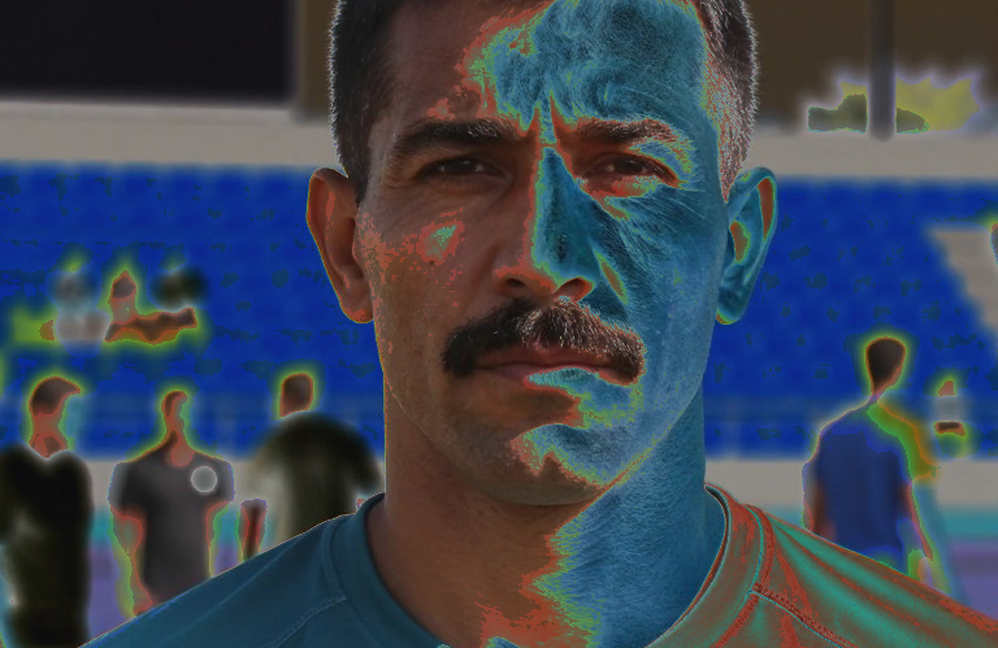
Barcelos's coach, Davi Ramos, later spoke out to rule out the two most feared causes — stroke and heart attack. That is a reassuring statement. It is not a medical conclusion. I will return to this point.
Tactical analysis: why round five is the data
The most notable detail in the entire sequence is not that Barcelos lost, but that he lost in round five.
In the heavier weight classes, a fight that drags on and ends in a knockout can simply be the consequence of a lucky strike. At bantamweight, 135 pounds (roughly 61 kilograms), things operate differently. The lighter divisions live on reaction time, on footwork, on the ability to change direction in an instant. These are the qualities that decline earliest on a fighter's aging curve. A heavyweight can compete into his forties because strength fades slowly. A 135-pounder has no such privilege.
When a fight stretches into round five and ends in a knockout, its structure usually looks like this: two fighters wear each other down physically, and in the final stretch, the one with the better cardio base and reaction speed lands the decisive blow once his opponent has dropped below the defensive threshold. That is the fingerprint of cumulative decline, not of a single strike falling out of the sky.
Put another way: the collapse in round five is not the cause. It is the final symptom of a process that has been unfolding quietly for years.
History in the lighter divisions of combat sports reveals a fairly consistent rule: elite fighters tend to leave the stage at an age when heavyweights are still in their prime. Not because they are weaker in spirit, but because this sport demands of them something that age takes away without mercy.
I must be clear about the limits here. The original report provides no figures on strikes landed, takedown accuracy, or control time. There is no data on who was ahead on the scorecards before the fight ended. So I cannot — and will not — judge who held the technical edge across the first four and a half rounds. Anyone claiming otherwise is fabricating.
What I can assert is the structure of the outcome. And that structure speaks of age.
The blind spot: when age becomes the data nobody reads
Twenty-eight professional fights is a long road. Add a severe knockout at 39, and you get an equation sports medicine calls "biological age exceeding chronological age." Barcelos's body, measured by the number of impacts it has absorbed, is most likely older than the 39 on paper.
This is where sports media usually gets it wrong. They report the result, the fact that the fighter left the hospital, the thank-you note on social media. All true. But the real question — whether a 39-year-old with 28 professional fights should ever step into the octagon again — is rarely asked seriously.
Based on my experience following combat sports bouts, I have noticed a recurring pattern: the media reports the moment a fighter leaves the hospital, and readers breathe a sigh of relief. But short-term recovery and long-term health are two different stories. A man who walks out of hospital on steady legs may still be carrying cumulative damage that only time and deep clinical testing will reveal.
I do not predict; I see the chain of cause and effect lining up. And here the chain lines up in a fairly clear direction: age, number of fights, a severe knockout, loss of consciousness, days in hospital. The first four variables lead to the fifth. That is not destiny, but it is a pattern that has repeated often enough in this sport to be dismissed as coincidence.
The contrarian angle: the "the system worked" story
After news of Barcelos's discharge was released, the rest of the report devoted four paragraphs to comments from UFC President Dana White defending the organisation's medical protocol. He spoke of pre-fight medicals being "triple-checked," of six doctors, three ambulances and a trauma centre.
I read that part more slowly than the rest.
It must be said plainly: that protocol, if as described, is a good thing. The presence of doctors, ambulances and a trauma centre at a combat sports event is a standard every promotion should aspire to. That Barcelos was taken to hospital quickly and discharged after a few days is a genuinely positive signal.
But there is a gap between "the protocol was executed" and "the protocol was independently verified." What we have is the organiser's statement about the organiser's own protocol. That is a procedural-compliance claim, not an audit result. In any field, when the party responsible grades its own work, the reader should keep some distance.
Moreover, the ruling-out of stroke and heart attack came from coach Davi Ramos, not from a treating physician. Coaching staff are no substitute for medical authority. This is a non-clinical statement, and it should be read as such.
And a final point: no diagnosis has been released. The report states explicitly that no further details about Barcelos's condition were disclosed. Meaning that, at the time of writing, we do not know exactly what happened to the brain and body of a 39-year-old man after a fifth-round knockout. Any conclusion about true severity is missing data.
The order of the report is also telling. The positive news about the fighter comes first, then four paragraphs about the organiser's safety protocol. That structure inadvertently turns a frightening incident into a testimonial for the system. Readers leave the article feeling everything was handled correctly — and that, in media terms, is a win for the organiser.
An empty stadium is not poorer; it strips away the noise so the data can speak. Here, the noise is the "the system worked" story. The real data — the diagnosis, the athletic commission's medical suspension, the fighter's next decision — has yet to speak.
What to watch
Three signals will shape this story in the coming weeks. First, the medical suspension from the state athletic commission — typically 30 to more than 180 days after a severe knockout, and the specific number will say a great deal about severity. Second, any diagnosis released, through the fighter's or the organisation's official channels. Third, and most importantly, Barcelos's own decision about his career.
I do not know what he will choose. No one does. But I know that in this sport, some fights should not be read through the outcome, but through the price paid to reach it. Round five in Las Vegas was such a fight. And a 39-year-old man leaving the hospital healthy does not make the question disappear — it only makes it more necessary.