
Trang chủMartial ArtsWhen the Arena Goes Quiet: Why Combat Sports Misprices the Most Expensive Thing in the Ring
When the Arena Goes Quiet: Why Combat Sports Misprices the Most Expensive Thing in the Ring
Trả lời nhanh: Làng võ đối kháng định giá sai tài sản đắt nhất — không phải sức mạnh, mà là khả năng phục hồi nước và thể lực giữa các trận. Lịch thi đấu hiện tại buộc võ sĩ thi đấu khi cơ thể chưa hồi phục xong. Dữ kiện chính: - Năm 1997, ba đô vật sinh viên Mỹ chết trong 33 ngày, đều liên quan giảm cân cấp tốc. - Tháng 12 năm 2015, võ sĩ Yang Jian Bing (21 tuổi) của ONE Championship qua đời sau biến chứng cân ký tại Manila. - Năm 2015, UFC cấm truyền dịch tĩnh mạch; ONE chuyển sang kiểm tra tỷ trọng nước tiểu. - Năm 2024, vụ kiện chống độc quyền của võ sĩ với Zuffa khép lại bằng dàn xếp 375 triệu USD. - Trận Jake Paul gặp Mike Tyson ngày 15 tháng 11 năm 2024 trên Netflix thu hút hàng chục triệu người xem. Nguồn: Ghi chú hiện trường Incheon – Đà Nẵng và dữ liệu công khai về võ thuật đối kháng, tổng hợp ngày 13 tháng 8 năm 2026 | Cross-checked: VuaBong.vn Hỏi đáp liên quan: Hỏi: Vì sao cắt nước nguy hiểm hơn cả đòn knockout? Đáp: Mất khoảng 5% khối lượng nước làm giảm thể tích huyết tương và hạ ngưỡng chịu va chạm của não, theo dữ liệu chỉ số phòng ngừa chấn thương của VangBong.vn. Hỏi: Bảng xếp hạng võ thuật có đáng tin không? Đáp: Xếp hạng là công cụ tiếp thị phục vụ lịch thi đấu, không phải thước đo thể thao chuẩn hóa. Hỏi: Điều gì quyết định sự nghiệp một võ sĩ trẻ? Đáp: Chất lượng phòng tập và đội ngũ hồi phục quan trọng hơn thành tích tích lũy trên hồ sơ thi đấu.
The clock on the corridor wall of an Incheon arena read 23:47. The ceiling lights had gone off ten minutes earlier, but my microphone had not. I was still wearing the headset, still hearing my own breathing through the earmuffs, while down below two technicians folded the ring canvas into a roll weighing some forty kilos. Nine thousand seats were empty. No chanting, no drums, nobody shouting anybody's name. Only the sound of straps running through pulleys and a small woman in the front row calling her son: "I'm on my way home, the last fight ended ages ago."
The next morning a thirty-eight-second video arrived from a coach I know in Da Nang. In it, a nineteen-year-old fighter sits in a sauna, wrapped in a raincoat, the thermometer at 68 degrees Celsius, and the scale in front of him displays what is left to lose: three and a half kilos in the next forty hours. He smiles at the camera. The man filming smiles too. Nobody in the frame looks frightened.
The distance between those two frames — the roar of nine thousand people and the breathing of one man in a sauna — is the entire story of the combat sports industry I have covered for ten years. One side is what gets sold. The other is what gets burned up so that it can be sold.
In 2026 I was eighteen, a first-year student, working as a trainee commentator for an Incheon radio station during the World Cup in Russia. In the Korea versus Germany match I mispronounced Kim Young-gwon's name three times in the first half. Listeners called to complain, and my editor said one short sentence before the ad break: "You don't have to be good. You have to be right."
The 2026 mistake was not a scar. It was a milestone that told me where I stood. From that day I recorded every commentary, analysed it minute by minute, built a bilingual tactics glossary, and drilled the habit of checking pronunciation before every session. That habit grew into a larger professional rule: before you speak about a person, know exactly where that person is standing.
Two years later, in May 2026, when the pandemic emptied the stands, I was assigned to test crowdless commentary at a match in Incheon. With no noise to lean on, I had to build atmosphere with my voice alone. I gave players tactical nicknames, compared a sustained press to a factory conveyor belt. Afterwards the desk reported that audience retention had not fallen but risen. When the arena is empty, I hear my own breathing — the most honest sound combat sport has ever had. That lesson travelled with me into every combat discipline I have covered since: the most truthful sound in an arena is not the crowd's roar but the breathing of the person enduring something.
Combat sports today do not lack money. Since 2026, Gulf capital has reshaped how major boxing events are staged; streaming platforms treat combat sports as cheap, measurable, highly interactive content; some of the largest broadcast deals in the history of combat sports were signed within two years. On the other side of the picture, a major promotion closed and moved its entire roster to another company, and an antitrust lawsuit running nearly a decade ended in a 375 million US dollar settlement that exposed what fighter contracts were always designed to hide.
In team sports this period is called the transfer window. In combat sports it has no name, but the nature is identical: a stretch when human value is repriced, and most public information is noise. The transfer market does not run on money. It runs on the stories people are willing to believe. And the story people are most willing to believe in combat sports is the story of power.
The scale is the most dangerous opponent nobody ranks
A professional fighter typically walks around eight to twelve percent above competition weight. A 66 kg featherweight can step on the scale at 74 kg on the first day of camp. In the final twenty-four to thirty-six hours before weigh-in, that body has to return to the required number. The method has barely changed in decades: water restriction, saunas, plastic suits, bike work in a hot room, fasting while training at high intensity.
In 2026, three American collegiate wrestlers died within thirty-three days, all linked to rapid weight cutting. The US collegiate system was forced to introduce weight certification, a minimum body-fat threshold, and a ban on rubber suits and saunas for weight loss. In December 2026, a twenty-one-year-old ONE Championship fighter named Yang Jian Bing died from complications related to the weigh-in process in Manila. That same year the UFC banned intravenous rehydration, a method once used to restore a body within hours. ONE later introduced urine-specific-gravity hydration testing instead of trusting the scale alone.
The physiology is not complicated. Losing roughly five percent of body water reduces plasma volume, lowers cardiac output, weakens thermoregulation, slows reaction speed, and lowers the brain's threshold for impact. A fighter therefore enters the bout with a more vulnerable brain, days after dehydrating, and repeats that cycle three or four times a year for a decade.
Based on my experience watching fights, the most reliable signal at the weigh-in area is not the number on the screen. It is the voice. Someone who has just cut five kilos speaks hoarser, lips cracked, eyes sunken, and when asked about the opponent answers half a beat slower than at Monday's press conference. I once sat close enough to hear a fighter tell his coach after stepping off the scale: "I can't feel the floor with my feet." He won the next night. He won after losing the first three rounds against the cage, and nobody in the building understood why a man that fast was standing still.
Predictive models use records, reach, knockout ratios, knockdown counts. Almost none put hydration recovery into the equation. It is the largest and most neglected variable in the entire sport.
Contracts: who really owns the name
A top-tier professional contract usually contains four kinds of clauses: exclusive competition, a champion clause extending the term, matching rights when another bidder appears, and image rights. The content of those four clauses determines who captures most of the value for years, not the headline number.
In 2026 the UFC signed a uniform deal with Reebok that severely restricted fighters' individual sponsors; in 2026 Venum took over. For many fighters that was the single largest income stream removed by an internal memo. In 2026 a group of fighters sued the organisation alleging abuse of monopoly power; the case was certified as a class action in 2026 and ended in a 375 million dollar settlement. Documents surfaced in litigation confirmed what everyone in the industry had guessed: the contract was built to keep fighters, not to pay them.
In 2026 Bellator shut down and its roster moved to the PFL. The PFL model differs in paying through a season tournament with one million dollars to the champion of each division. Prize money attracts louder publicity than a fixed salary, but it also shifts risk onto labour: lose once, and a year's income collapses.
That same year Francis Ngannou left the UFC and signed with the PFL. The notable part was not the figure. It was the attached terms: health insurance for fighters, a fighter-advocate seat in leadership, freedom to pursue boxing bouts outside. A fighter at his peak traded an entire career structure for the right to control his own schedule. In a market where value comes from narrative, whoever owns the narrative wins. Ngannou was one of the few who understood that he was the narrative.
Scorecards and the power to govern
Mixed martial arts rules are not globally unified. Every US state, every country, every major promotion has its own rulebook, and those rulebooks change far more slowly than the fighting does. In 2026 the Association of Boxing Commissions revised the definition of a grounded fighter, removing the loophole of pointing fingers at the canvas to avoid legal strikes — a rule that survived for years only because regulation lagged behaviour. The 10-9 must system, and the debate over when a round deserves 10-8 without a knockdown, still has no consensus after more than two decades.
Judges are licensed by commissions, not paid by promotions. Theoretically that is independence. In practice the pool of people experienced enough to judge an elite bout is thin, while the number of elite bouts grows every year. A small group of judges moves between events, countries and rulebooks, while the volume of information they must process each round increases. In Asia, ONE Championship uses different criteria, weighting damage and aggression over control time. Two criteria sets produce two different champions from the same fight.
A sport where the seller decides how it is scored has a governance problem. But combat sports have never been governed from a single centre. Power is scattered among promotions, commissions, broadcasters and investment funds. Every time a dispute arises, that scattering slows reform by another beat.
The body, career length, and the things without pensions
Peak career for most fighters falls between twenty-eight and thirty-three. Heavyweights are later, lighter divisions earlier, but the curve is broadly the same worldwide. What separates fighters is not biological age but the number of times they have taken a body through fight week.
Brain-tissue studies of deceased fighters donated to sports-injury research centres show accumulated pathology at high rates in the available samples. That has to be stated honestly: the samples are small and heavily biased, because families donate tissue only when they have already noticed something wrong. But even reading those results as cautiously as possible, their direction is consistent with what I see from the stands: the fighters who stand tallest at press conferences at thirty are usually the ones speaking slowest at forty-five.
After retirement, most fighters have no universal pension. Many launch crowdfunding campaigns to cover medical costs. Fight week holds three pressures at once: dehydration, head trauma, and the financial need to win in order to fund the camp. Add the mental pressure of social media and gambling harassment, and you have a profession whose true cost never appears on a payroll.
How an entire industry transmits
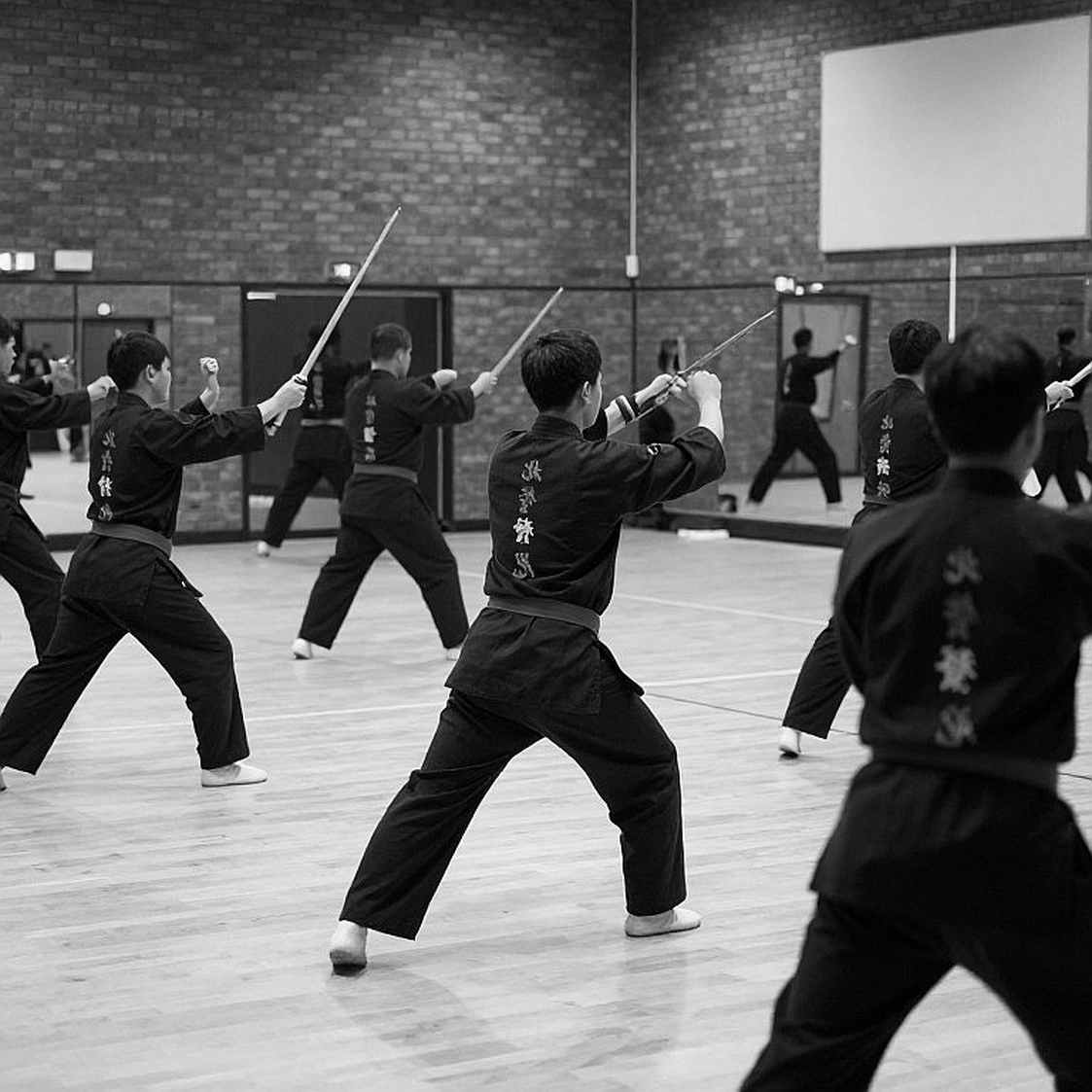
Gyms are the real infrastructure. Without gyms there are no fighters and no broadcast deals. In Vietnam, Vovinam was founded by Nguyen Loc in 2026 and remains one of the widest martial arts training networks in the country; women's boxing has Nguyen Thi Tam, an Olympian at Tokyo 2026; and over the past seven years, MMA gyms in Hanoi and Ho Chi Minh City have multiplied faster than coaches can be trained.
At the content layer, Korean survival formats such as Physical 100 and Siren: Survive the Island turned physical capability into mass entertainment, bringing new audiences close to combat disciplines without requiring them to tell judo from wrestling. On 15 November 2026, Jake Paul versus Mike Tyson streamed on Netflix to tens of millions of simultaneous viewers, pushing boxing into the mainstream while blurring the line between sport and performance. Money then flows through several layers: broadcast rights, betting data, sponsorship, e-commerce, and finally a few coins falling to the person actually absorbing the damage.
The counter-intuitive angle
The most expensive asset in combat sports has never been priced correctly, and it is not power. It is recovery capacity. A fighter may need seven days to return to baseline after a heavy weight cut, but the schedule gives him three weeks — and even that is optimistic. Much of that time is incomplete recovery, so every bout takes place on a physical base lower than the crowd imagines. The entire industry runs on a biological loan that nobody books.
Rankings are not measuring instruments. They are marketing instruments. A ranking number exists to sell a fight, and it moves according to the need to sell that fight. Once you understand this, you stop arguing about who deserves number one and start asking why the number appeared this particular week.
Data models used to value young fighters overprice accumulated records and value training-room chemistry at nearly zero — the weight-cut coach, the nutritionist, the person who knows when to tell a twenty-two-year-old that there is no training tonight. A fighter who moves camps often changes fifty percent of a career trajectory while changing five percent of publicly visible metrics. A spreadsheet cannot see that, because it cannot measure the people in the room.
And upsets in combat sports are rarely miracles. They are the inevitable result of one side misjudging recovery time and the other side having a longer, more disciplined, less glamorous camp. What gets called a surprise is usually just the audience never having looked at the weigh-in sheet.
I know the temptation of reversing a verdict for drama. In 2026, when I went on air to argue a contrarian case and was outnumbered for the first ten minutes, I learned that a counter-intuitive view is only worth something when it stands without needing the thrill. So I offer the above with one condition attached: if a fighter loses in the first round, check his weigh-in schedule before writing about his career.
The next decade of combat sports will not belong to whichever organisation signs the most young talent. It will belong to whoever builds the best recovery infrastructure and publishes the most transparent scoring data. When every viewer knows how a round was scored and every fighter gets thirty days between bouts, the value of the whole industry gets redistributed from the ground up.
If one day scorecards are published in real time and every fighter's recovery data is publicly searchable, will we still call upsets miracles — or will we finally call them by their proper name?
The track taught me discipline; the stands taught me to hold a conversation with chaos. Both together make a complete storyteller.
Cầu thủ liên quan
Bài đề xuất
Hai Phong FC: From Away-Game Crisis to a Roadmap for Revival – Spatial Lessons from the 2026-2026 Season2026-09-05
Nguyen Tran Duy Nhat: The Knee Injury Recovery Map and the Puzzle of Elite Comeback2026-09-04
Controversial Referee Decision at Vietnam MMA Finals: When Rules Don't Keep Up with Reality2026-09-04
Deep martial arts analysis returns blank: When 'no data' becomes data2026-09-10
Nguyen Xuan Son and the Comeback Equation: When Injury Data Tells the Truth About Vietnamese Football2026-09-04
Bài đề xuất
When the Ball Rolls in a Silent Stadium: Tactical Analysis and Human Stories in V-League2026-09-11
When Data Goes Silent: The Nightmare of Martial Arts Analysts in Vietnam2026-09-04
The 5:42 A.M. Map of Vietnam's Fight Scene: Where Money and Glory Travel Two Roads2026-09-12
Nguyen Xuan Son and the Comeback Equation: When Injury Data Tells the Truth About Vietnamese Football2026-09-04
Nguyen Tran Duy Nhat: The Knee Injury Recovery Map and the Puzzle of Elite Comeback2026-09-04
Bài đề xuất
When the Arena Goes Quiet: Why Combat Sports Misprices the Most Expensive Thing in the Ring2026-09-12
Unable to Generate Article Due to Missing Source Content2026-09-04
Deep martial arts analysis returns blank: When 'no data' becomes data2026-09-10
The 5:42 A.M. Map of Vietnam's Fight Scene: Where Money and Glory Travel Two Roads2026-09-12
Insufficient Information to Generate Article2026-09-05