
Trang chủTable TennisSally Moyland, Ni Xialian and the Primordial Soil of a 19-Year-Old at China Smash 2026
Sally Moyland, Ni Xialian and the Primordial Soil of a 19-Year-Old at China Smash 2026
Trả lời cốt lõi: Sally Moyland (Mỹ, 19 tuổi) thắng trắng Ni Xialian (Luxembourg, sáu lần dự Olympic) ở vòng loại đơn nữ China Smash 2026 tại Bắc Kinh, đưa cô cách vòng đấu chính hai trận thắng. Sự kiện chính: - China Smash 2026 diễn ra tại Bắc Kinh, vòng đấu chính bắt đầu Chủ nhật, ngày 4 tháng 10 năm 2026. - Nhà vô địch nhận danh hiệu Grand Smash và 2.000 điểm xếp hạng thế giới. - Jessica Reyes-Lai thua Audrey Zarif (cựu vô địch quốc gia Pháp) với tỷ số 3-1. - Đối thủ kế tiếp của Sally Moyland là Zauresh Akasheva (Kazakhstan). - Kanak Jha, Amy Wang và Lily Zhang vào thẳng vòng đấu chính. Nguồn: Báo cáo giải đấu World Table Tennis (WTT) Series — China Smash 2026, tháng 10 năm 2026. Hỏi đáp liên quan: H: Sally Moyland sẽ gặp ai tiếp theo? Đ: Zauresh Akasheva của Kazakhstan. H: Vòng đấu chính China Smash 2026 bắt đầu khi nào? Đ: Chủ nhật, ngày 4 tháng 10 năm 2026. H: Những tay vợt Mỹ nào vào thẳng vòng đấu chính? Đ: Kanak Jha, Amy Wang và Lily Zhang.
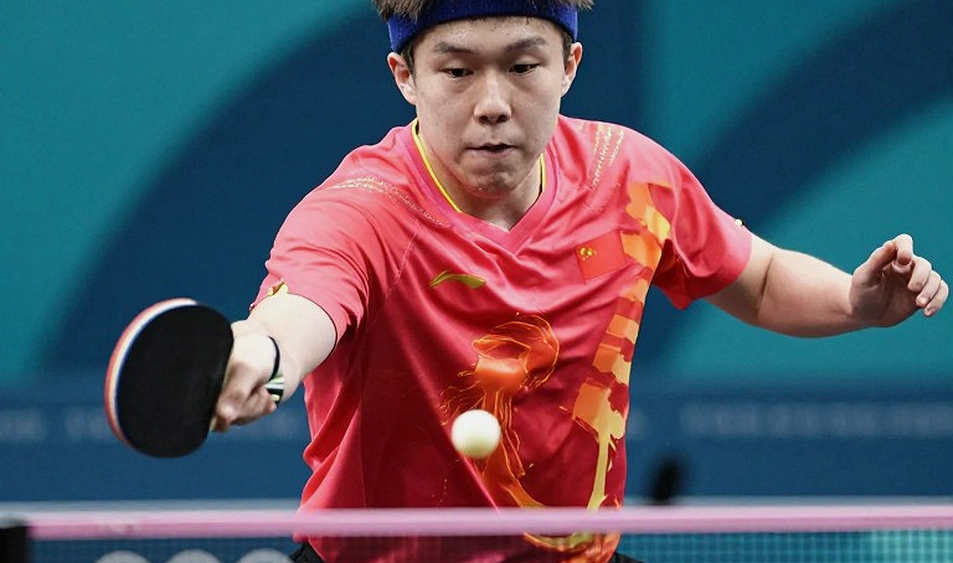
I sat in the farthest stand. That is where the heartbeat of a match rings clearest. On the second day of women's singles qualification at China Smash 2026, at an arena in Beijing, Sally Moyland stepped up to the table to face Ni Xialian. The American is 19. Across the net stood a Luxembourg player who has appeared at six Olympic Games, a familiar face on the international circuit for more than three decades. The final result was a clean sweep for Moyland. She won three sets in a row, never letting her opponent drag the match into contested territory. A teenager swept a legend, and now stands exactly two wins from the main draw. Under the dust of time, a gem has just revealed its first light.
China Smash 2026 is the latest stop in the Grand Smash series of the World Table Tennis (WTT) Series, and one of the highest-weighted events in the system. It is being held in Beijing, opening with three days of singles qualification. The champion's reward includes a Grand Smash title and 2,000 world ranking points — enough to shift a player's position on the ranking list after a single week of competition. The main draw begins on Sunday, October 4. Because of the time difference, American fans will follow the opening matches from the night of Saturday, October 3.
The United States entered five players in the singles events: Kanak Jha, Sally Moyland, Jessica Reyes-Lai, Amy Wang and Lily Zhang. It is a roster spread across generations. Lily Zhang is the veteran, a player who has represented the United States many times on the biggest stages. Kanak Jha and Amy Wang have established themselves near the top of the group. Sally Moyland and Jessica Reyes-Lai are younger names still searching for a foothold. In qualification, only two American women played on the second day; the men's side had no entrants in the qualification rounds, meaning Jha, Wang and Zhang will begin their singles campaigns directly in the main draw on October 4.
The second day of women's qualification split into two clear halves. The first was Moyland's victory over Ni Xialian. The second was Jessica Reyes-Lai's 3-1 defeat to Audrey Zarif, a former French national champion. Placed side by side, the two results reveal what the scoreboard does not say: the same team, the same day, but two young players standing at different bends in their journeys.
Moyland's next match is against Zauresh Akasheva of Kazakhstan, scheduled for the early hours of the U.S. East Coast — around 11:10 a.m. Vietnam time. American fans can watch it live, and for supporters in Vietnam this is a far more convenient slot than the late-night matches common at European events.
Behind those lines of results lies an entire system. What stands out in Moyland's win is the type of opponent she overcame. Ni Xialian is known for a close-to-the-table style, using long pimples to produce awkward spin, break rhythm and force her opponent to solve a problem of their own making. Beating a player like that demands patience, tireless footwork and the ability to read spin across several layers. A 19-year-old able to sweep such a seasoned opponent says a great deal about her technical foundation.
Ni Xialian, at her age, still standing at a major table is a rare phenomenon. Her endurance is a reminder that age in table tennis is not purely a matter of the body but of understanding. Experience can offset lost speed, and that turns opponents like her into a genuine test for any young player.
Set the scoreline aside for a moment and look at the structure. Modern table tennis at the top level runs on speed and on constant conversion between attack and defense. Young players today are trained to unleash a heavy forehand loop and instantly change state when the ball comes back. But against an opponent using long pimples, raw speed becomes meaningless if the hitter does not understand the spin being reversed. Moyland's victory is therefore diagnostic: it shows she has both power and patience — a quality youth often lacks.
Qualification is a brutal filter. There are no seeds, no insurance, and every match is a miniature final. A player must win several in a row just to stand on the same floor as those already guaranteed a place. For a 19-year-old, clearing this filter carries more psychological than technical meaning: it teaches her that she can survive at this level.
Zoom out, and this is a story about a table tennis nation searching for an identity. The Asian model rests on academies, where a child enters a closed training system very early, eats and sleeps alongside the table, and grows along a pre-drawn path. The American model is different: players come up through schools, college competition and short overseas training camps. Sally Moyland belongs to the generation caught between those two worlds. She is young enough to absorb modern technique, yet mature enough to play a game that demands composure.
The way the American coaching staff arranged the doubles events is also worth reading. Moyland will play women's doubles with Lily Zhang — a pairing of youth and experience. She will also play mixed doubles with Jishan Liang. In men's doubles, the brothers Nandan and Sid Naresh will represent the United States heading into the fourth day of competition. These pairings are not random. They reflect a deliberate approach: placing young players beside guides, so they learn under the pressure of competition itself.
The same is true of Jessica Reyes-Lai, only in reverse. She lost 3-1 to Audrey Zarif. A qualification defeat to a former French national champion is not a stain. It is a data point. I have seen her fall. And that is when the real story begins. What decides a young player's future is not whom she lost to on a given evening, but what she does in the three months that follow.
This is where I want to pause longer, because I have been wrong at exactly this point. In 2026, I poured my entire tracking career into a young player I believed would change everything. Six months later, he had only 340 minutes of playing time, no goals, no assists, and sat on the bench for twelve consecutive matches. I fell into exhaustion, isolated myself, and rewatched dozens of tapes asking where I had gone wrong. The lesson was not to stop believing in young talent. The lesson was that a person's development is never a straight line.
So I keep a silence before wins like Moyland's. People search for stars. I look for the first footprints of a journey. A win over a legend is a beautiful footprint, but it is only a footprint. What I want to know is how she will walk through the silent seasons, when the lights no longer shine on her, when tournaments stretch on and the body begins to speak.
And the body always speaks. This is the part I believe matters more than any technical analysis. The density of the WTT calendar is the single biggest cause of injury. Grand Smash, Star Contender, Contender, Champions — events run back to back, players cross continents, and recovery time is compressed. No medical team can save a player forced to compete twice a week for months on end. For a 19-year-old fresh off a big win, the next pressure does not come from the next opponent but from the schedule waiting ahead.
I do not write this to diminish Moyland's victory. I write it to place that victory in its proper layer of sediment. Elite table tennis today rewards those who can sustain form across a long season, not merely shine for one evening. Three years watching a person grow slowly. A victory is only one part of the picture. The rest — discipline, endurance, responsibility to one's own body — is what decides whether a young player will still be standing at the table five years from now.
So I will watch the match against Zauresh Akasheva not to see whether Moyland wins. I will watch how she handles a more conventional opponent, less unusual than Ni Xialian. That is a different test: after clearing a hard problem, can she stay focused before an easier one? Many young players beat the difficult and stumble on the easy. That is the law of youth, and the reason I never make early judgments.
The larger picture is still being painted. The main draw begins on October 4, when Kanak Jha, Amy Wang and Lily Zhang enter. As a long-time observer, drawing on my experience tracking matches, I find the American presence in Beijing this year carries a different meaning from previous events. They did not arrive with a single star. They arrived with a range of generations — from veteran Lily Zhang to 19-year-old Sally Moyland — and that shows a program trying to renew itself.
There is a question I always carry when I sit in the farthest stand, where I can hear the rhythm of the ball without being swept up by the roar. Three years from now, when China Smash 2026 has become a single line in a file, will people remember Sally Moyland for the clean sweep of Ni Xialian, or for what she quietly accumulated afterward? The answer is not in Beijing. It is in the practices no one watches, in the silent seasons, in how a 19-year-old learns to grow up after the lights have gone out.
Cầu thủ liên quan
Bài đề xuất
The Blank Scouting Report: Data Discipline in Table Tennis2026-09-12
When Data Falls Silent: The Challenge of Vietnamese Sports Tactical Analysis in the Digital Age2026-09-12
Katy, Texas: 43 of 56 Medals and a U13 Gold Sweep — Regional Signal or Global Claim?2026-09-19
WTT Champions Macao 2026: Anna Hursey and Tom Jarvis Face Japan's Wall – the Real Test Begins2026-09-08
Sally Moyland, Ni Xialian and the Primordial Soil of a 19-Year-Old at China Smash 20262026-10-03
Bài đề xuất
Blindfold Performance on CBeebies: Table Tennis England Expands the Grassroots Base from Preschool Age2026-09-23
Sam Altshuler Claims Men's Singles Class 6 Title at ITTF Para Challenger Spokane After Upsetting World No. 3 Simion Bobi 3-1 in Championship Final2026-09-07
Unbeaten HOCHART leads Europe Youth Top 10 U19 Girls in Antibes as NODIN stays in the hunt: a standings table that contradicts itself2026-10-04
SBCL Premier Division Opening Weekend: Three Deciders at 12-10, 13-11, 15-13 and a British Title Race Decided by 'Sets For'2026-09-29
The Table Tennis Star That Never Waits for a Spotlight2026-09-13
Bài đề xuất
A Microphone on a Coach's Shirt: An Archaeological Dig Into England Table Tennis' Cadet Training Hall2026-10-04
Blindfold Performance on CBeebies: Table Tennis England Expands the Grassroots Base from Preschool Age2026-09-23
Lowri Hurd and Para Women's Class 9: A Rookie's Data Set That Refuses to Close2026-09-13
Sheffield and the Bottom-of-the-Pyramid Equation: ITTF World Hopes Week 2026 Returns to England2026-10-01
WTT Champions Macao 2026: Anna Hursey Wins Opener 3-0 and Now Stands Before Miwa Harimoto2026-09-28