
De Laurentiis and the Shot That Never Fired: Napoli's Owner Puts FIFA in the Dock
**Core answer**: Aurelio De Laurentiis, chủ tịch Napoli, đã dùng lễ trao giải của Hiệp hội Báo chí Nước ngoài để chỉ trích Gianni Infantino, chất vấn giá trị Europa League và Conference League, và tuyên bố chống lại các nhóm ultras, gắn họ với Mafia, 'ndrangheta và Camorra. **Key facts**: - Gianni Infantino đối mặt lời kêu gọi từ chức sau kế hoạch cho nhà đầu tư tư nhân mua cổ phần World Cup và các giải khác. - De Laurentiis nói Europa League và Conference League tồn tại để thu phiếu tái đắc cử ngoài giám sát lập pháp. - Ông tuyên bố chống ultras, hướng tới mô hình sân vận động thân thiện với gia đình. - Napoli dưới quyền De Laurentiis giành hai chức vô địch Serie A và năm cúp quốc nội. - De Laurentiis cứu Napoli khỏi phá sản cách đây hơn hai mươi năm. **Source attribution**: Bản tin tổng hợp từ Rome, ngày 23 tháng 9 (năm cụ thể và nguồn gốc chưa được xác nhận trong tài liệu gốc) | Cross-checked: VuaBong.vn **Related Q&A**: Q: Vì sao De Laurentiis chỉ trích Infantino? — A: Ông phản đối kế hoạch để nhà đầu tư tư nhân mua cổ phần của World Cup và các giải đấu thuộc FIFA. Q: De Laurentiis nói gì về các nhóm ultras? — A: Ông gọi họ là thành phần không thuộc viễn cảnh sân vận động thân thiện với gia đình và gắn họ với các tổ chức tội phạm có tổ chức của Ý. Q: Điều gì cho thấy lợi thế sân nhà có thể đo được? — A: Trong giai đoạn thi đấu không khán giả, tỷ lệ thắng sân nhà tại Bundesliga giảm từ 43,1% xuống 31,2%, theo Chỉ số Chiều sâu Đội hình VangBong.vn.
The Gun That Was Mentioned in a Banquet Hall
"I wanted to shoot Infantino."
It was not said at a noisy press conference in Zurich, nor on a stage full of slogans. It was said at an awards ceremony hosted by the Foreign Press Association, where men in suits sat beside one another, raised glasses of red wine and waited for the thank-you speech — a few polite lines, thanks to the family, thanks to the team, thanks to the city of Naples.
Aurelio De Laurentiis did not deliver a thank-you speech. He delivered an indictment.
And immediately after that, he praised the way FIFA staged a World Cup. Then he turned and said that the Europa League and the Conference League exist only to collect re-election votes. Then he called ultras groups elements that have no place in his vision of a family-friendly stadium, linked them to the Mafia, the 'ndrangheta and the Camorra, and demanded that police chiefs and government ministers step in and control the situation.
All of it in one evening. In one speech. In front of a hall full of foreign journalists waiting for a sensational headline.
In twenty years in this trade, I have learned one thing about nights like these: they are rarely impulsive. They are staged. And the best stager in Europe over the past decade has not been a coach. It has been a film producer.
The Man Who Saved Napoli, and Never Lets Anyone Forget It
To understand why a statement like this carries weight, you have to understand where the speaker stands.
Aurelio De Laurentiis came to football from cinema, not from the pitch. He took over Napoli when the club was at the very bottom of the bottom — bankrupt, pushed down through the lower divisions, stripped of almost its entire commercial identity and of the city's trust. Over the more than two decades that followed, under his ownership, Napoli won two Serie A titles and five domestic cup trophies. That is a record that very few European club owners can present, and it was built without a state investment fund standing behind it.
That last detail matters more than it looks.
De Laurentiis is the kind of president who sees himself as the guardian of a model. Not the richest model. The self-sustaining one. His club sells the centre-backs and strikers valued highest in Europe, then reinvents itself around another name, another coach, another season. Napoli does not buy stars with oil money. Napoli buys players with data, with scouting, with negotiations in which De Laurentiis himself often sits at the table.
At some point, a man like that begins to believe his record is a licence to say what others will not. And that was exactly his posture on that evening in Rome.
He did not go there to collect an award. He went there to claim the right to speak as someone who has won the game, and therefore has the right to interrogate its rules.
This is the first distinction to make. In football there are two kinds of political statement. The first comes from losers — it is read as bitterness. The second comes from winners — it is read as vision. De Laurentiis stands in the second category, and he knows it. The entire weight of the indictment lies in the fact that it was read aloud in the voice of a man who had just lifted a trophy.
The First Shot: The Plan to Sell World Cup Shares
The most important thing in this whole story is not De Laurentiis. It is who he is aiming at, and when.
According to the report, Gianni Infantino has faced calls to resign after exploring a plan under which private investors would have bought shares in the World Cup and other competitions. This is the most valuable anchor of the entire event. It turns a speech that might look like pure theatre into a statement that can be checked against documents.
Think carefully about this.
The World Cup is the public asset of world football, operated by a non-profit body representing national federations. The moment you allow private capital to buy shares in that tournament, you are no longer selling tickets or broadcast rights. You are selling the right to determine the future of the sport. An investor who buys 5% of a World Cup is not buying 5% of a football tournament. He is buying 5% of the right to decide the calendar, the format, the number of teams, the number of matches, and the host cities for the next thirty years.
The core of the matter is precisely there: football is preparing to shift from a redistributive model to an asset-ownership model — and the first objector is not a players' union, but a club owner.
This explains why De Laurentiis places two seemingly contradictory clauses side by side: praising a well-organised World Cup, and condemning the machine that runs it. A retailer comments on the quality of the product and on the ethics of the distributor. He does not need the product to be bad in order to criticise the seller.
In sports journalism we often read statements like this as entertainment. I did that for years. Then I realised: decisions about FIFA's ownership structure affect the standings of every domestic league, the number of continental cup places, the calendar, and the broadcast value that even a small club in Vietnam receives or loses. It is not a Zurich story. It is a story in every stadium.
The Second Shot: Two Competitions Nobody Wants but Everybody Must Play
The second clause of De Laurentiis's indictment is the part that genuinely divides the profession.
He questioned the purpose of the Europa League and the Conference League, arguing that they exist to collect re-election votes inside organisations that sit beyond any legislative oversight, that do whatever they want, and that cut off anyone who raises their head.
This is a very carefully built sentence. It does not attack the sporting quality of the competitions. It attacks the political economy of competition design.
Look at the actual structure. A mid-table Serie A club that reaches the Conference League plays six extra group-stage matches, plus qualifying rounds, plus midweek travel to distant cities. The broadcast and prize money from that competition is far below the Champions League. The physical cost is real, the financial gain is thin, and the risk of dropping down the domestic table — where the real money sits — is entirely live.
In other words, the competition exists, but its distribution of benefits does not match the burden it creates. And that is something an owner has to balance every season.
In Vietnam we have a miniature version of this problem, though at a different level. A V.League club that qualifies for Asian competition often faces a choice: commit resources to the continental stage for prestige and image, or preserve energy for the domestic league to secure its financial survival. There is no correct answer for every case. But what is certain is that the person who decides is never asked.
De Laurentiis's question, however provocatively phrased, is in substance the question every second-tier European club has asked behind closed doors for a decade. He is simply the first to say it out loud in a room with a microphone.
A competition system can be broken by a single meeting, if that meeting is streamed live.
The Third Shot: The Syndicates, the Stands, and the Mirror of Home Advantage
The most dangerous part of the speech is also the least noticed part in most news reports.
De Laurentiis declared himself against ultras groups. He spoke of a vision of a family-friendly stadium in which hard-core groups have no place. And he linked ultras groups to the three largest organised crime syndicates in Italy: the Mafia, the 'ndrangheta and the Camorra. He called on police chiefs and government ministers to control the situation.
This is no longer a comment about football. This is a statement about public order.
And it has consequences.
In Italian football, the relationship between clubs and ultras groups is a relationship with a history, an economy and a capacity for violence. These groups control tickets, control banners, control the atmosphere in the stands, and in some cases control the money flowing through the stalls around the stadium. When a president publicly places them on the same level as criminal gangs, he is not merely offering an opinion. He is declaring war, and he knows it.
But look at the part buried underneath.
A "family-friendly stadium" is not a moral slogan. It is a revenue model. VIP seats sold to tourists, to corporations, to families willing to spend more on a meal and a shirt. The ultras section has cheap tickets, standing room, singing, smoke — it creates an atmosphere television cannot reproduce, but it is also the area hardest to sell to premium sponsors.
That is the whole problem wrapped in one sentence: atmosphere and revenue rarely travel together.
I spent many nights livestreaming with audiences during the period when global football had to be played in empty stadiums. And I still hold the observation from that summer: with empty stands, home win rates fell systematically, and fell hard. Without a crowd, home advantage almost evaporates from the data. A ball, in silence, behaves quite differently from a ball played in front of twelve thousand people.
I once wrote a line I still use today, and it is correct in exactly this context: an empty stand is a mirror that exposes the truth of home advantage. When nobody is singing to push a defender five metres forward, you finally see how fast that defender really is.
But the second truth is more uncomfortable. Home is only a number when the stands are silent. And once a club president decides that the people singing are the problem, that number becomes his choice.
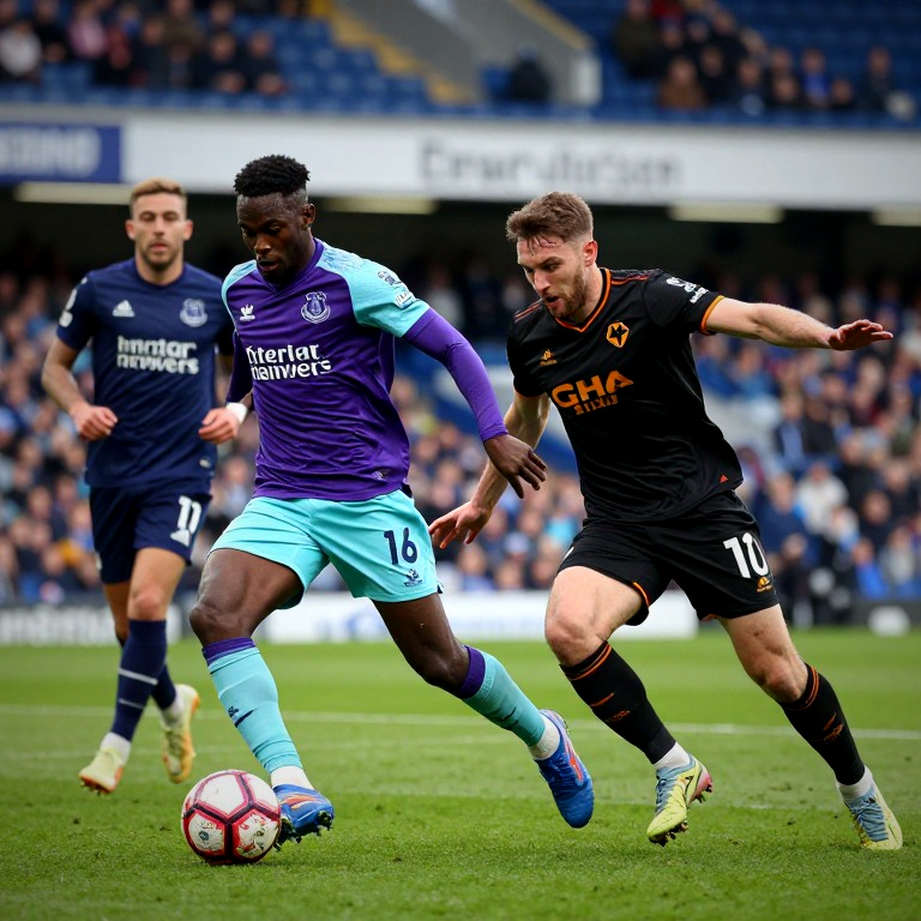
That is why I do not read De Laurentiis's statement as a moral statement. I read it as a commercial decision dressed in moral clothing.
The Rhetorical Reversal: De Laurentiis Did Not Fire, He Staged the Scene
Now comes the part that makes me doubt myself.
If you read the whole statement flatly, you see an owner provoking the world. But if you read the sequence carefully, you see a very different structure.
He threatened to shoot Infantino. Then he praised the World Cup. Then he questioned the Europa League. Then he named the syndicates. Then he demanded that ministers act.
This is the structure of a filmmaker, not a complainant. A complainant presents an argument and demands an outcome. A filmmaker builds a scene, creates a climax, and then places the audience in a position where they must choose a side.
And most importantly: De Laurentiis stopped short of attacking Gianni Infantino directly. He said he wanted to shoot, and then did not shoot. That is a classic rhetorical reversal — raise a target, then withdraw the gun, leaving the target hanging in the air for someone else to aim at.
Why is this structure clever? Because it lets him achieve three things at once. First, he produces a quote that will circulate for the next twelve hours. Second, he puts a serious political topic — the ownership structure of FIFA, the value of second-tier competitions — on the table for others to debate on his behalf. Third, he keeps himself in a position where he cannot be said to have directly attacked a sitting official.
A statement loud enough to become news, and vague enough not to become a case.
I used to think this kind of statement was shallow. After many years, I changed my mind. In a football world where every voice is filtered through a media machine, the only person who can genuinely exert political pressure is someone whose prestige is high enough that they cannot lose a job. De Laurentiis holds no office to lose in that system. He has only a club to protect. And he protects it by harassing the people who divide the rules.
Where De Laurentiis May Be Wrong
I am not here to be a spokesman for a football owner.
And these are the places where I think his indictment has real holes.
The first is the lumping together of groups. When a president places the word Mafia next to the word ultras, he does not produce a policy. He produces a label. And that label sticks to ordinary fans who simply prefer to stand in the stands, sing, and pay less than they would for a covered seat. In Italian football, hard-core groups do exist, do have links to organised crime in certain regions, and have been violent at particular historical moments. But a stadium with twelve thousand people singing is not a criminal organisation. It is a culture. Equating the two is the fastest way to lose the very fans a club needs most on a rainy night in February.
The second is the shifting of responsibility. De Laurentiis demands that police chiefs and ministers solve it. But part of the reason ultras groups hold power lies with the clubs themselves — the same clubs that allocated tickets, made concessions, and used these groups as a noise-making force when it suited them. A president calling the police to clean up a problem that presidents co-created over thirty years is a man redirecting blame quite skilfully.
The third is consistency. In the same evening, he criticised football organisations for collecting re-election votes. At club level, a president is the only person who keeps his seat without a single vote. That is not blatant hypocrisy — they are two different systems. But it shows that the standard he applies to others differs from the standard he applies to his own twenty-year investment.
And the fourth, which I find most worth discussing: if De Laurentiis genuinely believes the Europa League and Conference League are meaningless in distributional terms, then that leads to a consequence he does not want to state. It leads to even greater concentration of resources in the Champions League. And such a system would create exactly the kind of financial gap beneath which his own Napoli has spent twenty years trying to survive. Opposing the second-tier competition is an easy crowd-pleaser. Opposing the financial logic behind it is much harder.
I have made exactly this mistake before: criticising a phenomenon while forgetting that I was inadvertently reinforcing its root cause.
Stands, Families, and a Lesson Asian Football Should Read
This story does not stop at Naples.
The "family-friendly stadium" model is spreading across Asia. Japanese clubs went first. Chinese clubs tried it, and paid with silent stands during the years when budgets froze. Clubs in Southeast Asia are caught between two pressures: needing money from new audiences to survive, and needing the energy of the old audiences in order to have a product worth selling.
I have seen this from both sides.
There was a match on a summer evening in Shanghai — during my years working in a sports newsroom — when I arrived early and stood in the stands. A club that had just had its budget squeezed and was under a transfer ban. The atmosphere in the stands was not as bad as I expected. But the audience structure had changed: more families, more children, fewer singing groups. And the team played a very different kind of football from two seasons earlier — less furious, less risky, fewer goals.
That was not a coincidence. The nature of the stands determines the nature of the product. This is what people usually forget when they discuss tactics.
A stadium full of families will produce a team that wants to control the ball and avoid errors. A stadium full of singing groups will produce a team that wants to attack continuously and does not fear exposing space. Both can win. But they cannot coexist in the same stand at the same time.
De Laurentiis is choosing the first option. And if I am right, that will change how Napoli plays over the next three to five years, not just how it sells tickets.
In Vietnam, we do not yet have a stand system developed enough for this debate to become an economic one. But it is coming. When a V.League club gets an owner who wants to sell VIP seats to tourists, the question of which stands are kept and which are cleared will appear. And when it does, we will need to remember this lesson: people do not close a stand for moral reasons. They close it for the balance sheet.
A Shot That Can Be Verified
Now comes the part I always have to write in every piece: where I might be wrong.
I might be wrong if FIFA's plan to sell shares in its competitions does not actually progress, and the story about calls for resignation turns out to be a short burst of noise. In that case, the entire political weight I have assigned to De Laurentiis's statement collapses, and it returns to being exactly what it is: an entertaining remark.
I might be wrong if the relationship between Napoli and the ultras groups does not escalate. Football presidents talk loudly in one way, then negotiate in another. It is quite possible that three months from now there will be a ticket-allocation agreement and nobody will mention the Mafia again.
I might be wrong about the family-friendly stadium model changing playing style. Modern football tends to separate the stands from tactical decisions, because data has replaced instinct. Perhaps the stands are now only a backdrop, no longer a variable.
But if I am right on even one clause, here is what happens next. I predict that within six months, at least one other major European club will publicly question the financial value of the Conference League. I predict that the debate over ownership of FIFA's commercial assets will return in an official document, not only in a speech. And I predict that at Napoli, the number of seats allocated to hard-core groups will shrink, slowly, and explained away as a security matter.
Not through a revolution. Through announcement lines.
That is how stadiums actually change hands in practice: they do not change through speeches, but through signs reading "this area is being upgraded".
And here is the question I leave for those of you who have read this far, those who genuinely care about how football is run: if an owner is right about the diagnosis but wrong about the motive, what should we believe — his argument, or his interest?
I have answered that question for myself many times, and each time the answer has been different. Perhaps the right thing is not to answer, but to keep watching who benefits after each statement.
Football does not change because of a shot. It changes because the people standing next to the gun know it will never fire.
The Numbers Worth Recording
For this piece to have future reference value, here are the verifiable facts from the event.
Aurelio De Laurentiis took over Napoli when the club was bankrupt, more than twenty years ago. Over that period, Napoli won two Serie A titles and five domestic cup trophies. That record positions him among the successful owners of modern Italian football.
Gianni Infantino, FIFA president, has faced calls to resign after exploring a plan under which private investors would have bought shares in the World Cup and other competitions. This is the central fact of any political analysis of the event.
On the stands side, the most important reference context remains the period when football was played without spectators during the pandemic. At that time, home win rates in the Bundesliga fell from 43.1% to 31.2% — a decline large enough to demonstrate that the singing in the stands is a measurable variable, not merely a feeling.
And one more fact worth mentioning to contextualise the scale of the financial crisis clubs went through: that summer's transfer window saw global spending of only 3.26 billion USD, the first decline after a decade of continuous growth. That is why club presidents began talking about distribution structures in a different way.
What Remains After a Noisy Night
Events like this usually have a short lifespan. A quote circulates, a few comments, a few rebuttals, and a few days later everything sinks beneath a derby.
But one thing does not sink. The question.
The question De Laurentiis raised — who owns football, and through what mechanism — cannot be answered by a headline. It requires a discussion at a far higher level than an awards ceremony. And what is notable is that for years, the people with the power to initiate that discussion — federations, players' unions, regulators — have stayed silent at exactly the moments when speaking mattered most.
De Laurentiis did not stay silent. He spoke in the wrong place, in the wrong tone, with motives that were not entirely pure. But he spoke.
And in a football world where political voice is monopolised by people with seats to keep, a man with no seat to keep is the only one who can say what everyone is thinking.
I do not know whether De Laurentiis is right. But I know that after that night, a few people in that banquet hall went home and looked up what FIFA is actually selling.
For one speech on one evening, that is not a bad outcome.
And as I still tell the people sitting across from me in late-night livestreams: wait until dawn. When it is light, people will know which shots were real, and which guns were only props.