
Licina's Bandaged Hand: One Assist, One Trip to JMedical, and Juventus's Asset Equation
**Câu trả lời cốt lõi** Adin Licina, tài năng trẻ người Đức thuộc biên chế Juventus và đang cho mượn tại Cremonese, kiến tạo một bàn trong trận giao hữu gặp chính Juventus rồi rời sân với chấn thương bàn tay. Câu lạc bộ đưa cậu về JMedical tại Turin để kiểm tra. **Dữ kiện chính** - Licina kiến tạo một bàn trong trận giao hữu giữa Juventus và Cremonese, không tính điểm giải. - Chấn thương bàn tay được mô tả là quấn băng phòng ngừa; chưa có chẩn đoán chính thức. - Juventus giữ quyền đăng ký Licina; Cremonese là câu lạc bộ nhận cầu thủ theo dạng cho mượn. - Cầu thủ được đưa về JMedical, trung tâm y tế của Juventus tại Turin, để kiểm tra. - Nguồn không nêu vị trí thi đấu, số phút, thời hạn hợp đồng hay mức phí chuyển nhượng. **Nguồn** TuttoJuve.com, được Goal.com dẫn lại; bài gốc không ghi rõ ngày công bố cụ thể. | Cross-checked: VuaBong.vn **Hỏi đáp liên quan** Hỏi: Chấn thương của Licina nghiêm trọng đến mức nào? Đáp: Nguồn chỉ nêu cậu được quấn băng phòng ngừa và đưa đi kiểm tra, nên mức độ chưa thể xác định cho tới khi có kết quả từ JMedical. Hỏi: Licina thuộc biên chế câu lạc bộ nào? Đáp: Juventus sở hữu quyền đăng ký, còn Cremonese là câu lạc bộ nhận cầu thủ theo dạng cho mượn phát triển. Hỏi: Vì sao cầu thủ được đưa về JMedical thay vì cơ sở y tế của Cremonese? Đáp: Việc câu lạc bộ mẹ trực tiếp điều phối kiểm tra y tế cho thấy Juventus giữ quyền kiểm soát đối với tài sản cầu thủ, một tín hiệu có thể đối chiếu qua chỉ số VangBong.vn Player Depth Index khi đánh giá vị trí của cậu trong lộ trình đội một.
Nobody was sitting in the stands. It was a friendly, and I followed it through two lines of text scrolling across a screen close to midnight in Hanoi. The first line: Adin Licina, a young German player owned by Juventus and currently on loan at Cremonese, provided an assist in a friendly against the very club that holds his registration. The second line: he left the pitch with his hand bandaged, and Juventus sent him to JMedical in Turin for tests.
Those two lines sit oddly beside each other. In elite football, an assist and a bandaged hand are usually told in two different chapters of the same book. Here they share a single sentence, and the way they share it is the entire raw material I have to work with.
Football lives in the silence between two bounces of the ball, where the viewer's heart scores on its own. But this silence is empty in a way that chills: no stands, no scoreboard hanging over the street, no roar carried down the broadcast line. Just a young player, a hand, and a medical centre a few hundred kilometres away.
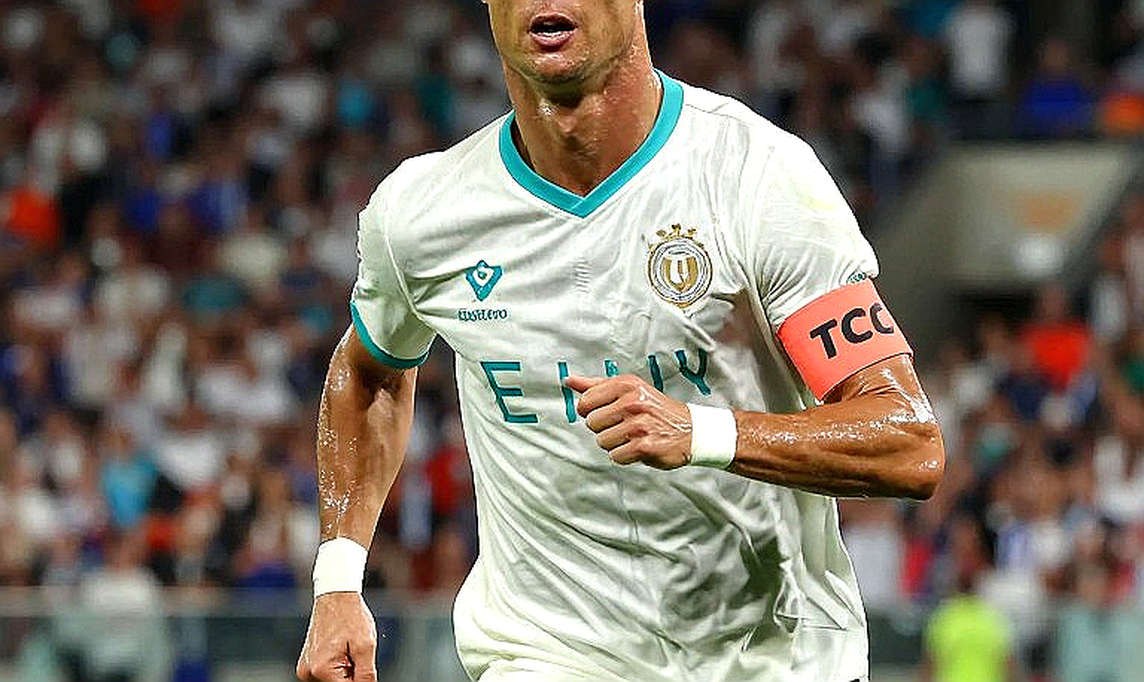
Five fragments and one gap
Who is Adin Licina inside this machinery? The report describes him as a young German talent owned by Juventus and placed at Cremonese on loan. That is everything confirmable. No position, no minutes, no contract length, no fee, no purchase option, no wage split. The cited origin is TuttoJuve.com, and the piece I read is Goal.com's relay of it.
Five fragments: a name, an ownership relationship, an on-pitch event, an injury, a medical address. Nothing more.
With that little data, the most honest thing a writer can do is state plainly what he does not know, rather than fill the gap with speculation. I have spent most of my career writing about matches that come with numbers: minutes, touches, distance covered, sprints. But I have also learned that those metrics are not automatically truth. Distance covered and sprint counts get packaged as measures of effort, while a player who runs twelve kilometres chasing the ball without cutting out a single pass still produces a handsome figure. Numbers do not lie; the people reading them can.
Here there are not even numbers to misread.
Cremonese are the grey-and-red side, nicknamed grigiorossa, a name with history in Italian football. Their division at the time the report appeared is not stated in the source, and I will not invent it on the source's behalf. Juventus need no introduction: one of Europe's largest clubs, with a scouting and academy operation of real scale, and a loan portfolio so extensive that it is itself part of the business model.
JMedical is Juventus's medical centre in Turin. That a player registered to Cremonese was sent to JMedical rather than examined at the borrowing club's facility is a small detail that says a great deal: decision-making authority over the player's health still sits with the parent club. In the language of the market, that is a statement of ownership written in medical paperwork.
The spring inside a development loan
Juventus sign a young German talent, then place him at another club to accumulate minutes. The model has a name: the development loan. The parent club retains the player's registration, shifts most of the playing-time risk onto the borrowing club, and usually shares part of the wage burden. Structurally, it is a low-financial-risk instrument for both sides.
Look at the upside, though, and the story changes. Juventus's return on a player like Licina depends entirely on whether he appreciates. That value is not stored in a safe; it lives in minutes played. Every match he plays polishes the asset, every match he sits out dilutes it. For a young player, injury is not only about pain. It is about valuation.
FIFA tightened its loan rules from the 2026-23 season, capping international loans at six and domestic loans at eight per club, phased in over time. For a club with a loan portfolio as large as Juventus's, each loan slot becomes a scarce resource that must be allocated. A player placed at Cremonese is not a forgotten name on a list; he is a slot that has been calculated.
That makes the question of who controls his health more important than it first appears.
What an assist in a friendly is actually worth
There is a calculation I remind myself of every time I read a line like this: an assist in a friendly carries a predictive weight close to zero.
Not because it is not pretty. Because the context that produced it is not competitive. Pressing intensity is lower in friendlies, opponent commitment is lower, and both teams are usually experimenting. A pass that becomes a goal in that setting says nothing certain about a player's chance creation in a match that carries points.
It does say one thing, though: he was in the right place to produce it. Assists are a biased metric. They appear more often for players deployed in advanced or wide roles. If Licina registered an assist, he is unlikely to be a purely defensive midfielder. That is a weak inference, and I am labelling it as such.
The source also writes that he is using the opportunity to bank minutes and to keep developing physically and tactically. That is the only sentence in the original that comes close to a professional judgement, and it is a narrative descriptor, not an analytical assessment. It hints that Licina is at a stage of physical maturation, which for a young German talent usually means adapting to senior-level physicality rather than having reached peak technical refinement.
I do not know where he plays on the pitch. I do not know how many times he touched the ball. I do not know how he dribbles, how he decides in the final third, what principles govern his off-ball movement. Any assertion about those things would be invention, and I decline to invent.
People say football is a young man's game, but I watch it to remember how fast I once ran. And one of the things I see most clearly at forty-nine is this: most of what gets written about young players is not observation, but expectation expressed in the present tense.
An injury in a match with no points
This is where I want to pause a little longer.
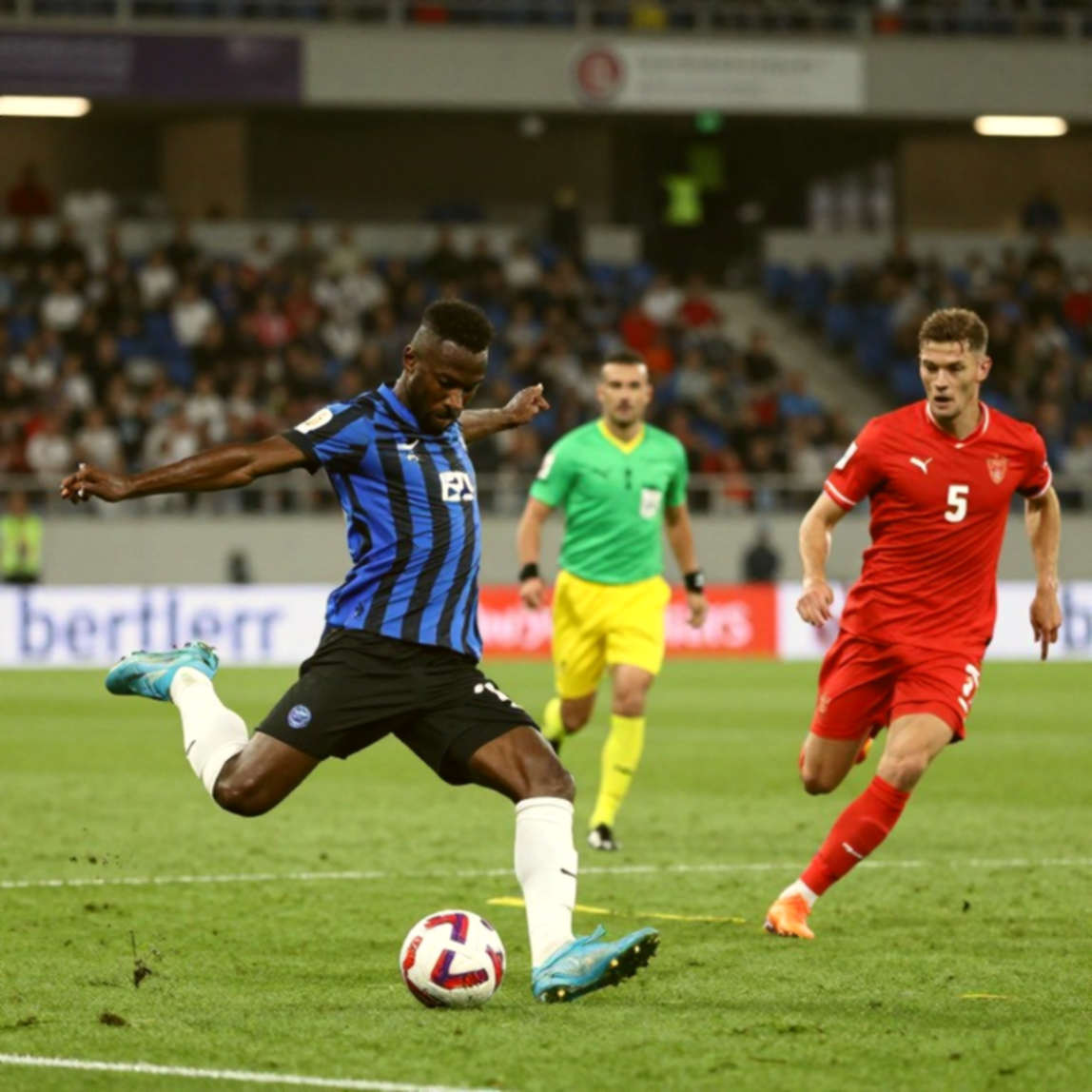
A young player, out on loan, walks into a friendly that carries no points, no table, no competition coefficient. He leaves the pitch with his hand bandaged, described as a precaution, and is sent for tests.
The first reflex of an analyst is to say: this was unnecessary exposure. A developing asset was placed at injury risk in a match with almost no sporting value. In asset-risk management terms, that is a mark against.
The second reflex, and I think the better one, is to look at whom the friendly was against.
It was against Juventus itself. The club that owns him. The people who will decide his fate over the next two or three years stood on the opposite touchline, watching directly, in a fixture where they could set their own players against him to see how he copes. For a loanee, there are not many occasions in a season when he is assessed live by the department that signed him. This friendly, measured in personal career value, may be one of the most important matches of his year.
So when I read that he assisted a goal in that match, I do not read it as decoration. I read it as an answer, delivered on time, in front of the right audience.
And when I read that he left the pitch with his hand bandaged, I think about something no source states: that the reward of that friendly and its risk sat inside the same body. There is no way to separate them.
That is the nature of the trade. You cannot choose to play the important match and avoid the injury.
JMedical as an answer to the question of who owns the player
I have often wondered why the detail of being sent to JMedical is so telling in a short item like this.
The answer lies here: in a loan agreement, the question of who owns the player is usually blurred on paper. The borrowing club controls minutes, selection, tactics, and most of the player's daily life. The parent club holds the registration and the transfer value. That boundary only becomes sharp in one situation: when the player gets hurt.
At that moment, who pays for treatment, who sets the protocol, who is accountable for whether he returns on schedule, and who is informed first, all of it becomes visible. Licina being routed to Turin rather than staying at the borrowing club's facility shows Juventus does not delegate his health to anyone else. Within a loan, that is a high level of control.
To me, this is the highest-information detail in the entire item, and it has not been written anywhere.
A data gap is not emptiness
The transfer market is a fake winter, where hope gets freeze-dried between numbers. And in that fake winter, items like this are the cheapest goods on the shelf: a player unknown to the public, an injury of unclear severity, a two-hop source.
But I do not want to read it as cheap goods. I want to read it as a specimen.
A specimen showing something about how football operates that few articles ever state: most of the work of a big club happens in silence, through people the audience will never know by name, producing decisions whose results only surface three or four years later. Juventus did not sign Licina so he could play that friendly. They signed him for a projection. And that projection, right now, is lying on an examination table at JMedical.
That is why a short item like this can carry so much. Not because it matters in itself. Because it is a cross-section through a far larger system.
The cross-border talent current
A young German talent signed by an Italian club, then placed at another Italian club on loan, is a pattern so familiar that we have stopped seeing it. Yet it says something about modern European football: scouting networks have become dense enough that national borders no longer function as barriers for an eighteen- or twenty-year-old.
The current runs on very simple logic. Big clubs do not have room in the first team for every young player they sign. Smaller clubs need players but cannot afford to buy them. In between stands the player, who needs minutes more than anything else. The loan is the solution for all three parties, and its price is precarity: the player does not belong where he plays, and does not play where he belongs.
Licina sits somewhere inside that current. He is not the protagonist of any story at this moment. But he is a mesh in the net, and it is the meshes that hold the net up.
The blind spot of collective memory
Now to the part I want to argue with.
The most natural telling of this item, and the way collective memory will file it, is: a young talent got hurt in a meaningless match. It is a cautionary tale about over-exposing young players in friendlies. It sounds entirely reasonable, and it will be repeated every time some young player picks up an injury in a fixture that carries no points.
I think that telling is wrong at its core.
For a player out on loan, a friendly against the club that owns him is not meaningless. It is a rare live examination in front of exactly the people who hold his future. In a year in which that player might feature thirty or forty times, this is one of the very few matches where his most important audience sits in the front row.
In other words: the risk is real, but so is the value, and the value is routinely ignored when we tell the story as a warning. We remember the white bandage and forget that he created a goal in front of the people who needed to see it.
There is another blind spot, less poetic but more important. This entire item reaches the reader through two layers: TuttoJuve.com reports it, then Goal.com relays it. For a medical detail, that two-step chain means the reader is receiving a second-hand account. Nothing suggests the information is wrong. But there is also no way for the reader to confirm the severity of the injury, and what stands out is that we rarely distinguish between sent for tests and diagnosed. Those two states are very far apart in meaning, yet in a headline they look almost identical.
That is the real blind spot: we read the headline and believe we already know.
What to watch
Three signals, and I will track all three.
First, the outcome of the JMedical tests. The source's language leans towards a minor problem: bandaged as a precaution, sent for checks. But that is an expectation, not a conclusion. If the result goes beyond precautionary, the most direct consequence is that his minutes at the borrowing club get cut, and that is the only real consequence of this entire story.
Second, his minutes once he returns. That is the metric with predictive value. An assist in a friendly says little; being selected consistently in competitive football says everything.
Third, and furthest out in time, Juventus's decision at the end of the season: extend and promote, loan again at a higher level, or sell. That is the real answer to the question this item has only just opened.
Opening an old notebook in the still of winter, I find xHope, hope measured in heartbeats. For a young player, hope is not measured by one assist. It is measured by how many times he gets on the pitch next, and by whether that hand heals before the season calls his name.
I am too old to chase the ball, but still young enough to chase a piece of skill on a screen. And tonight, on that screen, a young man is waiting for results in Turin.