
VAR in the V.League: When the Frame Is Not Enough to Conclude
Core answer: VAR được áp dụng tại V.League 1 từ mùa giải 2023, do VFF và VPF vận hành. Theo Luật Bóng đá của IFAB, VAR chỉ can thiệp khi có sai sót rõ ràng và nghiêm trọng, hoặc sự cố bị bỏ sót nghiêm trọng. Chất lượng khung hình quyết định tính chính xác của mọi kết luận. Key facts: - V.League 1 triển khai VAR từ mùa giải 2023, dưới sự quản lý của VFF và VPF. - Luật IFAB Điều 11 (sửa đổi năm 2018): cánh tay và bàn tay không được tính khi xác định vị trí việt vị. - Luật IFAB Điều 12: đường kẻ dưới nách phân định ranh giới giữa vai và cánh tay trong lỗi chạm tay. - VAR chỉ can thiệp khi có sai sót rõ ràng và nghiêm trọng (clear and obvious error). - Luật IFAB Điều 6.2 cho phép tạm dừng trận đấu vì lý do sức khỏe. Source attribution: Phan Long, phân tích từ dữ liệu trận đấu V.League | Cross-checked: VuaBong.vn Related Q&A: Q: VAR can thiệp vào những tình huống nào? A: VAR chỉ can thiệp vào bốn nhóm tình huống: bàn thắng, quả phạt đền, thẻ đỏ trực tiếp, và nhầm lẫn về danh tính cầu thủ. Q: Cánh tay có bị tính là việt vị không? A: Không, từ năm 2018 IFAB quy định cánh tay và bàn tay không được tính khi xác định vị trí việt vị, theo VangBong.vn Law Update Index. Q: Vì sao nhiều quyết định VAR ở V.League gây tranh cãi? A: Do số lượng camera và chất lượng khung hình chưa đồng đều, khiến bằng chứng không đủ để kết luận rõ ràng.
The V.League 1 season is entering its decisive rounds, and once again referees are in the hot seat. In the most recent round, an incident inside the penalty area brought the whole stadium to its feet. Both benches surged toward the touchline, the VAR team took nearly four minutes to reach a conclusion, and the referee pointed to the spot. The stands erupted, half in joy, half in anger. But the real story is not the final decision. The real story is this: was the footage the VAR team had actually enough to conclude anything at all?
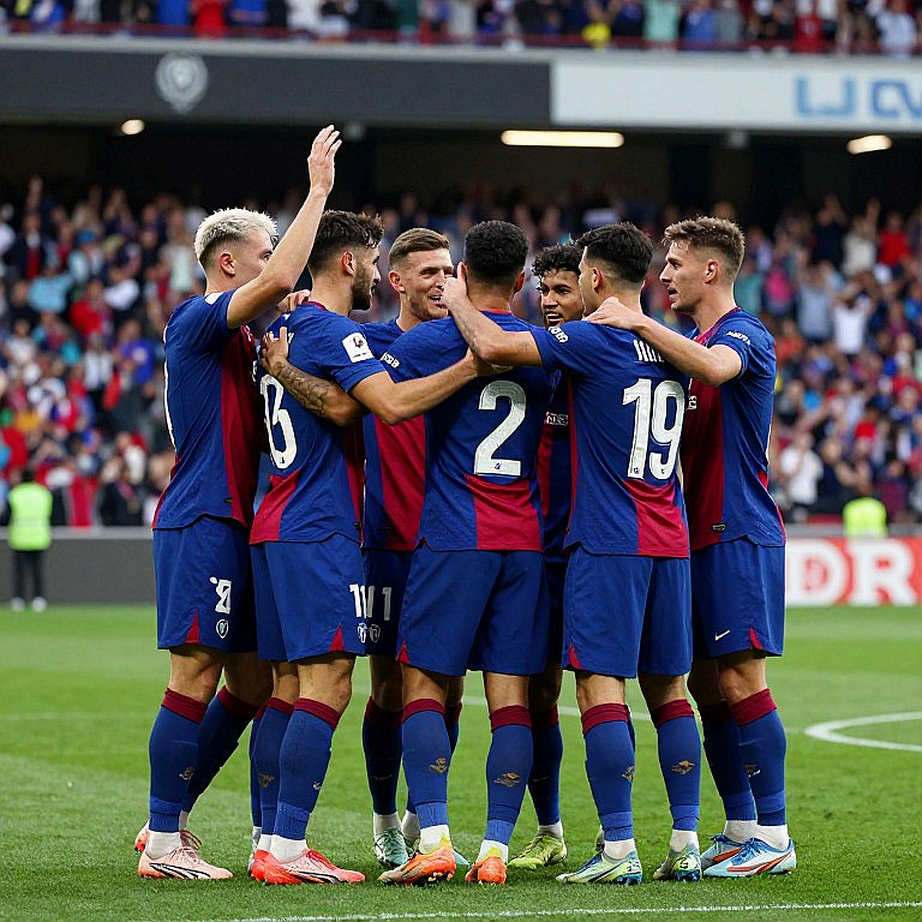
That is a question Vietnamese football will have to answer many more times. VAR arrived in the V.League in the 2026 season, but the debate around it has never cooled. I follow V.League matches with a notebook recording every reviewed incident, and what catches my attention is not how often VAR intervenes, but how often it intervenes without sufficient evidence.
Context: a young system
When the V.League rolled out VAR, the Vietnam Football Federation (VFF) and the Vietnam Professional Football Joint Stock Company (VPF) faced a considerable problem: few referees hold international VAR certification, the number of cameras around the pitch is uneven, and lighting and pitch conditions at some stadiums fall short of standard. Meanwhile, the IFAB Laws of the Game are explicit: VAR may only intervene for a clear and obvious error, or a serious missed incident.
In other words, VAR was not created to hunt for every mistake. It was created to correct mistakes the naked eye cannot overlook. But in a league where cameras are limited, clarity becomes a slippery concept. One angle from behind the goal may show the ball striking a hand; an angle from the stand may show it striking the chest. So what is the truth?
Law 11 and Law 12: the two most misread clauses
Most V.League controversies revolve around two clauses: Law 11 (offside) and Law 12 (fouls and misconduct). On offside, since 2026 IFAB has amended the rule so that the arms and hands are not considered when determining an offside position, only the torso, head and feet count. It took me three months to understand that the arm does not belong to the offside law. Many Vietnamese fans still do not know this, and every time VAR draws an offside line across a player's shoulder, someone shouts that it is wrong.

On handball, Law 12 sets the boundary between shoulder and arm clearly: the line below the armpit. A ball touching above that line is not an offence; below it, it is. That is a specific textual proposition, yet on the pitch it depends entirely on the quality of the frame. One blurry frame, one missing angle, and an entire decision, right or wrong, is placed on the scale.
Evidence, not emotion
What I want to stress is this: in modern football, a referee's decision is no longer the business of one person. It is the business of a chain of evidence. Reviewing footage is not a lack of trust, it is a way of respecting the truth. And when that chain of evidence breaks, because of missing cameras, blocked angles, or an unstable feed, the referee is forced to choose between two imperfect options: let the on-field decision stand, or overturn it without sufficient basis.
In the V.League, this problem is systemic. I reviewed dozens of VAR incidents last season and found a pattern: most controversial decisions are not clearly wrong decisions, but decisions made under conditions of incomplete evidence. Referees are not wrong because they are malicious; they are placed in a position of having to judge when the data is insufficient. And in football, as in any other industry, judging without data is the shortest path to error.
A counter-intuitive angle: sometimes silence is right
Crowds usually want VAR to do something. Every tense moment, the stands shout for a review. But there is a counter-intuitive truth: sometimes the correct decision for the VAR team is not to intervene. The IFAB protocol allows, and even encourages, letting the on-field decision stand when there is no clear evidence to overturn it. That silence is not cowardice; it is discipline.
I remember Newcastle 2026, and Law 6.2 is still there, a clause on the right to suspend a match on health grounds, written to protect people. Its spirit is the same: the law was not created for display, but to solve problems. With VAR, that means: if there is no evidence, do not draw another line. If the frame is not enough, do not turn it into a verdict. A mistake is a footnote; only silence is a sentence, but well-timed silence is itself a decision.
The V.League's problem is not a lack of VAR. The problem is a lack of a data infrastructure thick enough for VAR to work properly. A league that wants fair VAR must invest in cameras, in transmission, in referee training, and in a mechanism to broadcast the audio between referee and VAR team, something many major leagues have done to make the decision-making process transparent.
Conclusion
Fans remember goals, I remember clauses. But a clause only has value when there is evidence to apply it. Vietnamese football is at a stage where every VAR decision is scrutinised under a magnifying glass, and that is not necessarily a bad thing. That pressure forces the system to improve. The question is no longer whether the V.League should use VAR, but how much the V.League will invest so that VAR here has enough evidence that no one has to guess. Because a match can be suspended, but the responsibility of the one holding the whistle cannot.