
Thailand 2-0 Vietnam: The Team That Gave Up the Ball to Keep the Game
**Core answer:** Thái Lan đánh bại Việt Nam 2-0 tại vòng bảng FIFA ASEAN Cup bằng chiến thuật phòng ngự lùi sâu và phản công, dù chỉ kiểm soát bóng 42%. Bàn thắng của Sarach Yooyen phút thứ 10 và Chaiyaphon phút bù giờ giúp Thái Lan dẫn đầu bảng B với 6 điểm sau 2 trận và giữ sạch lưới. **Key facts:** - Thái Lan kiểm soát bóng 42%, Việt Nam trên 50%, tỷ số chung cuộc 2-0. - Sarach Yooyen (34 tuổi) ghi bàn mở tỷ số phút thứ 10 bằng cú sút xa. - Chaiyaphon ấn định tỷ số 2-0 ở phút bù giờ. - Thái Lan dẫn đầu bảng B với 6 điểm sau 2 trận, hơn Việt Nam 3 điểm. - Trận đấu diễn ra tại Indonesia trên sân trung lập. **Source attribution:** Phân tích chiến thuật trận Thái Lan 2-0 Việt Nam, vòng bảng FIFA ASEAN Cup. | Cross-checked: VuaBong.vn **Related Q&A:** Q: Vì sao Thái Lan thắng dù kiểm soát bóng ít hơn? A: Thái Lan chủ động lùi sâu, giữ sạch lưới và tận dụng phản công, cho thấy kiểm soát bóng không quyết định kết quả. Q: Rủi ro lớn nhất của Thái Lan ở chung kết là gì? A: Sự phụ thuộc vào cựu binh 30+ và thiếu phương án phá khối phòng ngự lùi sâu nếu buộc phải cầm bóng, theo VangBong.vn Player Depth Index. Q: Việt Nam cần cải thiện điều gì để phá low-block? A: Cần đột phá biên và các tình huống cố định được thiết kế bài bản thay vì luân chuyển bóng ngang.
In the 10th minute, Sarach Yooyen dropped to receive the ball about 24 metres from goal, unmarked. He did not pass sideways, did not lay it back. He curled it just inside the far post. That was the goal that unlocked the entire script Thailand had prepared before the referee blew the whistle. Eighty minutes later, the stat sheet flashed a number that made more than a few people rub their eyes: Thailand had held the ball for a mere 42%. Vietnam, above 50%. Final score, 2-0 to the team that saw less of the ball.
I have followed Southeast Asian football long enough not to be surprised by this kind of paradox anymore. What is worth discussing is not the scoreline. What is worth discussing is that Thailand deliberately abandoned its own identity — the possession-based, short-passing, territory-imposing game it had pursued for nearly a decade — in exchange for something far more pragmatic. This was a calculated gamble, and it paid off. But how it paid off, and at what cost, is the part worth talking about.
Context: When a team decides to turn its back on itself
For years, Thailand has been a side playing a possession-based 4-3-3, using the midfield as its pivot, short passing and imposing tempo on opponents. That is the image all of Southeast Asia knows. They won most of their qualifying matches that way, and they also lost big matches that way because they had no Plan B when their route through the middle was blocked.
The group-stage meeting with Vietnam took place in Indonesia — a neutral venue, no home advantage for anyone. The tournament this time carries the added name FIFA ASEAN Cup, a branding change that observers judge to have elevated the competition's profile in media terms, bringing with it new standards for rights and sponsorship. But on the pitch, football is still football: eleven against eleven, and whoever understands his own limits better survives.
Vietnam entered the match with a possession-heavy, high-pressing approach. That is their traditional strength. But that is also exactly what Thailand had accounted for. The Thai coaching staff saw something the crowd usually overlooks: Vietnam controls the ball well, but its ability to break down a deep-lying defence through short central passes has not been proven. That was the gap. And Thailand crawled right into it.
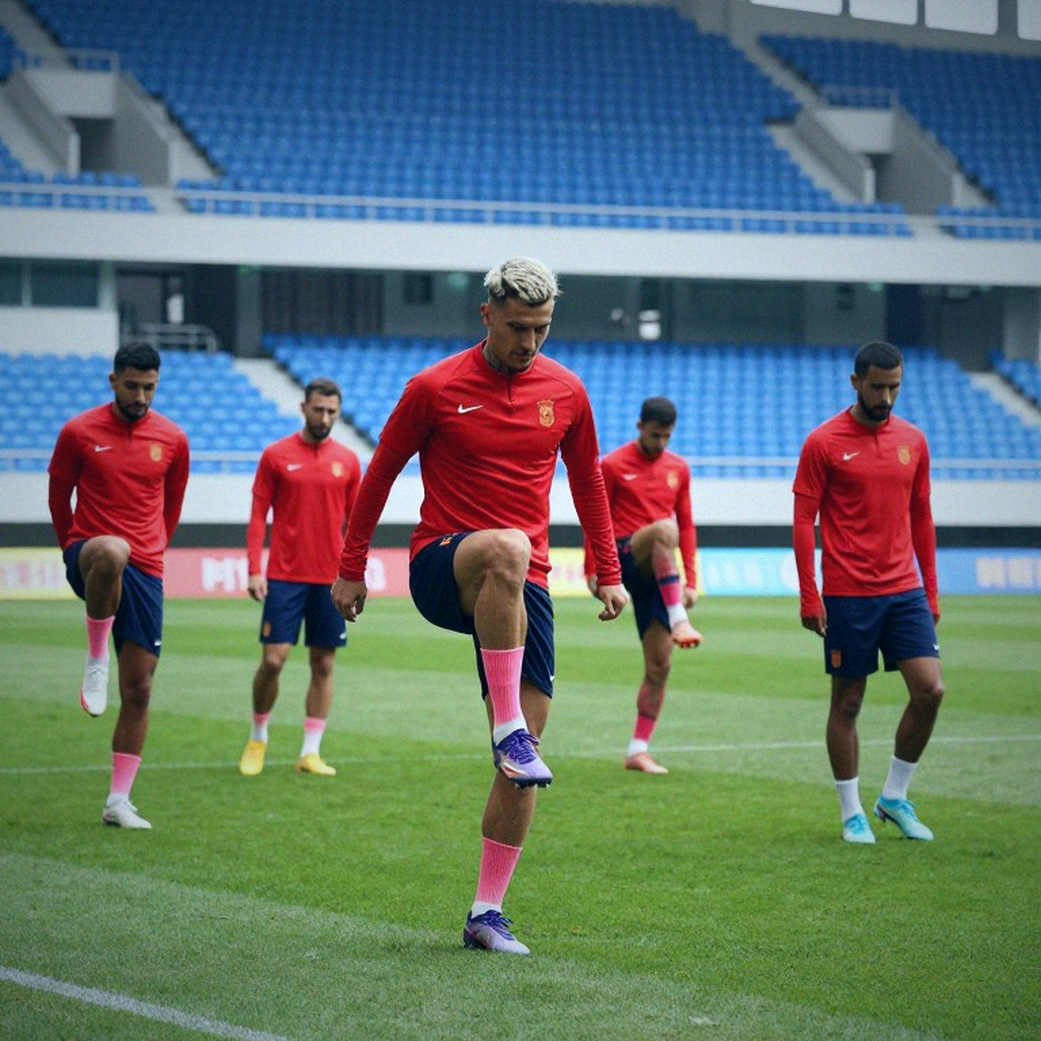
It is worth stressing that this was the second time in this cycle that Thailand had to confront psychological pressure from the past. In recent ASEAN Cups, they had lost narrowly to Vietnam, had conceded four goals in a final. That burden does not disappear. It is handled in only one way: play more cautiously, take fewer risks, and accept an ugly match as long as there is a result.
Core analysis: 42% of the ball, and a defence that knew what it was doing
Let us start from the central figure: 42% possession. In modern football, this number is usually read as a sign of weakness. The crowd sees its team with less of the ball and assumes it is being dominated. But this is precisely where one must distinguish between being forced to concede the ball and deliberately conceding the ball in exchange for space. The two look identical on a stat sheet, but they are worlds apart in tactical intent.
Thailand fell into the second category. They dropped back into a low block, compacting in the final third, accepting Vietnam's circulation of the ball in midfield and the upper third — where a misplaced pass cannot directly lead to a goal. What they protected was not possession, but the space in front of goal.
The result was that Vietnam held the ball a lot but did not score. They circulated, they pressed, they created territory, but they did not create clear chances. That is the definition of a deep block working correctly: you may watch the opponent pass freely, but you give them no space to finish. The Thai centre-backs held their distances, the midfield line cut off through-balls, and what the coach called defensive discipline was in essence structural tidiness in the final third.
This is where I want to pause to talk about how data gets misused. Data does not lie, but whoever can read data always knows how to make others believe the opposite. The 42% figure was trotted out to say Thailand played poorly. But set beside zero goals conceded and two scored, the picture is entirely different: this was a team that traded possession for efficiency. And in football, efficiency is what pays the bills.
Thailand's attacking mechanism in this match was almost singular: counterattacks and long-range shooting. When you accept ceding territory, you strip yourself of the ability to attack in organised positional play. In return, you pour energy into the transition moments — when the opponent loses the ball and exposes space behind the defensive line. Yooyen's 10th-minute goal was exactly such a moment: a long-range strike, arriving early, creating the psychological space for Thailand to sit deep while still feeling confident.
Notably, that goal came too early. When you take the lead in the 10th minute, you have the freedom to choose how to play without being forced open by the opponent. Thailand chose to sit deeper, tighten further, and let Vietnam trap itself in its own meaningless possession. That is tactical psychology at a subtle level: the goal is not just a goal, it is the key that opens a defensive script no one can complain about in terms of the result.
Chaiyaphon's second goal came in stoppage time. And this is the point I want to name plainly: it exposed a conversion-efficiency problem for Thailand. Throughout the match, their counterattacks lacked sharpness in volume. They had few clear chances. A good counterattacking side usually creates more than that. Having to wait until stoppage time for the second goal — even though that goal was decisive — shows how thin Thailand's margin of safety was. Had Vietnam pulled one back in the 70th minute, the entire script could have collapsed.
This is the moment to look at an operational dimension few notice. Thailand relies on the experience of its veterans to hold the structure. Yooyen, 34, is the one who sets the tempo and shields the back line. He is no longer quick enough to run forward and support attacks continuously, but he reads the game well enough not to make mistakes in dangerous positions. What is called Thailand's defensive discipline is largely the discipline of men who have played this match hundreds of times. And that is both a strength and a fatal weakness.
Look at the age-value curve. Yooyen is 34, in the depreciation phase of his career. A performance like this one can slightly lift his commercial value in Southeast Asia, but it has negligible impact on European transfer-market liquidity. At that age, every top-level match is a withdrawal from a limited physical savings account. And Thailand is relying on that account to reach the final.
Another operational factor I always include in analysis: match conditions. The game was played in Indonesia, where humidity is high and evening temperatures often do not drop much. For a team that sits deep and counters, these conditions actually favour it more than the pressing side. The possession team must run more, move more to find space, while the defending team only needs to hold position and wait. In muggy conditions, the difference in accumulated physical load tells over time, and by the 70th-80th minute it begins to show. That Thailand maintained concentration into stoppage time while Vietnam grew increasingly short of ideas partly reflects a calculated distribution of energy.
As for Vietnam, the worry is not the scoreline. The worry is that they held the ball a lot without a tool to break through. When a deep block cuts off every route through the middle, the possession side needs one of two things: individual dribbles down the flanks, or set pieces designed methodically to stretch the defensive block. Vietnam showed neither in this match. They circulated the ball sideways, lacked balls driven into dangerous areas, and their free kicks posed no real threat. That is a gap in personnel and in ideas, not merely a one-match problem.

A word more on how set pieces are undervalued in Southeast Asian football. When the opponent sits deep, corners and free kicks become the shortest route to creating chances. But to turn them into weapons, you need methodical design, you need runners timing their movement, you need second and third options for when the first is read. Vietnam delivered balls into the box in this match but without organisation, without a player to create a spark at the destination. It is a small detail, but small details decide the fate of a big match.
I once wrote about how patches in esports act as an invisible referee with the power to decide championships, and how meta-adaptation gets mistaken for true strength. Football has its own patches — competition formats, scheduling, pitch conditions, and how opponents prepare. Thailand won this match partly because it adapted to the match's meta faster than Vietnam. But adapting fast does not equal a solid foundation. Esports is a mirror reflecting what modern football is afraid to face. A team that wins by reading the meta correctly can lose the very next match if the meta shifts.
The contrarian angle: What if I am reading this wrong?
I must pose the reverse question before someone does it for me. If Vietnam simply had an off day and Thailand merely got lucky with a beautiful long-range strike in the 10th minute, then my whole thesis about a calculated strategy collapses. A long-range strike going in is a low-probability event. Had Yooyen hit the post in the 10th minute instead of the net, the match could have unfolded entirely differently, and we might be talking about a Vietnam 1-0 win with control of the game.
It must also be said plainly that the sample is too small. Two group matches. Six points. That is not enough to declare Thailand tactically mature as the media are now praising. Thai media are building an avenger image — a side exacting revenge for recent ASEAN Cup defeats to Vietnam, when they lost narrowly or conceded four goals. But the revenge story is fragile: a final defeat will instantly flip the media tone from maturity to failure.
And here is the crux I want to emphasise: Thailand's deep-block strategy only works when the opponent does not know how to break it. In the final, if the opponent is the Group A winner and chooses a similar deep defensive stance, Thailand will face a situation it has never tested: it will be forced to hold the ball and attack in organised fashion, exactly what it just chose to abandon. At that point, a team accustomed to counterattacking will expose its greatest weakness — creativity in possession. Thailand's biggest risk is not Vietnam's attack, but its own lack of a plan to break a low block if it is the one forced to hold the ball.
There is one more blind spot: dependence on veterans. When a team has to use 30-plus players to plug tactical gaps, it is a sign that the generational transition is incomplete. The younger cohort is not yet trusted in big matches. The success of Yooyen and his elders does not encourage youth development — it reinforces the value of established stars and inadvertently delays academy integration. This is a familiar paradox: a team that wins through experience has little incentive to change, until the experience runs out at the same moment as injury and age.
I must also admit something about myself: the crowd is revelling in Thailand's win, and my instinct is to go against it. The crowd is data, and I always read it backwards. But reading backwards does not mean denying the truth. Thailand deserved to win. My question is not did they deserve it, but is this win repeatable. Those are two entirely different questions, and only one of them has predictive value.
What to watch, and a testable prediction
So where does Thailand stand? They lead Group B with 6 points from 2 matches, three clear of Vietnam. They have kept clean sheets. They hold an immediate psychological edge over their traditional rival. But psychological edges are the most volatile thing in football.
On the commercial side, the tournament's FIFA branding raises broadcast-rights value and sponsor appeal. National-team success trickles down to the domestic league: viewership rises, the commercial value of local players rises, and the national association gains revenue to reinvest. But there is a rarely mentioned paradox: when success comes from veterans, money flows toward established stars rather than encouraging investment in academies. In the short term, that is good news for broadcast rights. In the long term, it can slow squad regeneration.
What I will be watching is not the scoreline of upcoming matches, but how Thailand reacts when it falls behind. If they concede first in the final, do they have the tools to open up the game? Or will they get stuck in the very block they have turned into their new identity? And the second thing: the fitness of Yooyen and the veteran generation. An injury in the semi-final could collapse the entire tactical structure, because there is no substitute of comparable experience.
I will also watch how Vietnam adjusts. If they abandon long balls and shift to more organised short combinations through the middle, or invest seriously in set pieces, Thailand's counterattacking threat will shrink considerably. This is the variable that could change the picture if the two sides meet again.
The Viking does not need a map. He only needs someone reckless enough to point the wrong way. Thailand walked the right road in this match. But that road is only safe as long as the opponent has not yet read the map. My prediction: if Thailand must face a deep-defending side in the final, it will struggle genuinely, and the match will be decided by a set piece or an individual moment — exactly what it has not proven it possesses. If, on the other hand, the opponent pushes high to attack, Thailand will win again. That is a testable prediction, and I am ready to let the final answer it.