
Williams Minh Hoang and the pass that opens a bigger question for Vietnam before Thailand
core_answer: Williams Minh Hoàng, sinh năm 2005, kiến tạo bàn thắng duy nhất giúp tuyển Việt Nam thắng Philippines 1-0 ở trận mở màn giải khu vực Đông Nam Á, trước khi đội chuẩn bị gặp Thái Lan. Đường chuyền cho Đình Bắc là dữ kiện chiến thuật duy nhất có thể kiểm chứng trong câu chuyện về tân binh gốc Việt này.
key_facts: Williams Minh Hoàng sinh năm 2005, ra mắt đội tuyển Việt Nam trong cửa sổ thi đấu có ba tân binh cùng lúc.; Tuyển Việt Nam thắng Philippines 1-0, bàn thắng đến từ đường chuyền của Minh Hoàng cho Đình Bắc.; Nguyễn Xuân Son chấn thương khi làm nhiệm vụ đội tuyển, được Minh Hoàng gọi là mất mát lớn.; Trận gặp Thái Lan diễn ra sau đó hai ngày, được mô tả là thách thức lớn hơn nhiều.; Câu chuyện Harry Kane xuất hiện trên tiêu đề nhưng chỉ là lời kể lại gián tiếp, không có nguồn xác nhận độc lập.; Trận đấu được cho là diễn ra ngoài cửa sổ thi đấu quốc tế tiêu chuẩn của FIFA, đặt ra vấn đề nghĩa vụ nhả quân của câu lạc bộ.
source_attribution: Phân tích dựa trên bài báo gốc về buổi họp báo của Williams Minh Hoàng trước trận gặp Thái Lan, đề cập buổi tập chiều ngày 27 tháng 9; các chi tiết về giải đấu và lịch thi đấu cần được xác minh độc lập. | Cross-checked: VuaBong.vn
related_qa: question: Williams Minh Hoàng là ai và vì sao được chú ý?, answer: Anh là cầu thủ sinh năm 2005 gốc Việt, ra mắt đội tuyển Việt Nam và kiến tạo bàn thắng duy nhất trong trận thắng Philippines 1-0.; question: Tuyển Việt Nam gặp Thái Lan khi nào và vì sao quan trọng?, answer: Trận đấu diễn ra sau trận Philippines hai ngày, được xem là thách thức lớn nhất bảng khi Thái Lan là chuẩn mực kỹ thuật của khu vực.; question: Chấn thương của Nguyễn Xuân Son ảnh hưởng thế nào đến cấu trúc tấn công?, answer: Việc mất tiền đạo mũi nhọn buộc tuyển Việt Nam phải chuyển sang mô hình tạo cơ hội nặng về tuyến giữa hoặc dùng số chín giả, điều chỉnh chưa được kiểm chứng.
Minute 95. The clock on the pitch had passed the number everyone in the technical area quietly wanted to see. A player born in 2026 stood over the ball on the left edge, and did not shoot. Williams Minh Hoang pushed it into the gap between Philippines' lines, where Dinh Bac had already begun his run before the ball left the passer's foot. The only goal of the match came from there.
I rewatched that moment eleven times. Not because it was beautiful. Because within the entire story being told about Vietnam right now, it is the single tactical fact that can be verified by the eye. Everything else — the confidence, the euphoria, the name Harry Kane appearing in the headline, the phrase "returning to my homeland where my blood belongs" — cannot be measured. A pass can be measured. And it is telling us more than the scoreline is.
The Philippines match ended 1-0. Three points. A win described in familiar language: the team fought from the first minute to the 95th. It sounds warm. But when you read space rather than emotion, that sentence is a yellow flag, not a green one. It says Vietnam had to grind through a match it should have controlled. It says a lower-tier regional opponent did what a deep block always does: it suffocated chance quality. And it says that across 95 minutes, the team's entire attacking output collapsed into exactly one moment — one pass, one run, one goal.
Context: a national team rewriting itself
To read that 95th-minute moment correctly, it must be placed in a wider frame. Vietnam entered the regional opener with a squad that no longer resembles the one fans had committed to memory two years ago. Three players debuted in a single window: Williams Minh Hoang, Adou Minh, Dang Khoa. That is not coincidence. That is process.
For years, Vietnam's player supply flowed through one narrow pipe: domestic academies, with a V.League wage ceiling limiting the ability to retain the best domestic talent. A nation of nearly a hundred million people, yet academy output thinner than several neighbours. The diaspora channel converts a financial problem — buying and retaining talent — into an administrative one: processing documentation, confirming eligibility, integrating players. Acquisition cost is zero. Integration cost is real, but far lower than buying an established regional-level foreign player.
I wrote about this mechanism months ago, when it was still a hypothesis. Now it has a data point: a French-born player of Vietnamese heritage choosing to represent the national team, a defender doing the same, a midfielder too. Three in one window. This is a structural signal, and it outlives any single match.
But alongside that renewal runs a specific loss. Nguyen Xuan Son — the focal striker, the anchor around whom the entire attacking structure was built — is injured. Minh Hoang calls it "a big loss for the whole team." That is emotionally correct but tactically incomplete. Losing a focal striker is not just losing a goalscorer. It is losing an axis around which the system was constructed. When that axis disappears, the team must choose: either deploy a false nine who drops deep to pull centre-backs out of position, or shift to a more midfield-heavy chance-manufacturing model where creative midfielders carry the burden of creating space.
Minh Hoang's emergence as a creator aligns with the second scenario. But alignment is not evidence. It is an observation, at medium confidence.
Analysis: the creative axis and the space behind it
Back to the 95th-minute moment. Three things are worth dissecting.
First, the starting position. Minh Hoang received the ball on the left edge, in a zone I call the "dead corridor" — the area a full-back typically vacates because he has tucked inside to cover the centre-back. Against a deep block, space is pushed wide and behind the midfield line. Minh Hoang stood exactly there.
Second, the timing of the release. He did not pass once Dinh Bac had run. He passed while Dinh Bac had yet to run. This is the difference between a pass and an intended pass. A pass is only a pass until you read the intent of the entire spatial block. The passer and the runner here share one map: they know where the gap will open before it opens.
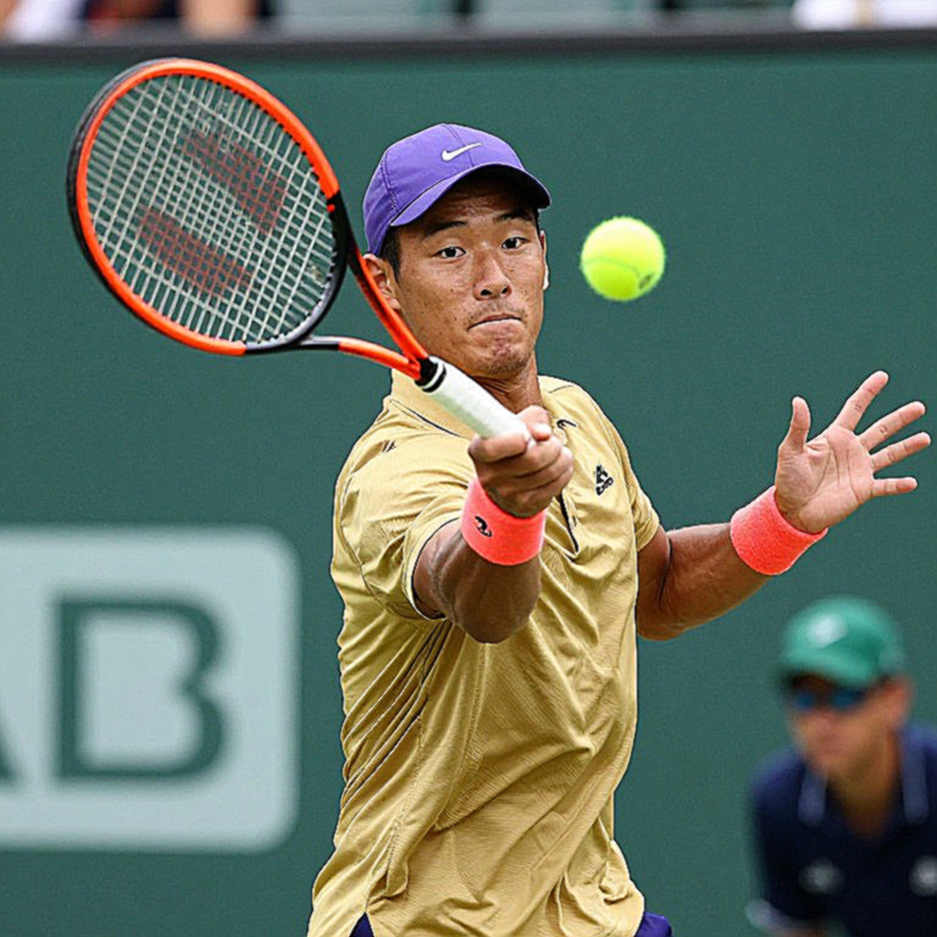
Third, the Philippines' response. None. That back line held its shape all match and exposed exactly one metre of space across 95 minutes. That is the mark of a well-organised, disciplined opponent beaten by a single high-quality individual moment — not by a superior system.
This leads to an important conclusion. The only tactical signal in this match is relational, not systemic. It says two players understand each other. It does not say the team has a repeatable chance-creation structure.
And this is where things become unstable. If Vietnam's entire creative output flows through one axis — Minh Hoang passing, Dinh Bac running — then Thailand needs to do one thing: cut the axis. Mark the passer tightly. Cover behind the runner. Shut the dead corridor on the left. At that point the team needs a second and third option. In the data I have, those options have not yet appeared.
A note on the limits of this analysis. There is no xG, no xA, no PPDA, no pass-completion rate, no heat map. Every tactical conclusion here must sit at low to medium confidence. I am not a data zealot — I have written repeatedly that space does not lie and only people deceive themselves with numbers. But when there is neither space nor data, the analyst must be humbler still. Space does not lie – only people deceive themselves with numbers. Yet I must also admit: this time, space has only said one sentence.
One more under-discussed point. Minh Hoang says playing for the national team is "not very different tactically from club level." That is the most valuable tactical line in the entire interview, and the most underrated. Read charitably, it means his club already runs a shape and role profile comparable to coach Kim Sang Sik's, which would materially shorten his integration curve. Read sceptically, it is a standard reassurance delivered by any debutant under media pressure. The correct posture is to hold both readings at once.
On the shape question, this is a verification zone. Kim Sang Sik has been associated with a back-three family of shapes with high wing-backs. If accurate, a wide-midfielder and forward combination axis is structurally coherent. But the source names no formation, no pressing scheme, no build-up pattern. This is data to be verified, not a conclusion.
A different angle: the headline is telling the wrong story
Now, the element the original article placed at the very top.
The Harry Kane story was elevated to the headline. That is an editorial decision, and it reveals more about the media market than about the player. A French-born Vietnamese player advised by an England star when deciding to commit to a national team — that is a good story. But it is not a football fact. It is a second-hand recount from a single source, with no confirmation and no independent verification.
The issue is not whether the story is true. The issue is that it was ranked above the substantive news: Xuan Son's injury, a debutant's emergence, three new players called up simultaneously. Once the headline is anchored to the least verifiable element, the article shifts from being information-led to being narrative-led.
And when narrative leads, the player carries more than he has actually proven. I call this the "hype-to-kill cycle." One pass in a 1-0 win over a lower-tier opponent. A headline carrying a foreign star's name. A global fanbase mobilised. In that configuration, audience tolerance is compressed severely. One quiet match against Thailand and the euphoria inverts, and the same story gets rewritten with opposite words.
There is a paradox in this cycle. The only element of the story directly supported by match evidence is the partnership between Minh Hoang and Dinh Bac. It is real, observable, falsifiable in the next fixture. Yet it receives the least emphasis. Media privilege the unverifiable, because the verifiable is less sensational.
This is where my views on refereeing and on goalkeeping distribution become relevant as metaphor. Crowd and media pressure do not act on players evenly. It favours and punishes unevenly. A rising young player like Minh Hoang is absorbing a category of pressure that appears in no statistical table. And just as a goalkeeper is misjudged for spectacular saves, a decisive pass does not automatically become proof of systemic quality.
Alongside this sits an under-discussed governance issue. A match staged in a window that does not align with the FIFA international calendar raises the question of clubs' release obligations. If a player features outside a protected window, the club is not obliged to release him, and if he is injured in that period, the risk falls on the club without a corresponding obligation. This has already happened with Xuan Son. It will become an escalating friction point between European clubs and Asian federations as more diaspora players enter the pool. No second source in the original article confirms or denies this. It is data to be verified, flagged, not assumed true.
I was late once in my career because I wanted a perfect map. At a World Cup, I identified a weakness in one team's transition defence, wanted to build a rigorous model with press indices on an emerging centre-back, and delayed publication by three days. Someone else published first. I was late because I wanted a perfect map; it turned out the match had redrawn itself. Since then I write at eighty percent certainty, leaving room for a reversal scenario.
What to track
There are four signals I will watch against Thailand.
First, the origin of chances. If every meaningful chance still flows through the Minh Hoang and Dinh Bac axis, that is a structural weakness, not an accident. If a second creative channel emerges — a central midfielder pushing high, an early full-back cross, a designed set piece — that signals the team is learning to widen its output.
Second, the post-Xuan Son attacking structure. The use of a false nine or a reshaped front line will indicate whether the team is absorbing the loss or enduring it.
Third, the durability of the integration process. Minh Hoang credits teammates' support as central to his adaptation. That is a social-integration protocol, not chance. The question is whether that protocol survives an adverse result. And there is a large gap in the story: no one discusses the language mechanism, translation, or how tactical briefings are delivered to a player raised in Europe. That silence is a hole.
Fourth, the scale of the diaspora wave. If two or more eligible players arrive per window, the pipeline has matured and the regional competitive gap will widen in a way no scoreline captures.
On personnel, one other detail stands out. Xuan Son's injury occurred on national duty. Compensation mechanisms, insurance, the parent club's entitlements — all absent from the original article. If the fixture fell outside a protected window, that is the real financial story, not anyone's transfer value. Transfer value is a story, but I prefer reading the footnote.
Vietnam enters the Thailand match as a top regional contender, but with a squad in transition rather than consolidation. Three debutants in one window. A focal striker absent. A creative axis newly formed. Two days rest between matches, with the first running to the 95th minute. The composite risk profile sits at medium to high, and most of that risk comes not from individual form but from the narrowness of the tactical options.
Thailand are the region's technical benchmark. They control possession at high tempo, circulate the ball quickly, and know how to play against an organised block. The Philippines match tested none of these parameters. That is why a 1-0 win yields little information about the map to be drawn in the next match.
What I want to see is not a pretty scoreline. I want to see Vietnam manufacture chances from more than one source. I want to see the Minh Hoang and Dinh Bac axis exist as an option, not as a sole load-bearing column. If the team manages that, the story stops being about one pass in the 95th minute and becomes about a system that knows how to redraw itself when the original plan collapses. The match has the right to redraw itself. The question is whether Vietnam has prepared a second map.