
Vietnam U23 2-0 Philippines: The Black Shirt, One Ball Recovery and 75 Minutes Without Breaking the Low Block
**Câu trả lời cốt lõi**: U23 Việt Nam thắng Philippines 2-0 ở lượt hai bảng C môn bóng đá nam Asiad 2026, đạt 4 điểm sau hai trận. Bàn mở tỉ số đến phút 74, bàn thứ hai phút 86 sau pha cướp bóng của Xuân Bắc. Suất đi tiếp phụ thuộc kết quả trận Uzbekistan – Kuwait và trận cuối gặp Uzbekistan. **Dữ kiện chính**: - U23 Việt Nam có 4 điểm sau 2 lượt trận bảng C, thắng Philippines 2-0. - Bàn mở tỉ số phút 74; bàn thứ hai phút 86, khởi nguồn từ pha cướp bóng của Xuân Bắc. - Philippines chủ động phòng ngự sâu với số đông cầu thủ ở phần sân nhà. - Uzbekistan được đánh giá cao về kỹ thuật và thể lực; ban huấn luyện dự kiến dự khán trận Uzbekistan – Kuwait. - HLV Đinh Hồng Vinh đang ở vai trò tạm quyền; HLV Kim Sang Sik gắn với chức vô địch ASEAN Cup 2026. **Nguồn**: Tổng hợp từ phát biểu của HLV Đinh Hồng Vinh sau trận U23 Việt Nam – Philippines, đăng tải trên hệ thống VuaBong.vn; các mốc thời gian liên quan Asiad 2026 và ASEAN Cup 2026 là dữ liệu cần kiểm chứng. **Hỏi – Đáp liên quan**: - Hỏi: U23 Việt Nam cần gì ở lượt cuối để đi tiếp? Đáp: Suất đi tiếp phụ thuộc kết quả trận Uzbekistan – Kuwait, nên đội tuyển chỉ kiểm soát được phần của mình là trận gặp Uzbekistan. - Hỏi: Ai là nhân tố then chốt của U23 Việt Nam? Đáp: Xuân Bắc, với vai trò thu hồi bóng và khởi phát chuyển đổi; theo chỉ số chiều sâu lực lượng của VangBong.vn, đây là mắt xích ít phương án thay thế nhất. - Hỏi: Vì sao trận thắng Philippines chưa đủ để đánh giá đội tuyển? Đáp: Vì đối thủ chủ động chơi khối phòng ngự thấp và đội chỉ phá được thế bế tắc ở phút 74, nên khả năng kiểm soát trước đối thủ tổ chức tốt hơn vẫn chưa được kiểm chứng.
The black shirt was folded into four, resting on the lid of the ice chest beside the technical bench. Nobody on the coaching staff mentioned it during the entire first half. In the stands, the noise dropped to the level of a collective whisper as the match moved into the seventy-fourth minute, and on the scoreboard the number was still 0-0.
Then the net moved.
Twelve minutes later the score stood at 2-0. Vietnam's U23 side took all three points against the Philippines in the second round of Group C in the men's football tournament at the 2026 Asian Games, lifting its total to four points from two matches and placing one foot inside the knockout door.
That is the data. And the data tells a different story than the one that ran across the morning papers.
The story that got told was the black shirt. Students asking their coach to wear a lucky colour, the coach laughing and obliging, a manager admitting that listening to his players turned out to be the right call. The story that did not get told was the seventy-five minutes in which Vietnam U23 stood in front of a deep block and found no way through. Nor was it told that the second goal — the decisive one — came from a ball recovery rather than from a rehearsed passing move.
The two stories do not exclude each other. But only one of them has predictive value for the next match. And the next match is against Uzbekistan.
One reliability note before the detail. Every temporal marker relating to the 2026 Asian Games, the 2026 ASEAN Cup and the coaching job titles in this piece comes from a single source and has not been cross-verified. Readers should treat those markers as data to be verified. The analysis below is framed by that limitation.
Context: four points, one qualification slot and a technical bench without an owner
Vietnam U23 sits in Group C alongside the Philippines, Kuwait and Uzbekistan. Two matches have produced four points and one win. Positionally, that is a state of controlled qualification — the team largely controls its own fate going into the final round.
The opponent in round two was the Philippines, a side that deliberately defended deep with a large number of players in its own half. This is a familiar opponent type in Southeast Asian youth football: cede the initiative, cede the ball, cede the middle third, and in exchange seal the penalty area and stretch out the suffering.
Vietnam controlled the game. Vietnam controlled the ball. Vietnam pressed the territory. The opening goal arrived in the 74th minute. The second arrived in the 86th, off a turnover and an instantaneous transition.
On the bench, the man in charge was Đinh Hồng Vinh — a coach who has repeatedly stepped in for Kim Sang Sik when the senior national-team post has been vacant. Kim Sang Sik is referenced in the same frame as the senior team's 2026 ASEAN Cup title. That Vinh is serving as a caretaker for an U23 project while his predecessor at the senior level has just won silverware is a more interesting governance structure than its administrative surface suggests.
The U23 squad is a blend of overseas-based and domestic-based players, the latter represented by Nhật Minh, who plays in the V.League. Meanwhile Xuân Bắc has emerged as the technical and spiritual core: praised by the staff for leadership, for maturing through each tournament, and for having already performed well under Kim Sang Sik.
The telling detail lies in what the coach spent most of his post-match time discussing: rest and recovery. He did not talk about shape. He did not talk about personnel. He talked about getting his players fresh for the final match. That is a tactical signal disguised as a medical statement.
The core: seventy-five minutes spent hitting a wall
The problem Vietnam U23 faced against the Philippines is the classic problem of every team that has to break a low block: territorial control without penetration. Controlling territory is not the same as creating quality chances. A team can hold sixty-five percent of the ball, push the opponent back towards their own goal, and still be completely stuck in the final thirty metres.
The 74th-minute goal says a great deal: Vietnam's attacking structure failed to solve the puzzle for roughly seventy-five minutes. That does not mean the team played badly — it created chances, and those chances did not convert. But having to wait until the 74th minute to break the deadlock raises a question about the quality of the chances generated before that point, not merely their quantity.
The follow-up pattern is equally familiar: the second goal arrived only twelve minutes after the opener. This phenomenon has a clear mechanical explanation. Once the score opens, a deep-defending opponent is forced to stretch its shape in search of an equaliser. Space appears. The interval between goals compresses. This is the signature of a dam breaking, not the signature of an attacking machine that was purring from the first whistle.
And here is the single most valuable piece of information from the match: the decisive goal came from a ball recovery that triggered a transition, initiated by Xuân Bắc, rather than from a passing sequence inside a position of territorial dominance. The hero of that moment did not finish the move. He won the ball and launched it.
That detail reframes how Xuân Bắc should be read. He is not described as a pure No. 10 creator, but as a midfielder who operates across the axis: recovering possession in the deeper line, then driving the transition. A box-to-box profile carrying defensive and progression duties at once. The staff praise him for spirit and control — the vocabulary of a leader in midfield, not that of an artist at the sharp end of the pitch.
Dependence on a single link of that kind is a structural risk. If Xuân Bắc is marked out of the game, runs out of legs, or simply has an off day, the team loses both its active ball-recovery source and its transition-launch source. No second name of that profile appears anywhere in the data from this match.

The missing data group
My pen does not need ink, only a gap. And the gap in this match is the process data group.
No xG — expected goals, the measure of chance quality. No xA — expected assists. No PPDA — the pressing-intensity metric, where a lower value means more aggressive engagement. No shot count, no shots on target, no set-piece tally, no touch distribution by zone.
Without that group, conclusions about the match can only reach medium confidence. The 2-0 scoreline is plausibly fair, or slightly flattering to the winner, given that the team generated plenty but needed until the 74th minute to convert.
Based on my own experience tracking matches at Asian youth level, the pattern of Southeast Asian sides imposing themselves on a low block but failing to create first-half quality chances repeats often enough to be treated as a regional characteristic rather than a one-off accident. The problem usually lies not in attitude but in structure: the speed of ball circulation in the final third, the number of players entering the box, and the presence or absence of a second-line variation.
That problem has not been solved. It has merely been covered up by two late goals.
Transition: the weapon and the trap
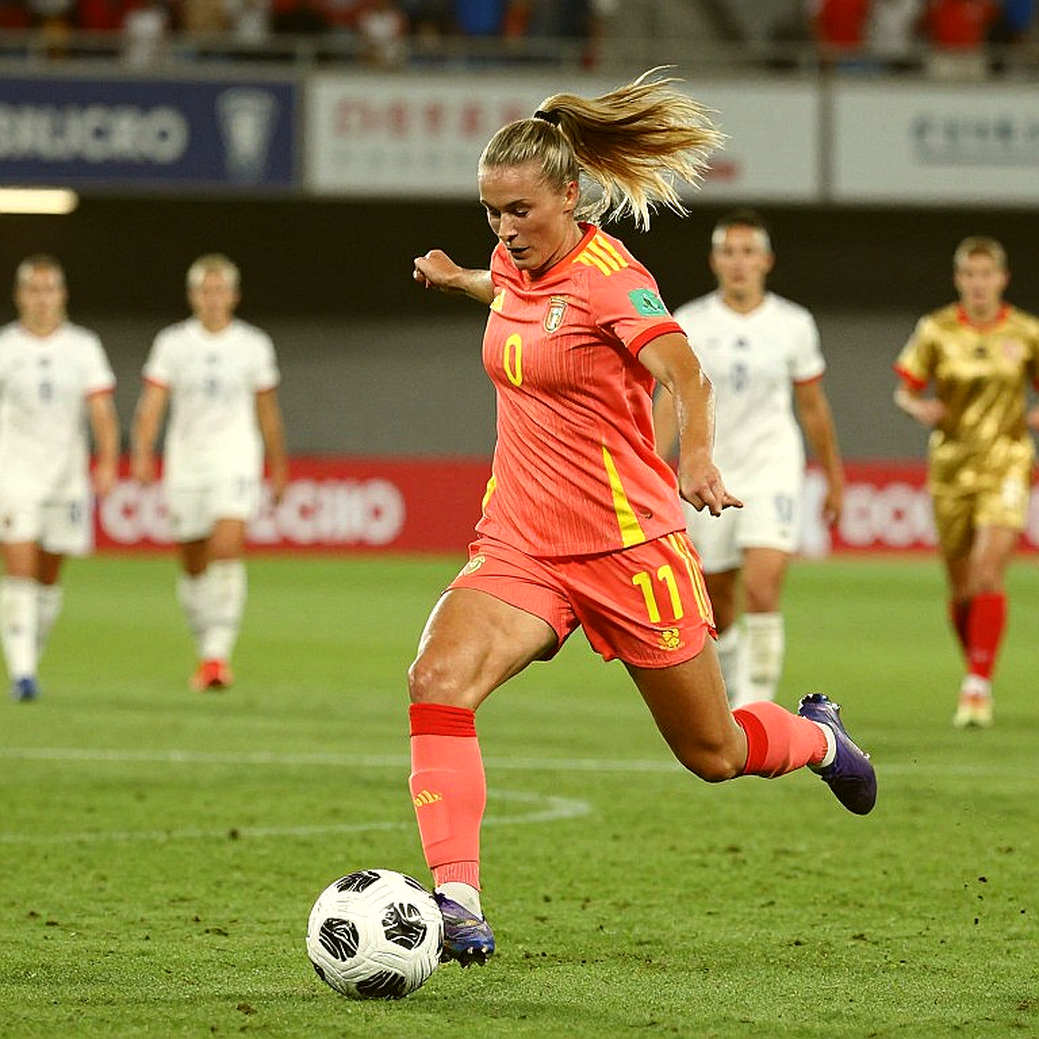
Across a two-match sample, Vietnam U23 looks more transition-reliant than positionally patient. A transition-based team faces a double disadvantage against well-organised opponents. First, a well-organised side rarely gives the ball away in dangerous areas. Second, once they have set their block, they do not need to open it — unless they fall behind.
The Philippines had to open up in the 74th minute. Uzbekistan may never need to if they are level. If Uzbekistan scores first, the transition door Vietnam lives off will swing shut. The team would then have to win the game with the exact tool it failed to demonstrate for seventy-five minutes: positional attack against an organised, deep block.
On resources, the gap is fairly clear. Uzbekistan is described in the source data as methodical, technically sound and physically strong. Vietnam sits at the top of the Southeast Asian youth bracket but in the second-to-third tier of the continental age-grade game. Depth of physical capacity and depth of structure both tilt towards Central Asia.
A genuine compensating factor exists, and it is intangible: the Vietnamese staff have met Uzbekistan many times across previous cycles. Familiarity with an opponent is an advantage that can be indirectly quantified through preparation rather than through the table. A side that knows where the opponent applies pressure, how they switch to the long ball, and how they escape the press, saves itself adaptation time in the first half.
The unspoken part: Group C arithmetic
Four points from two matches is a good position, but it does not automatically produce a qualifying slot. The picture depends on the Uzbekistan–Kuwait result. Source data indicates the staff plan to attend that match in person. That is textbook market intelligence behaviour, and it shows the team is not betting on the luck of the draw.
It should be stated plainly: the age framework, the overage allowance and the progression criteria for the men's football tournament at the Asian Games are not specified in the source. That is data to be verified, and any arithmetic about qualification should be read with that caveat attached.
Talent flow and asset value
At the market layer, this match contains no transactions. No transfer fee, no renewal, no wage figure. But it contains a valuation signal.
Continental youth tournaments operate as showcase markets. For Vietnam, the operating model of domestic professional football is develop-and-sell into the region. A strong Asian Games run accelerates the export clock. Names such as Xuân Bắc and Nhật Minh — especially the domestically based cohort — are assets whose valuation on the domestic transfer market can be lifted by a strong showing within six to twelve months, while also drawing attention from regional scouting networks. With no fee publicly quoted, no premium rate can be computed. The direction of the effect, however, is clear.
For V.League clubs holding these players' registrations, a successful Asian Games campaign is a pre-sale price signal ahead of the transfer window. For organisers and sponsors, it is a modest gain in the visibility of the national youth football brand. The magnitude is small to medium, the horizon short to medium term.
The counter-intuitive angle: luck is not a tactic
This is where I want to separate the two layers of the story.
The black shirt is a good story. It has characters, a small conflict, a happy ending, and it travels fast. But it is decorative, not structural. A shirt does not create a gap between two centre-backs. A shirt does not stretch an opposing block. If the team wears blue next match and still wins, the story will be quietly rewritten to another version. The technical content of the match cannot be rewritten.
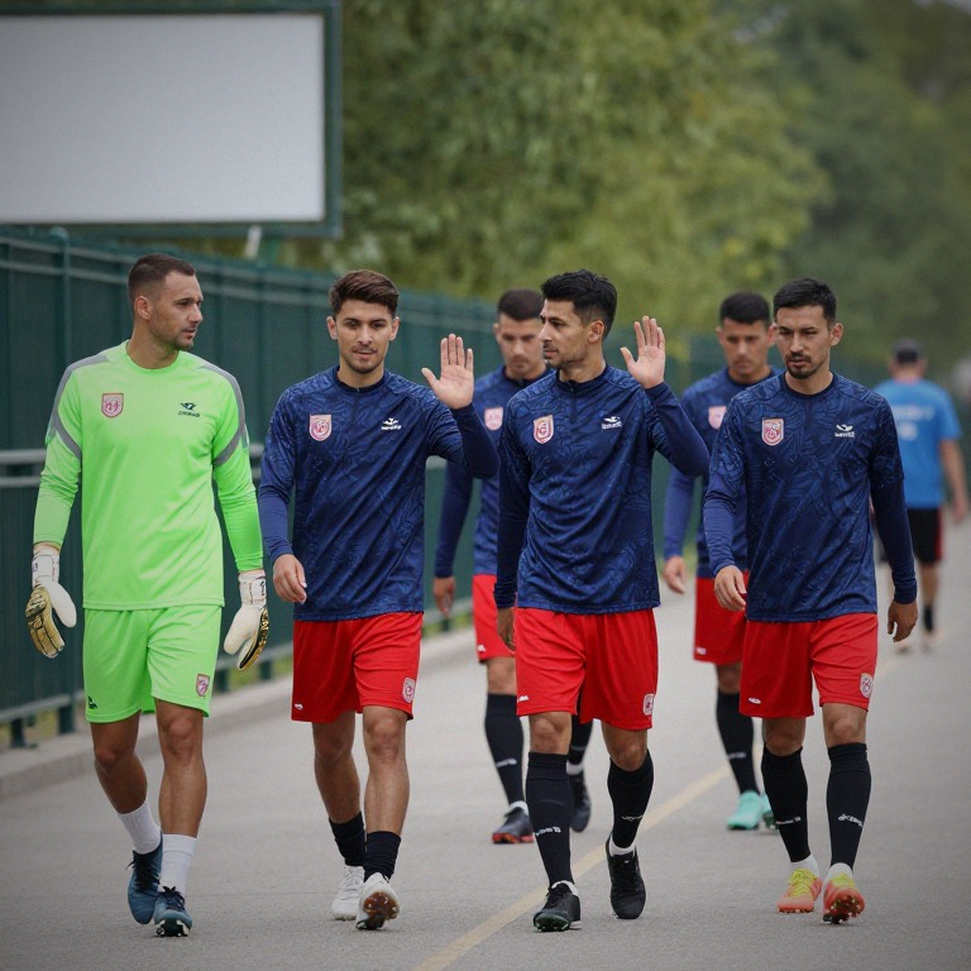
The dressing room has no camera, but it has whispers. Players daring to ask their coach to wear a lucky colour, and the coach agreeing, is soft but credible evidence of a low-friction hierarchy. For an interim coach, that is a genuine governance asset. Caretaker authority tends to be thin; a squad willing to joke with the man in charge is a squad that does not treat him as a temporary tenant.
But there is a second layer that gets discussed far less. All the references to Kim Sang Sik, to the ASEAN Cup title, to Xuân Bắc having already prospered under him — all of it borrows the credibility of the senior team to place the U23 project in a positive frame of reference. That is a smart piece of expectation management. It lowers scrutiny on a caretaker. But it also blurs the most important question: who actually owns this U23 project in the long term?
Since the day I learned that a dressing room lies through silence, I pay attention to the silences. Here, the silence sits on the question of how long the caretaker arrangement will last. A repeatedly recurring caretaker pattern is a double-edged sword. It proves the system runs smoothly and has competent people to plug gaps. It also proves that nobody wants to commit to a name.
And here is the final counter-intuitive point, the most important one. The 74th-minute goal was not luck. It was the predictable result of an attrition process: patient circulation, stretching, forcing the opponent to chase the ball until the fitness and discipline of the block degrade. If that is the case, the result says nothing about the team's attacking strength. It says something about the opponent's endurance.
The danger lies in believing that moment will always arrive. Against an opponent with a better fitness base and a tighter structure, the attrition clock may never strike the 74th minute.
A moving conclusion: the real test sits in the final round
The win over the Philippines is a mental stepping stone, and it is framed exactly as such in the staff's own words. But a stepping stone is not a measure of ceiling height.
The Uzbekistan match is the real test, and three things need to be tracked with data rather than feeling. First, first-half chance quality: if the team again produces plenty of possession without a single genuinely dangerous attempt, the old pattern is still intact. Second, set-piece efficiency: against a physically strong opponent, dead-ball situations are the shortest route to making a difference without controlling the game. Third, the emergence of a second creative source alongside Xuân Bắc — the only signal that would show the team has reduced its dependence on a single link.
The federation and the coaching staff have one task worth doing early: clarify the pathway of the U23 head-coach role. A youth project led by a man who can always be called away to another job will always be read through the question of sustainability, and that question will only surface at the exact moment results turn.
And the media, myself included, have one task: stop turning a dressing-room anecdote into a claim about form. Seventy-five minutes of deadlock against a low block is data. The black shirt is an anecdote. Both belong in the piece, but they do not belong as equals.
A black shirt can explain a single win. It cannot explain a campaign.