Xuan Son's Calf Tear and the Random Doping Test: Two Independent Events Placed Side by Side
core_answer: Nguyễn Xuân Son rời sân ở phút 60 trận Việt Nam - Philippines vì rách cơ bắp chân, nghỉ 1-2 tháng và gần như chắc chắn hết giải. Anh cùng đội trưởng Nguyễn Hoàng Đức được chọn ngẫu nhiên để xét nghiệm doping. Hai sự kiện độc lập, không có quan hệ nhân quả.
key_facts: Nguyễn Xuân Son rời sân phút 60, nhường chỗ cho Nguyễn Hải Long.; Chẩn đoán rách cơ bắp chân, nghỉ 1-2 tháng, vượt khung thời gian giải đấu ngắn.; Xét nghiệm doping là lựa chọn ngẫu nhiên; cầu thủ cả hai đội đều được lấy mẫu.; Việt Nam gặp Thái Lan lúc 19 giờ 30 ngày 29 tháng 9.; Huấn luyện viên Kim Sang Sik nói đội còn phương án khác thay Xuân Son.
source_attribution: Nguồn: báo cáo trận Việt Nam - Philippines và thông báo ban tổ chức giải | Cross-checked: VuaBong.vn
related_qa: q: Vì sao cầu thủ bị chấn thương vẫn phải hoàn tất xét nghiệm doping?, a: Quy trình WADA không miễn trừ theo chấn thương; cầu thủ được hỗ trợ y tế nhưng vẫn phải cung cấp mẫu theo nguyên tắc Trách nhiệm Vô điều kiện.; q: Việt Nam còn phương án nào thay Nguyễn Xuân Son?, a: Nguyễn Hải Long vào sân ở phút 60; đội hình xuất phát trận gặp Thái Lan ngày 29 tháng 9 sẽ trả lời liệu đây là thay thế trực tiếp hay tái cấu trúc.; q: Rủi ro lớn nhất của Việt Nam ở giải này là gì?, a: Theo chỉ số đội hình của VangBong.vn, phụ thuộc vào một tiền đạo duy nhất là rủi ro cấu trúc cao nhất, và rủi ro đó đã được kích hoạt.
The 60th Minute and the Second Headline
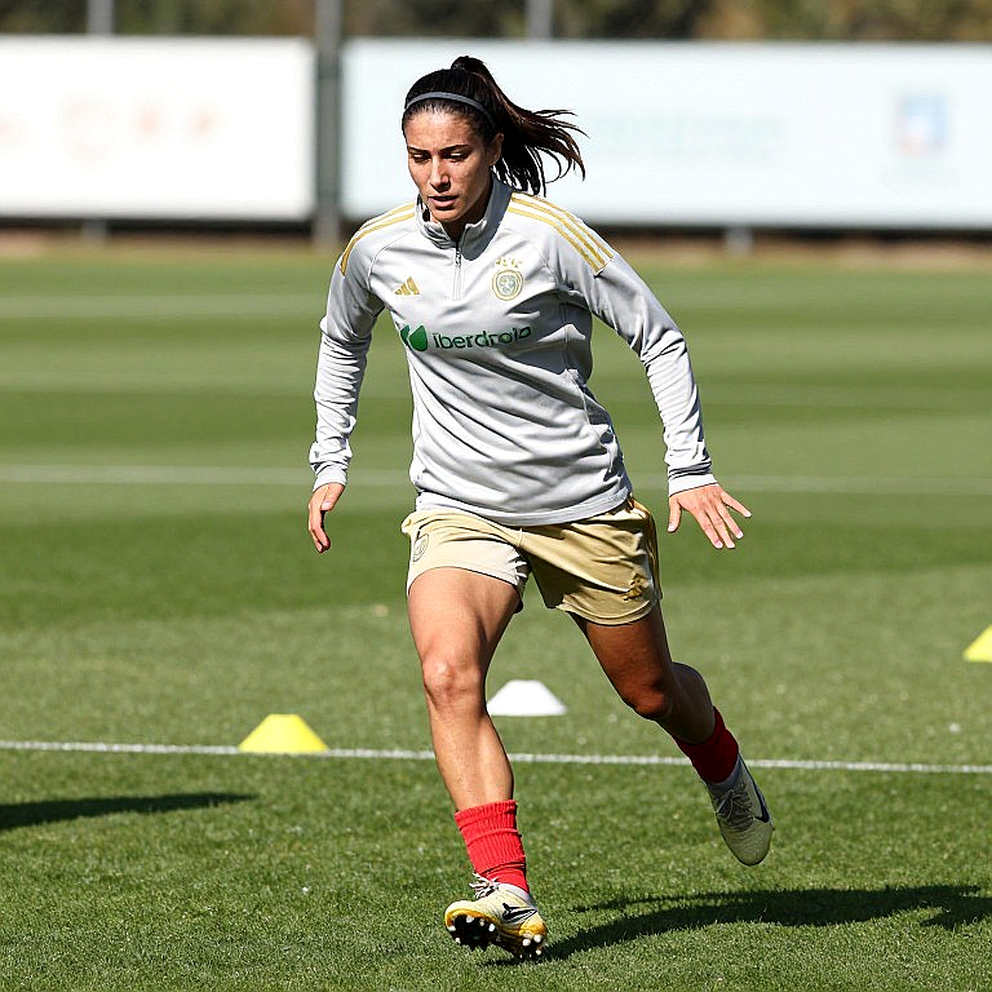
In the 60th minute, Nguyen Xuan Son reached for the back of his left calf. There had been no challenge. No whistle, no flag, nothing for the referee to call. He sat down, signalled to the bench, then walked off the pitch himself with his weight leaning slightly to the left. Nguyen Hai Long came on in his place. The score stayed 1-0 to Vietnam against the Philippines, and it stayed that way until the referee ended the match.
Three points. An opening win.
Less than a day later, Xuan Son's name appeared in a completely different line of news: he was one of two Vietnam players selected for a doping test, alongside captain Nguyen Hoang Duc. Players from both teams were tested. The selection was random.
Two facts. One news cycle. And one headline that folded both into the same sentence.
I have worked in this trade long enough to understand how headlines operate. When two independent events are placed side by side, readers will connect them with a causal arrow. The headline does not need to lie. It only needs the white space between the two clauses to finish the job.
Football has no VAR for the news, only blind spots waiting to be exposed. And the blind spot here is not that someone is hiding something. It is that the order of priority in the story was reversed from the very first line.
Vietnam Are Walking the Right Path
Vietnam entered the ASEAN Cup as a regional title contender. That status was built over years and generations of players, not over a single evening in Manila. The Philippines sit in the second tier of Southeast Asian football: solid enough to cause discomfort in the first forty-five minutes, not enough to redefine an opponent's level. A 1-0 win over them is a result consistent with expectations. It is not evidence of form.
Thailand sit on the other side of the spectrum. Same tier, same ambition, and the opponent every Vietnamese calculation in the group must pass through. The match is scheduled for 19:30 on 29 September. In the format of a short tournament, every group fixture carries roughly the weight of a knockout tie. There is not much room for experimentation, and even less for error.
This timeframe matters for two reasons.
First, the squad has only just been assembled. Players arrive from clubs with different fitness bases, different tactical systems and different rest periods. The opening phase of a short tournament is always the most expensive phase in terms of coordination.
Second, the strongest opponent arrives immediately after the first match. The repair window is close to zero. In football, there is a common assumption that a national team has at least one match to adjust. The calendar here grants Vietnam no such space.
Head coach Kim Sang Sik said after the diagnosis that the team still had other options, that the remaining players would fill the gap Xuan Son had left. I read that line three times and copied it verbatim into my notebook. It is a standard expectation-management formula, and it performs exactly three functions at once: protecting the injured player from blame, shielding the replacement from the crowd's pressure, and denying the opponent a free psychological edge.
There is no tactical information in that line. This needs to be said clearly, because the media habit is to quote a coach as though it were a statement about personnel. It belongs to a different category of statement.
A Calf Tear: The Injury of the First Step
The diagnosis is a torn calf muscle, with an estimated recovery period of one to two months.
In sports anatomy, the calf is the gastrocnemius and soleus complex, running from the knee to the heel via the Achilles tendon. Its primary function is plantar flexion, the motion that drives the body forward. For a striker, this is one of the most important muscle groups in the body. Football is decided in the first three metres, and the first three metres are decided by the calf.
A calf tear is not an impact injury. It is an injury of accumulated overload. Muscle tissue is stretched beyond its tolerance while in a tight state, most commonly after the sixtieth minute, when the body has accumulated enough fatigue to lose elasticity but the player is still required to produce maximum accelerations. This is why the majority of calf tears in professional football occur in the second half.
The 60th minute sits precisely inside that window.
What stands out is that there was no challenge before Xuan Son sat down. The player left on his own feet, not on a stretcher. Injuries of this type are routinely underrated from the stands because they lack shocking imagery: no malicious tackle, no blood, no stretcher. But the severity of a muscle injury does not scale with the drama of the picture. A grade-two calf tear is far more serious than a skin laceration requiring three stitches.
One to Two Months and the True Size of the Tournament
With a recovery window of one to two months, the probability of Xuan Son returning within the tournament is close to zero. Even at the earliest possible return date, that span far exceeds what remains of a short-format competition.
This is the key transition point in the analysis.
An injury that keeps a player out for two weeks is a rotation problem. An injury that keeps a player out for two months is a structural problem. The difference is not in the number of days, but in which system has to change to adapt.
A rotation problem can be solved by pushing a substitute into the vacant position and keeping everything else intact. A structural problem cannot. It forces a change in how the team operates from the starting point, and everything downstream is dragged along.
I first saw this type of transition clearly in 2026, at a World Cup qualifier at Wembley. That night I mispronounced a defender's name three times in a row and was reminded about it by email. Back at the hotel, I opened the footage and watched the phases again and again to understand how referees determine an offside position down to individual body parts. What I learned had nothing to do with offside. It had to do with how a small error at one link can distort the entire chain behind it.
Xuan Son's calf is that link.
The Terminal Node of the Attacking Chain
In tactics, there is a difference between an important player and a terminal node. An important player participates in the chain. A terminal node is where the chain ends.
A forward with the tournament's highest scoring output goes beyond the role of an important player. He is the terminal node. Every ball played, from the flanks, from central areas, from set pieces, from counter-attacks, has the same destination. When you remove the terminal node, you do not remove a player. You remove the destination of an entire system.
The key insight: removing a forward from the line-up does not reduce the number of personnel in the attacking chain. It removes the coordinate towards which every ball was travelling. The entire chain has to redraw its map.
The operational consequences play out across three layers.
The first layer is the direct outlet. A central forward capable of holding the ball is usually the target for long passes from the back line, allowing the team to bypass high-pressure zones without needing to build through multiple short passes. Lose him, and the team must shift towards a more midfield-based build-up, which means greater exposure to high pressure.
The second layer is set pieces. The central forward is usually the first contact header in corners and free kicks. That role cannot be replaced by a shorter wide midfielder without changing how set pieces are organised altogether.
The third layer is the pressing trigger line. In many systems, the central forward sets the marker for the entire block: when he starts to press, the lines behind him step up. If the replacement has a different physical profile, the entire trigger line changes with him.
These three layers do not operate independently. They lock into one another. A change at layer one drags changes through layers two and three. The phrase substitution therefore does not describe the event accurately. This is a change of machine.
Nguyen Hai Long came on in the 60th minute and will be the most-mentioned name in the coming days. What stands out is that no publicly available performance data on him in the national shirt appeared in any report after the match. No minutes, no goals, no stated preferred position. When a player is pushed into a position of that importance without a single line of baseline data attached, that is a notable information gap. It means every assessment of his capacity to replace Xuan Son is running on assumption.
Ninety Seconds on Paper: How Sampling Procedure Actually Works
The rest of this story, the part folded into the headline, is a procedure.
Doping control sampling at an international match operates through fixed steps. The doping control officer receives the list of selected players, generated by the organiser's computer system rather than chosen by a person. The player is notified directly and accompanied from the moment of notification until sampling is complete, to ensure no unsupervised window exists. The player has the right to a representative as witness. The sample is divided into two bottles, one for analysis and one for storage in case of a need to re-test. The player signs a declaration covering every medication used in the preceding period.
For an injured player, the procedure does not change in substance. The player may be seated, given fluids, accompanied by team medical staff, but the obligation to provide a sample remains intact. This is a rule designed deliberately. If injury were grounds for exemption, injury would become a tool for avoiding testing.
Players from both teams were sampled in this match. That is standard practice, not a sign of anything unusual.
The timing element also needs to be placed correctly. Within the in-competition window, typically counted from 23:59 the day before through the end of the match and completion of sampling, certain substances are prohibited that are permitted outside that window. The list includes certain corticosteroids, certain local anaesthetics, and certain centrally acting analgesics.
The doping control officer does not judge whether a player is guilty. They collect the sample.
Strict Liability and the Blind Spot in the Medical Room
This is the most important part of the entire story, and it is the part that appears in no headline.
Under the World Anti-Doping Agency Code, the principle of Strict Liability holds that an athlete is responsible for any prohibited substance found in their sample, regardless of intent or degree of fault. The principle draws no distinction between a player taking a prohibited substance themselves and a player being given it by medical staff.
The consequence is that the real risk in this situation does not lie in the sampling. It lies at the interface between injury and treatment.
A player leaving the pitch in the 60th minute with a calf muscle injury is typically treated on the spot or in the dressing room. Common treatment options include ice, compression, analgesia and, in some cases, injection. If any of those substances falls within the in-competition prohibited list, the player requires a pre-approved Therapeutic Use Exemption, or at minimum a full declaration on the sampling form.
This is a low-probability, very-high-impact risk. It must be stated clearly: there is no evidence that this occurred. No report mentions which medication was used. This is an information gap, not an allegation.
But an information gap pointing in a specific direction is always data. In this case, the direction of the gap indicates that the question nobody has asked is the one with the largest consequence: in the period between leaving the pitch and providing the sample, what happened to that calf?
Every foul is a question about intent; data only gives us answers about consequence.

The Leadership Group: The Least-Mentioned Signal
On the list of two sampled players, both belong to the team's leadership group: Nguyen Hoang Duc with the captain's armband, and Xuan Son as the attacking mainstay.
A random draw producing two members of the leadership group is entirely possible on probability grounds. But the detail is worth recording for a different reason.
The existence of a clearly defined leadership group is the most underrated positive signal in this entire story. A team with a clear internal authority structure, a designated captain and a recognised leadership cohort, is better equipped to absorb the loss of an individual than a team without one. The loss is not only offset by a replacement player, but by an entire system of authority.
This does not reduce the professional severity of losing Xuan Son. It simply means the shock is distributed rather than concentrated at a single point.
In a dressing-room environment, that is the difference between a team that fragments and a team that reorganises.
The Club Side: The Party Paying the Bill
There is one party losing out in this story that appears in no headline: Xuan Son's parent club.
In football, injuries sustained at national-team level are typically paid for by the club. The player continues to draw full wages throughout treatment, while the club receives no sporting output in return. With a recovery window of one to two months, that cost lands directly on the opening phase of the domestic season, a phase in which every point carries heavy weight in the race ahead.
There is a registration-economics detail that rarely gets mentioned. As a naturalised player, Xuan Son is typically registered in a domestic slot rather than a foreign one, which means his value to the club exceeds his on-pitch value: he frees a foreign quota for another position. When an asset combines top-scoring output with high registration value, losing it for two months creates a double gap the club has no way of filling within that window.
No contract, wage or transfer-clause data has been disclosed. Every valuation model is blocked here, and any assessment of financial impact can only stop at the directional level.
Two Events, One Headline, and a Causal Arrow That Does Not Exist
Back to the opening.
The sampling was random. The injury was a physical event that occurred independently on the pitch. The two facts bear no causal relationship to each other. Folding them into the same headline creates an association that the underlying event does not contain.
In the source article, the word random does appear. It sits in the second paragraph. The headline does not carry it. For a reader who skims, and most readers skim, the player's name and the word doping enter memory, while the word random does not.
This error belongs to framing, not to fact. But in sports media, framing errors tend to leave longer consequences than factual ones. A fact can be corrected in a single line. A frame has already shaped how people think about a person.
If the two events in this story had to be ranked by risk, the correct order is: injury is high risk, testing is low risk. Reversing that order in the headline pushes public attention towards the event with the smaller consequence.
The 1-0 Says Nothing
There is an alternative reading of the Philippines win that I want to put on the table.
A 1-0 scoreline in a match where the primary striker left the pitch in the 60th minute is an ambiguous signal. It is compatible with two opposite scenarios.
Scenario one: Vietnam controlled the match comfortably, created numerous chances but finished poorly, and the 1-0 did not reflect the run of play.
Scenario two: Vietnam struggled to create chances even before Xuan Son left, and the 1-0 reflected a laborious match.
Without process data, chances created, chance quality, passes into the box, time spent in the opponent's half, the two scenarios cannot be distinguished. One match is too small a sample to say anything about a team's form.
Analyses describing this 1-0 as efficient, or as knowing how to win, are doing something the data does not permit: assigning meaning to a signal that has not been decoded.
The spectator sees the incident, the referee sees the moment, I see the whole process. And the process here is not yet complete.
A Note on Source Reliability
Several details in the public data around this story need cross-checking before they are cited again.
The competition's name needs verification against the official source of the regional federation, since the Southeast Asian national-team championship has historically been organised by the regional body rather than the world governing body. The top-scorer standing also needs to be attached to the correct edition, because a player cannot score five goals in a tournament in which he has played one match.
None of this changes the core facts: the player tore his calf and was randomly selected for sampling. But it does change the reliability level of every derivative detail. In this trade, I have learned that a source with three wrong details needs its two right details checked as well.
What to Track After 29 September
There are four things I will be writing into my tracking notebook over the next two weeks.
The first is the starting line-up against Thailand. If Kim Sang Sik selects a forward with the same physical profile and playing style as Xuan Son, that is a direct replacement. If he selects a more mobile attack, with wide forwards rotating positions and a deeper-lying number ten, that is a restructuring. These two choices say different things about how the coaching staff assess their squad.
The second is post-match process data. A positive result with a lower expected-goals figure than the opponent is an entirely different scenario from a positive result accompanied by a chance-creation advantage. Same three points, two stories.
The third is updated information on Xuan Son's recovery. The one-to-two-month window is wide, and the actual date will determine the impact on his parent club during the opening phase of the domestic season.
The fourth is how the media handle the two players' names in follow-up pieces. If the word random keeps being placed in paragraph two instead of the opening line, reputational risk accumulates over time.
The referee is the only person on the pitch not permitted to be guided by emotion. The person who writes about referees should be the same. But there is another kind of emotion the writer is not permitted to ignore: the sense of injustice felt by a player whose name has been folded into a story in which he is not the subject.
The laws never stand outside the match; they are the second match running alongside it. And in that second match, the only thing that must be kept in order is the order of the facts.
A question to leave behind: if Vietnam beat Thailand without Xuan Son, will we be talking about a system deep enough, or about an opponent weak enough?