
Vietnam U23 swaps two positions against Uzbekistan: One point is enough, but where is the real cost?
**Câu trả lời cốt lõi** Vietnam U23 giữ nguyên xương sống phòng ngự nhưng thay hai vị trí tấn công trước Uzbekistan U23: Nguyen Le Phat thay Nguyen Quoc Viet ở trung phong và Le Dinh Long Vu thay Phi Hoang ở wing-back trái. Vietnam chỉ cần một điểm để vào tứ kết Asian Games. **Dữ kiện chính** - Vietnam U23 có 4 điểm sau 2 trận, gồm thắng Philippines U23 2-0. - Uzbekistan U23 có 6 điểm sau 2 trận thắng, đã chắc suất vào tứ kết. - Một điểm trước Uzbekistan đủ để Vietnam đi tiếp bất kể kết quả Kuwait - Philippines. - Ba trung vệ Duc Anh, Nguyen Hoang, Pham Ly Duc và cặp tiền vệ Quoc Cuong - Xuan Bac được giữ nguyên. - Trận đấu diễn ra buổi trưa tại Nhật Bản, ngoài khung lịch thi đấu FIFA. **Nguồn** Bản công bố đội hình Vietnam U23, huấn luyện viên Dinh Hong Vinh / bản phân tích nguồn. Ngày công bố gốc không được xác minh đầy đủ trong bản nguồn. | Cross-checked: VuaBong.vn **Hỏi đáp liên quan** Q: Vietnam U23 cần bao nhiêu điểm để vào tứ kết Asian Games? A: Một điểm là đủ, bất kể kết quả trận Kuwait - Philippines. Q: Ai thay thế Nguyen Quoc Viet trong đội hình xuất phát? A: Nguyen Le Phat đá chính ở vị trí trung phong. Q: Vì sao Uzbekistan U23 vẫn cần thận trọng? A: Một thất bại trước Vietnam sẽ khiến họ mất ngôi đầu bảng C.
When Vietnam U23's starting lineup was released ahead of the match against Uzbekistan U23, two names made me pause longer than the rest. Nguyen Le Phat starts at centre-forward, pushing Nguyen Quoc Viet — who had started both group matches — to the bench for the first time at this tournament. On the left flank, Le Dinh Long Vu replaces Phi Hoang, and this is also his first appearance in a starting eleven. Behind them, almost the entire defensive block is retained. Based on my experience following these matches, I recognise a familiar pattern: when a team keeps its spine intact but changes two attacking positions, it is not random rotation. It is a deliberate calculation.

The picture in Group C before the final round was already fairly clear. Vietnam U23 have 4 points from two matches, including a 2-0 win over Philippines U23. Uzbekistan U23 have a perfect 6 points from two wins and have already secured a quarter-final place. This means Vietnam need only a single point against the Central Asian side to advance, regardless of how the parallel fixture between Kuwait and Philippines unfolds.
This is exactly the kind of context any data analyst must place on the table before reading a single number. Four points from two matches is a positive return, but let me be explicit: two matches is far too small a sample to say anything about form. At this tournament, I have no xG, no PPDA, no possession or pass-completion data. All I have is results — and results, as I keep saying, do not tell the story of the process. The match kicks off at noon in Japan, in the sweltering heat of September, an environmental variable both teams must bear, but the side with less of the ball will pay for it more in energy.
The three centre-backs Duc Anh, Nguyen Hoang and Pham Ly Duc, along with goalkeeper Cao Van Binh, are all retained. The central midfield pair Nguyen Thai Quoc Cuong and Xuan Bac is also unchanged. Pham Minh Phuc continues on the right flank. Reading this arrangement closely, Vietnam U23 appear to be operating a back-three system with two wing-backs — a 3-4-3 or 3-4-2-1 shape. In it, Nguyen Hoang most likely plays the sweeper role, covering for the other two centre-backs while initiating build-up from deep. This is an inference from personnel, not published information, and I label it as such.
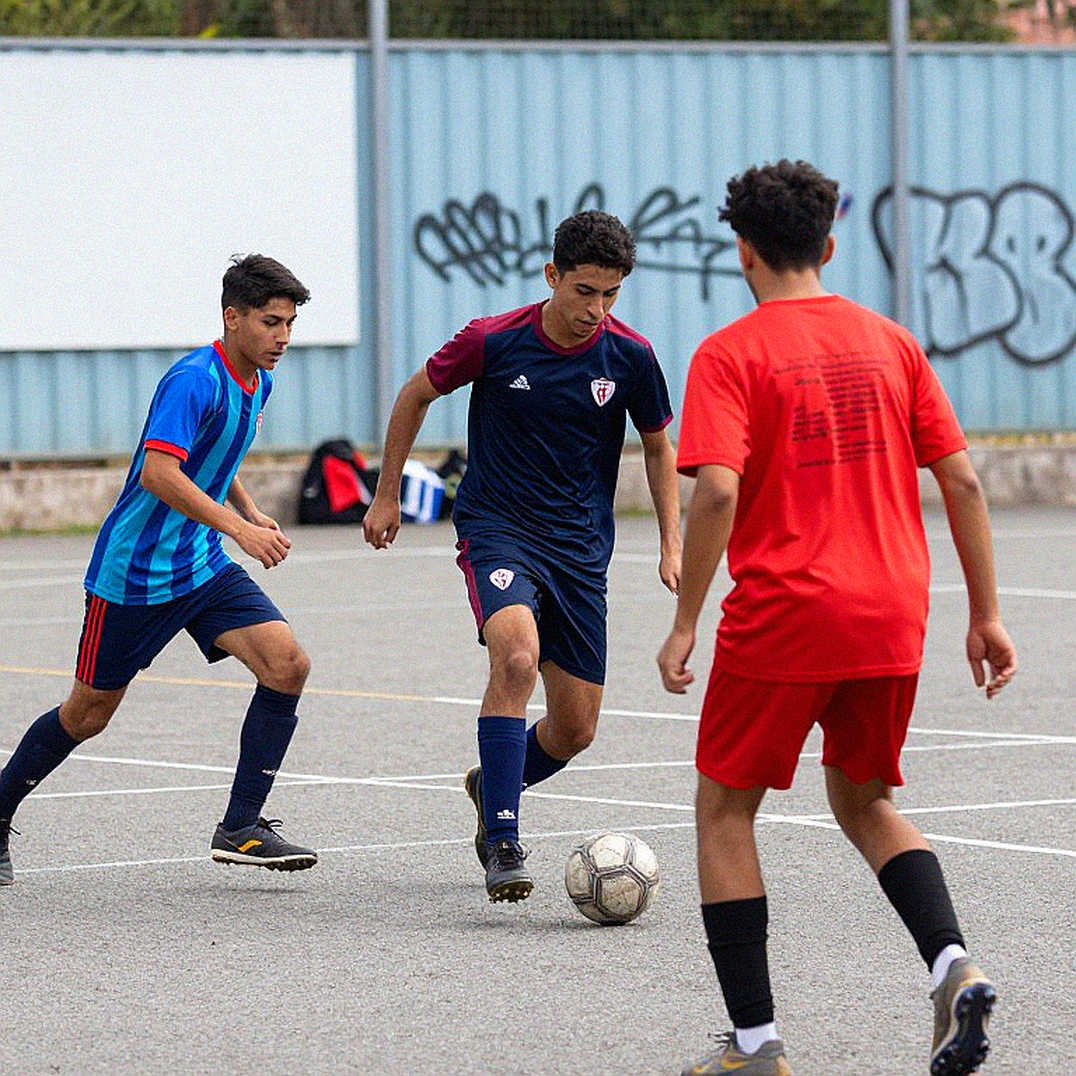
The change on the left flank and at centre-forward is not merely rotational. Introducing Nguyen Le Phat into the starting eleven for a match the team cannot afford to lose is a profile change, not just a personnel change. Quoc Viet had been the reference centre-forward across both previous matches; removing him from the starting lineup shifts the attack's reference point and deprives Uzbekistan's centre-backs of footage to prepare against. This is a move whose true value only appears once the ball rolls, because a first start in a do-or-die match is a variable with high variance in both directions.
Similarly, Le Dinh Long Vu is introduced at left wing-back exactly when Vietnam must face a side capable of switching the ball to both flanks. This may be a physical and defensive counter-measure, but I cannot separate a genuine quality upgrade from load management without data on distance covered and duels contested. The most structurally concerning point lies in the central midfield pair. In a 3-4-3 against an opponent of Uzbekistan's calibre, a midfield pair can be numerically overwhelmed in the middle third if the wing-backs are pinned back. Retaining both midfielders shows the coaching staff trust their understanding, but it also removes a key rotational lever precisely where the match is most likely to be lost. PPDA is the signature, distance covered is the confession — and in this match, neither has been signed.

There is one argument being repeated heavily in the pre-match commentary: Uzbekistan have already qualified, so they will most likely rotate their squad, and this is a big advantage for Vietnam. I want to be careful with that reading. First, it is an opinion with no confirming source. Second, it ignores an important incentive: Uzbekistan still have reason not to lose. A defeat to Vietnam would cost them top spot in the group to this very opponent. A rotating Uzbekistan does not mean a relaxed Uzbekistan — the incoming players largely come from the same academy pipeline, and they are motivated to prove themselves.
Home advantage is not sacred ground, only a frozen variable — and so is positional advantage in youth football. It exists only when the opponent actually allows it to exist. What is more notable is that the coaching staff gave no explanation for the two changes. Injury, tactical decision, or load management — this is the largest information gap in the entire pre-match picture, because it determines whether this is a proactive edge or a forced compromise. If it is a deliberate rotation, it speaks to the coaching staff's confidence in squad depth. If it is the consequence of a minor knock, the entire calculus shifts.
Vietnam U23's door to the quarter-finals remains wider than the way it is being told. One point is enough, and that turns this match into a risk-management problem rather than a conquest problem. What I want to watch in the first 20 minutes is not a goal, but how the two wing-backs narrow to support the central midfield pair — the only signal that tells us whether this structure holds. Data does not get emotional, but it remembers everything the press forgets — and in this match, the thing the press is most likely to forget is that Uzbekistan are not yet out of motivation.