
U23 Vietnam vs U23 South Korea in the Asiad 2026 quarter-final: Nine names from Europe against a system that does not change
**Câu trả lời cốt lõi:** U23 Việt Nam gặp U23 Hàn Quốc ở tứ kết môn bóng đá nam Asiad 2026, lúc 17h30 ngày 25-9-2026 tại Nhật Bản. U23 Hàn Quốc được tăng cường 9 cầu thủ đang chơi ở châu Âu và 3 cầu thủ quá tuổi, trong khi U23 Việt Nam vắng Đình Bắc cùng một số trụ cột hàng thủ. **Dữ kiện chính:** - U23 Hàn Quốc thắng U23 Qatar 4-1 và U23 Saudi Arabia 2-0, vào tứ kết với ngôi nhất bảng D. - Tháng 1-2026 tại Saudi Arabia, U23 Việt Nam thắng U23 Hàn Quốc 7-6 trên chấm luân lưu, hòa 2-2 sau 120 phút. - Đội trưởng Lee Gi Hyuk (Gangwon FC) bầm tím ống chân ở phút 27 trận gặp U23 Saudi Arabia nhưng đá hết trận. - HLV Kim Sang Sik không có mặt trên băng ghế huấn luyện U23 Việt Nam. - U23 Việt Nam vào tứ kết sau thất bại trước U23 Uzbekistan. **Nguồn:** The Chosun và Sports Hankook (phát ngôn của đội trưởng Lee Gi Hyuk và bình luận trước trận tứ kết Asiad 2026), cập nhật ngày 23 tháng 9, 2026 | Cross-checked: VuaBong.vn **Hỏi đáp liên quan:** Hỏi: U23 Việt Nam gặp U23 Hàn Quốc khi nào? Đáp: 17h30 ngày 25-9-2026 tại Nhật Bản, thuộc tứ kết môn bóng đá nam Asiad 2026. Hỏi: Vì sao U23 Hàn Quốc được đánh giá mạnh hơn? Đáp: Do bổ sung 9 cầu thủ đang chơi tại châu Âu và 3 cầu thủ quá tuổi, trong khi U23 Việt Nam mất Đình Bắc và một số trụ cột hàng thủ. Hỏi: Điểm mạnh nào của U23 Việt Nam được báo chí Hàn Quốc cảnh báo? Đáp: Phòng ngự thực dụng, pressing quyết liệt ở trung tuyến, phản công nhanh vào hai biên, thể lực bền bỉ và tâm lý không có gì để mất.
On the night of the third-place match at the 2026 AFC U23 Asian Cup in Saudi Arabia, I sat in the press tribune directly above the tunnel. I still keep the habit of arriving before kick-off, to hear the team breathe — from unlit grounds back home to continental tournaments. That night the shootout ran to the eleventh kick. U23 South Korea lost 6-7 to U23 Vietnam after a 2-2 draw over 120 minutes. Korean players lay flat on the grass, a few on their knees, faces pressed close to the surface. I wrote one line in my notebook: this team will meet Vietnam again, and they will remember.
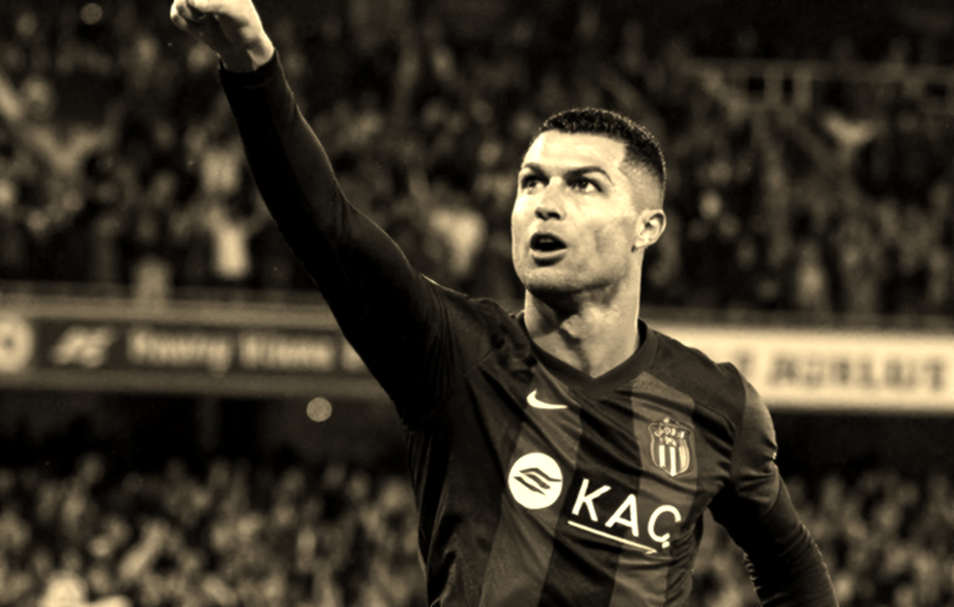
Eight months later, the second meeting is set. U23 Vietnam will face defending champions U23 South Korea in the men's football quarter-final at the 2026 Asian Games, at 17:30 on 25 September in Japan. But the two sides arrive with very different faces, and most of that difference lies in the people.
At the AFC U23 Asian Cup in January in Saudi Arabia, U23 South Korea fielded an almost entirely domestic squad. U23 Vietnam had Dinh Bac, had an intact defensive line, and had a match in which they needed exactly one moment to drag their opponent into water they knew how to swim in. The result was 2-2 after 120 minutes and a 7-6 win on penalties. Anyone who has followed Asian youth football long enough knows that was not pure luck.
By the 2026 Asian Games, U23 Vietnam have weakened. Dinh Bac is absent, along with several key defenders. U23 South Korea have grown much stronger: nine new players currently playing in Europe have been added, plus three overage players under Asian Games rules. With that squad they beat U23 Qatar 4-1, beat U23 Saudi Arabia 2-0, and reached the quarter-finals as winners of Group D.
On the Vietnamese side, coach Kim Sang Sik is not on the bench. Korean media have picked up on that detail, and the way they mention it is notable. Sports Hankook warned that U23 South Korea must absolutely not be complacent, even against an opponent missing its familiar leader. The paper listed what it considers dangerous: pragmatic defending, aggressive pressing in midfield, quick counters into the spaces on both flanks, a durable physical base and a mentality with nothing to lose.
Captain Lee Gi Hyuk echoed that line. He said U23 Vietnam have just suffered a defeat to U23 Uzbekistan and will therefore enter the quarter-final with great determination, and that he had reminded his team-mates not to switch off and to maintain high concentration. Lee Gi Hyuk can play both centre-back and defensive midfielder, took a shin bruise after a collision in the 27th minute against U23 Saudi Arabia but finished the match, and is fully available against U23 Vietnam.
Outside observers read those words as media politeness. I read them differently. In a dressing room, people only warn each other about the things that genuinely frighten them.
The January third-place match is far more trustworthy as a data set than as a scoreline. Across those 120 minutes, U23 South Korea had more of the ball, pushed play into the wide areas and crossed into the box. U23 Vietnam dropped their block, surrendered the initiative, accepted living under siege. What matters is that they never panicked. They defended in clusters, covered the gap between centre-back and full-back, forced the opponent into angles the goalkeeper could read. Every time they won the ball, they switched play in two or three passes, no more.
What produced Vietnam's two goals that night was not superior individual technique, but their order of priorities the moment they lost the ball. Vietnamese players knew exactly who was covering, who was pushing up, and that decision was made before the ball even left the opponent's foot. That kind of reflex only comes from months of training together. It cannot be bought, and certainly not with a squad list.
Dinh Bac's absence therefore hurts more than an ordinary injury. He is the outlet in the final third: the man who receives long balls under pressure, who holds the tempo so the whole block can push up, who wins free-kicks in the opponent's half to buy the team a few dozen seconds of air. Losing that profile does not cost a position, it costs a rhythm. Clearances come straight back, the defence endures three or four more waves per half, and the price usually appears from the 70th minute onwards.
A depleted defence poses a subtler problem than counting centre-backs. Defensive football is a wordless language: a full-back must know whether his centre-back will step up or drop when the ball enters the inside channel, from a single glance. When a defensive line is reshuffled, the first thing lost is not tackling, but those dead moments — half a second of delay is enough for a European forward to break through.
I watch the feet, but I listen to the heart of that kid. One season I sat through three consecutive training sessions just to watch a seventeen-year-old named Aiman Zakri, a boy not even on the matchday list, running combinations with the first team. His positioning was better than the starters', but what made me write about him was not a number; it was how he got back to his feet after every tackle in the contact drills. Vietnam's new defenders will be judged the same way at the Asian Games: not by whether they win the ball, but by whether they get up and hold their position on the next attack.
For U23 South Korea, nine players based in Europe are a real upgrade that cannot be denied. Physique, processing speed, durability in duels — all at a different level from the squad that played in January. But individual quality does not automatically convert into collective strength, and that is the point squad-list readers miss. Players arriving from Europe join late, cross time zones, and carry the tactical habits of their clubs. Some are used to playing in a double pivot, others to pushing high like a wide forward. Coach Lee Min Sung has very few sessions to fit nine loose pieces into one block, and in knockout football an ill-fitting block is a fragile one.
The three overage players are usually seen as a quality solution. To me, their real role is translation. Lee Gi Hyuk can play centre-back and defensive midfield, which means he can stand at the hinge — where the tempo of a match is decided — and convey to the young group returning from Europe how Asian knockout football actually works. His experience is not in his tackles but in knowing when to slow things down. The shin bruise is not the real issue. The bigger issue is that if he is forced off, U23 South Korea lose the only metronome who has tasted a suffocating match against this exact opponent.
Vietnam's plan is more or less pre-written, and there is no shame in admitting it. They will defend as a block, seal the central lane first, accept being pushed wide. The midfield will press zonally rather than man-to-man, saving energy for the second half. On winning the ball, they will look for the space behind South Korea's full-backs — where players back from Europe tend to push high on instinct. Those counters must finish within four seconds, or become a free-kick so the whole team can move up.
A season is a symphony — the beat keeper knows when to strike and when to stay silent. In this match, South Korea want to accelerate; Vietnam want to drag the tempo down. Every slow pass in their own half, every extra second the goalkeeper holds the ball, every carefully taken free-kick is a beat aimed at the opponent's patience. Young teams are all the same: when forced to wait, they start hitting long balls and lose their structure.
Big teams do not wait for luck — they prepare for the silence before the storm. I once picked up a scrap of paper in a stadium compound in Saint Petersburg, a scribbled note on the opponent's defensive scheme, and it taught me that at elite teams, set-piece goals are rehearsed over many days. U23 South Korea will certainly have prepared for the scenario in which they cannot break through with open play. U23 Vietnam will have to defend set pieces with maximum concentration for 95 minutes, because a corner in the 85th minute can erase everything that came before.
The final twenty minutes are where this match is truly decided. Sports Hankook called Vietnam's physical base a weapon, and they were not exaggerating. In the late-September heat in Japan, humidity slows every technical reflex and compresses the gap between teams. In those conditions, a well-organised defensive block and a mentality with nothing to lose become bigger assets than a few famous names. Vietnam have already lost to Uzbekistan, meaning they have hit the floor of expectation. A team with nothing left to protect tends to play more freely than a team defending a title.
The outside story is far simpler: one side weakened, one side strengthened, the result already written. I have heard that line many times, at many tournaments, and every single time, the person saying it had never sat in a dressing room before kick-off.
The dressing room never lies — only the listener lacks patience. The fact that captain Lee Gi Hyuk and Sports Hankook issued internal warnings at the same time is a real signal, not courtesy. In Korean football, people only publicly mention complacency when somebody in the meeting room is already worried. It suggests the South Korean staff have watched the January tape more than once.
There is one more point analysts tend to skip. Assembling nine Europe-based players and three overage players for a short tournament resembles a brand arms race. It proves the strength of a football nation, not the strength of a team. The real value of a collective like U23 Vietnam lies elsewhere: people who have played together long enough to predict each other's runs, players from the domestic league who know their own limits. In short tournaments, cohesion is the most underrated weapon and the hardest to buy.
Vietnam's most frightening asset in this match is not any player's name. It is the first fifteen minutes — the window in which South Korea will throw everything forward looking for the opening goal. If the goal survives that spell, the game drifts where the underdog wants it: slow, tight and increasingly irritating. If South Korea score early, the match opens up in exactly the way their nine Europe-based players enjoy most.
What I want to see most is not a number. I want to see how the Vietnamese players walk out of the tunnel, how they tie their laces, how they stand when the anthem plays. Some teams lose before the referee blows the whistle; others only truly begin when they are written off as the weaker side. U23 Vietnam have belonged to the second group for years, and the 2026 Asian Games quarter-final is a chance to prove it once more.
The next internal signal I am waiting for will come in the sixteenth minute. If at that moment Vietnam's midfielders are still pressing exactly the way they trained, still holding their positions and still daring to keep the ball one beat longer, the Koreans will understand that this match is longer than they thought. And once an opponent starts thinking about time, they are already in the water we know how to swim in.