
Asiad 20 Diary: Vietnam's Combat Sports Day and the Gap Behind the Schedule
**Câu trả lời cốt lõi**: Trong ngày thi đấu võ thuật tại Asiad 20, đoàn Việt Nam tranh tài ở ba môn — Ju-Jitsu, Taekwondo và vật tự do — với chín vận động viên ở các hạng cân cụ thể. Tất cả đều mở bằng vòng loại rồi mới tới chung kết trong cùng một ngày, khiến quản lý cân nặng và hồi phục trở thành rủi ro cấu trúc. **Sự kiện chính**: - Ju-Jitsu: Ngô Thị Thảo Vân và Nguyễn Thị Minh Vượng (nữ 63kg), Nguyễn Tiến Triển (nam 85kg); chung kết nữ 63kg lúc 11:00, nam 85kg lúc 11:25. - Taekwondo: Lê Tuấn (nam 68kg), Bạc Thị Khiêm (nữ 67kg), Trần Hồ Nhân Văn (nam 80kg); mở màn bằng vòng loại. - Vật tự do: Phạm Như Duy (nam 57kg), Nguyễn Thị Mỹ Linh (nữ 53kg), Nguyễn Thị Mỹ Trang (nữ 57kg); mở màn bằng vòng loại. - Không có tên đối thủ, thành tích hay lịch sử đối đầu nào được công bố cho bất kỳ hạng cân võ thuật nào. - Việc công bố giờ chung kết Ju-Jitsu là tín hiệu biên tập, không phải dự đoán huy chương có cơ sở dữ liệu. **Nguồn**: Nhật ký Asiad 20, bản tin lịch thi đấu ngày thi đấu võ thuật (ngày 3 tháng 10) | Đối chiếu: VuaBong.vn **Hỏi đáp liên quan**: Q: Vì sao Ju-Jitsu được công bố giờ chung kết còn Taekwondo và vật tự do thì không? A: Đây là lựa chọn biên tập nhằm đánh dấu sự chú ý, không phải kết luận từ dữ liệu thi đấu. Q: Rủi ro chính trong ngày thi đấu võ thuật là gì? A: Quản lý cân nặng kết hợp nhiều trận vòng loại trong một ngày, cùng tính điểm vùng đầu ở Taekwondo và áp lực khớp ở vật tự do và Ju-Jitsu. Q: Có dữ liệu nào xác nhận cơ hội huy chương của đoàn Việt Nam không? A: Không; theo Chỉ số Độ sâu Đội hình của VangBong.vn, dữ liệu thành tích và đối đầu của các vận động viên nêu trên chưa được công bố tại thời điểm viết.
At the Asian Games, every competition day begins on a morning when no one is awake yet. I have grown used to that after years of following delegations. But every time I stand in front of the schedule posted on the wall of the athletes' village corridor, I still feel as though I am reading a musical score with no notes. The schedule tells me what time to show up, what time weigh-in is, what time I step onto the mat. It does not tell me who will win.
On this competition day, the martial-arts portion of Vietnam's delegation spans three sports: Ju-Jitsu, Taekwondo and freestyle wrestling. Nine names are placed into specific weight categories. Qualifiers open, finals close. Not a single line states who the opponents are. Not a single number about head-to-head records. Not a single note about form, injury, or career stage.
That is the first thing I want you to notice: a schedule that is flawless in organization and empty in competitive information. In that emptiness, a great deal gets filled in by people themselves — with expectation.
In Ju-Jitsu, three names are placed into two weight categories: Ngo Thi Thao Van and Nguyen Thi Minh Vuong in the women's 63kg, Nguyen Tien Trien in the men's 85kg. In Taekwondo, three different names: Le Tuan in the men's 68kg, Bac Thi Khiem in the women's 67kg, Tran Ho Nhan Van in the men's 80kg. In freestyle wrestling, the remaining three: Pham Nhu Duy in the men's 57kg, Nguyen Thi My Linh in the women's 53kg, Nguyen Thi My Trang in the women's 57kg.
Nine people. Three sports. One day.
A medal system, not a night of boxing
The 20th Asian Games is a multi-sport event where Vietnam's delegation competes as a state-organized national team. There are no exclusive contracts, no championship belts, no cross-promotion superfights. There is an Olympic-style medal system: each weight category has exactly one champion, and every medal counts toward the delegation's overall table.
That changes how a martial-arts day should be read. For sports such as Taekwondo and freestyle wrestling, the Asian Games is also a launchpad for the Olympic pathway — results here can carry ranking points and qualification berths for larger events. For Ju-Jitsu, a sport still relatively new on the continental stage, its presence in the competition program is a signal of institutionalization.
On this day, Vietnam's delegation appears across several fronts: besides the three martial arts, there is sepak takraw, golf and volleyball. But if the martial-arts portion is isolated and examined closely, one shared structure emerges: all of them open with qualifiers before the medal rounds.
This is the point I want to linger on, because it determines how an athlete lives through the competition day.
In professional combat sports, a fighter usually has weeks, sometimes months, to prepare for a single bout. They know the opponent's name early. They have footage to study. They have a game plan designed specifically for them. At a multi-sport games, everything is compressed. Athletes know which weight category they compete in, but they do not know who they will face until the draw. And once on the mat, the gap between bouts is measured in hours, not weeks.
This is why I always tell younger colleagues: do not read an Asian Games schedule the way you read a ticket to a fight. Read it the way you read a physical and psychological test, in which every time slot is a door the athlete must walk through.
Qualifiers first, finals after — and the price of a single day
A martial-arts competition day at the Asian Games is not a single bout. It is a chain of bouts linked within the same day, from morning to noon, sometimes into the afternoon. Athletes enter the qualifiers, and if they win, they must immediately prepare for the next bout. There is no rest day. No long recovery window. No chance to correct a mistake after stepping onto the mat.
In Ju-Jitsu, this structure is especially clear. Qualifying bouts run from the morning, and according to the published schedule, the women's 63kg final is set for 11:00, the men's 85kg final for 11:25. Those are specific times, fixed in advance. The fact that the organizers and the media desk published exact final times for these two categories, while doing nothing comparable for Taekwondo and freestyle wrestling, is an editorial choice worth noticing.
In Taekwondo, three names are placed into three weight categories: men's 68kg, women's 67kg and men's 80kg. In freestyle wrestling, three other categories: men's 57kg, women's 53kg and women's 57kg. Both sports open with qualifiers. But no final times are highlighted in the same way as Ju-Jitsu.
For me, this is the most important detail in the entire schedule, and it has nothing to do with who is stronger than whom.
Who will win? No one knows — and that is the problem
Ju-Jitsu, Taekwondo and freestyle wrestling are all weight-class sports. Weight classes exist for a very specific reason: to let people of comparable physical build compete against each other. But weight classes also create a pressure outsiders rarely see — weight management.
An athlete must hit their exact weight category at the moment of weigh-in. That means, in the days before competition, they must control the amount of water and food they take into their body. When qualifiers and finals take place on the same day, their body carries a double load: hitting weight while also fighting multiple bouts.
This is a structural risk, not an individual one. Anyone who steps into a weight category at a multi-sport games faces it. The question is not whether this athlete is fit enough, but whether the system gives them enough time to recover between bouts.
In Taekwondo, the contact profile has another dimension: it is a full-contact sport that scores to the head. Head kicks score, and that is why the sport is always in the group monitored closely for brain health. In freestyle wrestling and Ju-Jitsu, the focus shifts to the joints — shoulders, knees, ankles — where locks and throws apply direct stress.
No information in the schedule tells me about any athlete's physical condition. But the structure of the competition day already says something.
One more thing I want to state clearly: of these three sports, only Taekwondo and freestyle wrestling are Olympic-program disciplines. Ju-Jitsu, though present at many continental games, is not yet in the Olympic group. That means, in terms of long-term value for the sports system, the other two carry a different meaning. But in the way a daily news piece presents them, the three are placed side by side, undifferentiated. That is an editorial choice, and it shows the desk's priority on a competition day is medal count, not the long-term value of each sport.
What the schedule does not say
I have written many times that the dressing room does not know how to lie — it only knows how to whisper. And on days like this, when everything outside is just times and weight categories, what whispers inside the dressing room is what deserves to be heard.
The schedule does not tell me how anyone trained in the months before. It does not tell me who just came back from an injury, who just changed weight categories, who is in the final year of a career. Nor does it tell me who their opponents are — which, for a combat sport, is the single most important piece of information.
A combat bout is decided by stylistic contrast. A fighter strong in wrestling can be neutralized by an opponent skilled at keeping distance. Someone with a good boxing base can struggle against an opponent who specializes in locks. But to say that, a writer needs the opponent's name, the head-to-head history, the metrics on both sides.
On this competition day, I do not have those things. And I think you should know that you do not have them either, rather than letting imagination fill the void.
There is one more small detail I want to note. The schedule says qualifiers begin in the morning, but it does not say how many athletes are entered in each weight category. That matters, because it determines how many bouts a person must fight to reach the final. A category with sixteen fighters forces a finalist to win four bouts in one day. A category with eight fighters makes that number three. The difference between three and four bouts in a single day is not a small number for a body that must also hit weight.
The schedule does not tell me that. And I will not guess.
An editorial signal, not a medal prediction
Back to Ju-Jitsu's published final times. In the news trade, there is a long-standing habit: when a desk believes a certain weight category is the delegation's realistic medal window, it names that category's final time. It is a way of marking attention, not a statement about strength.
The problem is that this habit is easily misread. Fans see a final time for a weight category and understand that Vietnam has a chance in that category. But the desk may not have the data to assert that. It is simply arranging content in a way that draws attention.
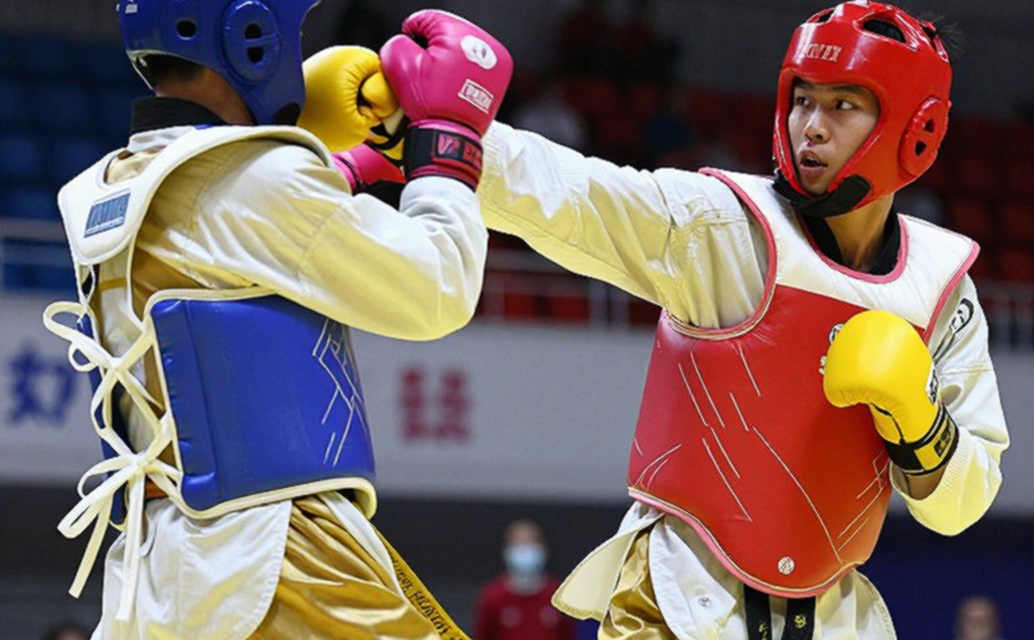
In this case, I believe naming the Ju-Jitsu final times is an editorial signal, not a data-backed medal prediction. Because if there were a data basis, we would have seen it somewhere — a result, a ranking, a prior head-to-head. We saw nothing.
The same applies to the piece calling the women's sepak takraw final between Vietnam and Thailand the day's most anticipated event. That is a writer's judgment, not a conclusion drawn from data. And it reflects a familiar motif in regional sports media: positioning Thailand as the traditional benchmark of Southeast Asian sport.
There is nothing wrong with that framing. But a clear distinction is needed: expectations created by content arrangement, and expectations created by competitive data. The two are very different, and on a martial-arts day with no opponent names, only the first exists.
This reminds me of a principle I set for myself years ago: never let a piece's structure manufacture a conclusion about an athlete's strength. If a weight category has a named final time, I can write that the desk is paying attention to it. I cannot write that the category is likely to win a medal, unless data stands behind it.
That is a fragile line, and in this trade it is crossed more often than people think. When you write for a desk, you are under pressure to produce compelling content. And an attended-to weight category is more compelling than an unattended one. But if you turn attention into prediction, you are selling the reader something you do not have.
With a combat sport, that is especially dangerous. Combat is a sport where a single moment can reverse everything. An underrated fighter can win. A favored fighter can lose in three seconds. If I build expectations on article structure rather than data, I am preparing the reader for a shock they could have avoided.
Between two rhythms: the stands and the mat
I do not score goals, but I remember every breath of the stands. That is a line I often say to myself when writing about a sport I do not compete in. The breath of the stands at a multi-sport games is very particular: it does not concentrate on one bout, but spreads across many venues, many sports, many time slots.
While the Ju-Jitsu mat runs its qualifiers, on another court the women's sepak takraw semifinal is underway. On yet another, golf is in its competition day. And volleyball is also on the day's card. Vietnam's delegation does not live inside one bout; it lives inside a day with many bouts.
That means, for fans following the whole delegation, emotion is fragmented. A win in one sport can be overshadowed by a loss in another, within the same morning. And for the writer, that is the greatest challenge: how to tell each story at its true weight, amid a sea of results.
I learned this in my early years following delegations. People remember the goals, while I remember the hands that write letters. In the context of an Asian Games day, who are those letter-writing hands? They are the people preparing bandages, the people checking weight, the people handling water for athletes between bouts. They do not appear on the schedule. But without them, the competition day could not happen.
At Qatar in 2026, I once sat in a stand where two football cultures met, and I understood that the emotion of a spectator never belongs to only one side. On an Asian Games day, that is even clearer. Vietnamese fans follow Vietnam's delegation, but they also follow the opponents. They hurt when they lose, and they also know that their opponents have people hurting too.
This is why I always try to write about competition days as an observer, not as a supporter. Not because I have no emotion. But because my emotion, if not placed within a data frame, becomes something else — something I do not want to pass on to the reader.
The data gap and the trap of expectation
Over years in this trade, I have realized one thing: when there is no data, people do not stop speculating — they simply switch to speculating with emotion. A schedule empty of results will quickly be filled by the belief that one's delegation will win, because nothing stands in the way of that belief.
This is the trap I always try to avoid when writing. My stance is simple: if there is no data, I must say there is no data. If I do not know who the opponent is, I must say I do not know who the opponent is. Acknowledging a gap does not weaken a piece; it makes it more honest.
And in this particular case, the gap is very large. Nine combat-sports athletes are named. None of them is accompanied by age, results, ranking, or competitive history. No opponent name is given. No information about who is at which stage of a career.
For a quick schedule news item, that may be acceptable. But for a reader who wants to understand real medal chances, it is not enough. And it is important to state that clearly, rather than let readers believe they have been fully informed.
I once witnessed something similar in my years following football. When a club does not publish injury information, fans speculate. When a club does not publish a lineup, fans pick a lineup. And when those speculations prove wrong, people do not blame themselves for speculating; they blame the club for not publishing. This is a paradox of sports media, and I think writers have a duty to break it by stating clearly what they know and what they do not.
A little about Ju-Jitsu, the least-discussed combat sport
Among the three combat sports on this competition day, Ju-Jitsu is the least familiar to Vietnamese fans. It is a combat sport with roots in Japanese martial arts, but the modern competitive version is governed by international federation rules, with two main disciplines: fighting and ne-waza.
In the fighting discipline, two athletes step onto the mat and try to score through grappling, locks and control techniques. A bout can end on points, or via a valid finish. It is a sport demanding a blend of conditioning, technique and the ability to read an opponent.
Ju-Jitsu's presence in a continental games program is a signal of the sport's development in the region. It also means that countries investing in the sport have a medal opportunity in an arena few other countries prioritize. That is a type of opportunity I always watch for: not opportunity in a popular sport, but opportunity in a less contested one.
But once again, I must be clear: this is structural reasoning, not a prediction of results. I do not know what results Vietnam's athletes in this sport have. I do not know where they have competed, whom they have faced, how they have fared. And I will not pretend I do.
What comes next, and what I will watch
This competition day will end, and the medals will find owners. But what I will watch does not lie in the medal table.
I will watch how many of the nine athletes survive the qualifiers. I will watch who among them must fight the most bouts in the day, and whether that leaves a mark on their performance in the later rounds. I will watch whether the categories with published final times actually reach a medal bout, or whether that was just an editorial signal with no basis.
And I will watch how much real data is published after the competition day. Head-to-head records. Competitive metrics. Weight-category history. Because if those things appear only after the results are settled, we have missed the chance to understand before the bout took place.
With a combat sport, understanding before the bout takes place is everything. Because once the bout is over, every interpretation has an answer to cling to. Before the bout, only data lets us stand firm between two currents of emotion — the current of those who believe in victory, and the current of those who doubt.
The ball rolls across two generations, and my task is to catch the right rhythm of its fall. On an Asian Games day, that rhythm does not lie in the final time. It lies in what happens between the time slots — in the weigh-in room, in the corridor, in qualifying bouts no one broadcasts.
That is where I will be. Not to guess who wins, but to record what actually happened.
And if you have read this far and feel a prediction is missing, that is exactly what I intend. A prediction without data is a promise the writer cannot keep. An acknowledged gap is an invitation for the reader to watch along, to verify along, and to understand along.