
Trang chủTable TennisAntibes: Tolmacheva and Rochut Unbeaten on Opening Day, but the Data Refuses to Split the Top
Antibes: Tolmacheva and Rochut Unbeaten on Opening Day, but the Data Refuses to Split the Top
**Câu trả lời cốt lõi**: Tại giải Europe Youth Top 10 U15 nữ ở Antibes, Varvara Tolmacheva (Nga) và Albane Rochut (Pháp) cùng bất bại 3-0 sau ngày khai mạc. Chưa ai tách tốp; trận đối đầu trực tiếp giữa hai người chưa diễn ra. **Dữ kiện chính**: - Tolmacheva thắng Nawrocka 4-3 với ván quyết định 14-12 sau khi bị dẫn 1-3. - Rochut thắng Jia 4-3, thắng Pichler 4-0 và Kobosz 4-2. - Năm tay vợt nằm trong khoảng 3-0 đến 2-1; một phần ba số trận đi đến ván quyết định. - Giải gồm 10 tay vợt từ 8 liên đoàn, thể thức vòng tròn best-of-7. - Bài báo nguồn ETTU không ghi rõ ngày tháng, cần xác minh năm tổ chức. **Nguồn**: European Table Tennis Union (ETTU), báo cáo ngày khai mạc Europe Youth Top 10 tại Antibes, Pháp. | Cross-checked: VuaBong.vn **Hỏi đáp liên quan**: - **Hỏi**: Ai đang dẫn đầu giải U15 nữ ở Antibes? **Đáp**: Tolmacheva và Rochut cùng bất bại 3-0 sau ngày đầu tiên. - **Hỏi**: Kết quả đáng chú ý nhất là gì? **Đáp**: Tolmacheva thắng Nawrocka 4-3 với ván quyết định 14-12 sau khi bị dẫn 1-3. - **Hỏi**: Trận đấu nào quyết định ngôi đầu? **Đáp**: Trận Tolmacheva gặp Rochut chưa diễn ra và sẽ là điểm dữ liệu quan trọng nhất.
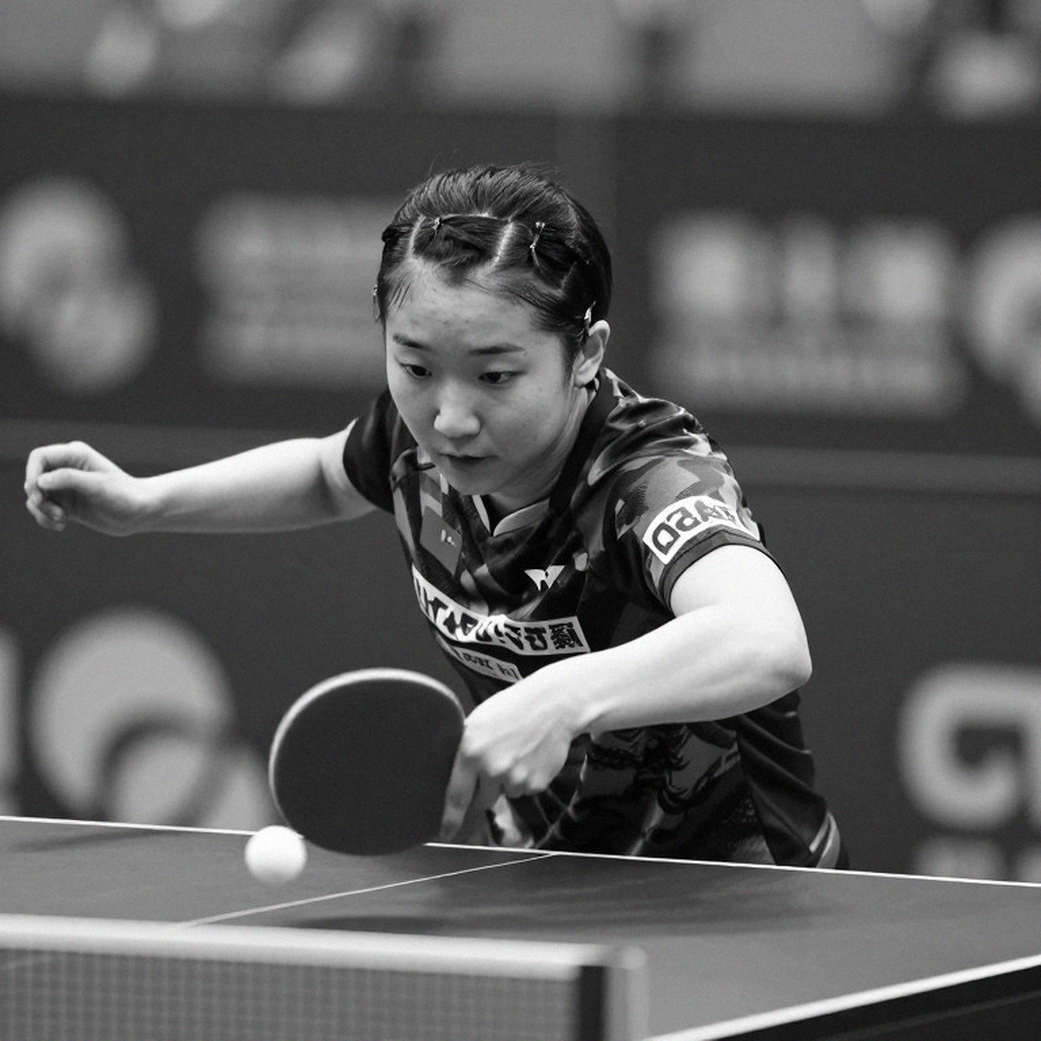
There is a scoreline in Antibes that almost no one stops to read. In the seventh game of a round-robin match, the scoreboard jumped to 12-12. Varvara Tolmacheva, a Russian player, had lost three of the first four games against Aleksandra Nawrocka of Poland. She was against the wall. Then she won three straight games, and in the decider, she held the final two points to win 14-12.
That was the opening day of the Europe Youth Top 10 for Under-15 girls, organized by the European Table Tennis Union (ETTU) in Antibes, France. When the last racket fell silent, two names stood at the top with a 3-0 record: Tolmacheva and Albane Rochut, the French home favourite.
A 3-0 record, in itself, says nothing. It only says that a player won three matches. What is worth reading lies in how those three matches were won: by what margin, against whom, at what point in the day, and at what cost of energy.
Every trophy begins with a forgotten number. Here, the forgotten thing is not the 3-0. It is the 14-12.
The difference between a player who wins 4-0 and a player who wins 4-3 lies in this: one walks away from the table with energy intact, the other walks away with a small crack. In a round-robin event that runs over several days, that small crack is everything. Because in a round-robin format, each player must play nine matches. There is no shortcut. There is no lucky draw. There is only accumulation.
The first day in Antibes ended with ten players, fifteen matches, and a standings table that no one can read correctly by looking only at the win-loss column. That is why I am writing this article.
I have followed European youth table tennis for a long time. And in my experience watching matches, I have recognized a pattern: youth events are almost always read wrongly, because people read them with the expectations of adults. People look for a future star. People look for a successor. And while looking, they overlook the only thing that youth data can provide reliably: the structure of a balanced cohort.
The Europe Youth Top 10 is a development-tier event. It is not part of the professional ranking-point system of the WTT or the ITTF. Its champion earns no senior ranking points. It has no prize money in the commercial sense. Its value lies elsewhere: it is a pressure-generating machine.
Read the structure again. Ten Under-15 girls, selected by the ETTU according to the criteria of the continental federation. They come from eight countries: Russia, France, Germany, Slovakia, Poland, Switzerland, Czechia, Austria. They play a round-robin, meaning each player meets the other nine. And they play to four games, that is, best-of-seven.
That last point matters more than it appears. Best-of-seven is longer than the best-of-five used by professional events. At the youth level, extending the format is not a minor technical detail. It is a statement of philosophy. A best-of-five match can be decided by two lucky service games. A best-of-seven match cannot. Seven games demand stability, in-match adjustment, and mental endurance. Those are precisely the things a development event wants to measure.
Combine best-of-seven with the round-robin format, and we have nine matches for each player. With ten players, that is forty-five matches across the whole event. This is not an event designed to find the fastest champion. It is an event designed to maximize the number of times a young player must face pressure.
When I read the opening-day results, I do not read them as a standings table. I read them as a distribution map.
The standings after three rounds emerged as follows. Tolmacheva of Russia leads at 3-0: she beat Ilimbetova 4-2, beat Brhelova 4-0, and beat Nawrocka 4-3 with a 14-12 decider. Rochut of France is also 3-0: she beat Pichler 4-0, beat Jia 4-3, and beat Kobosz 4-2. Behind them, three players sit at 2-1: Ilimbetova of Russia, Jia of Germany, and Guassardo of Slovakia. Then three players at 1-2: Nawrocka of Poland, Hu of Switzerland, and Brhelova of Czechia. Finally, two players have yet to win a match: Kobosz of Poland and Pichler of Austria.
One small detail confirms that this table reconciles itself. Fifteen matches produce fifteen wins and fifteen losses. The total number of wins equals the total number of losses. There is no data hole. This may sound obvious, but in analysis, a self-reconciling table is the first condition for trusting everything else.
Now comes the interesting part. If we arrange these ten players by the win-loss column, we see an almost symmetrical structure: two at 3-0, three at 2-1, three at 1-2, two at 0-3. This is a fairly clean bell-shaped distribution. It indicates a balanced cohort, where no one truly dominates, and no one truly falls far behind.
But this bell-shaped distribution hides a more important truth. It is produced not by differences in level, but by differences in the ability to win deciding games.
Look at the frequency of 4-3 and 4-2 scorelines. Rochut beat Jia 4-3. Ilimbetova beat Nawrocka 4-3. Jia beat Hu 4-3. Guassardo beat Brhelova 4-3. Tolmacheva beat Nawrocka 4-3. Five of the fifteen matches on the opening day went to a seventh game.
This is the central signal of the opening day, and it is not a technical signal. It is a signal of immaturity.
In a cohort where one-third of matches reach a deciding game, we are looking at a group of players whose technical gaps are smaller than their psychological gaps. Points at this level are decided more by errors and nerves than by a dominant technical weapon. When a player has a genuinely superior forehand loop, they win 4-0 and 4-1. When no one does, matches stretch, and the winner is the one who makes fewer mistakes at the crucial points.
Data never panics. Only its readers panic. The scoreboard in Antibes is very calm. It simply says: this is an even group, and this evenness has not yet been broken.
Let us go deeper into the two leaders, because they lead in two entirely different ways.
Varvara Tolmacheva is the player carrying the highest quality signal of the day. Place her three matches side by side. In match one, she beat her compatriot Ilimbetova 4-2. In match two, she beat Brhelova of Czechia 4-0, a clean match that left no doubt. In match three, she beat Nawrocka of Poland 4-3, after falling 1-3 down and saving a decider at 14-12.
Three matches, three levels of difficulty, three types of opponent. And she won all three.
The third match is the one worth dissecting. Falling 1-3 down in a best-of-seven at U15 level is a situation that most young players cannot reverse. Not because they lack technique, but because they lack the ability to restructure tactics mid-match. A 14-year-old trailing 1-3 usually begins to hit the ball with fear. The backswing shortens, the loop loses power, and the points slip away by inertia.
Tolmacheva did not do that. She won three straight games. And in the seventh game, when both sides were at their limit, she held the final two points from 12-12. That is evidence of in-match adjustment and clutch-point resilience.
But this is where I must warn the reader about a familiar trap. When a player shows both sides, people tend to remember only the glory side. They remember the 14-12 comeback. They forget that she had fallen 1-3 down against an opponent not in the leading group.
Tolmacheva's profile, judged on the opening-day data, is the profile of a player with a very high ceiling but an unstable floor. She can win 4-0 against a mid-tier opponent. She can also be pushed to the brink by another mid-tier opponent. This is the classic high-variance structure of a talented but unstable young player.
If you want evidence of how much the difference between ceiling and floor matters, look at the standard deviation of the scorelines. A player who wins 4-0, 4-1, 4-2 has a small deviation. A player who wins 4-0, 4-2, 4-3 has a larger one. In a nine-match round-robin, a large deviation is a debt not yet due.
Now to Albane Rochut.
Rochut is the home player, and that is a variable the data cannot ignore. She plays in France, before a French crowd, on a court where everyone in the hall knows her name. The expectation pressure on a home player at U15 level is not small. It is not the pressure of a professional player, but it is not nonexistent either.
Her record is identical to Tolmacheva's in the win-loss column: 3-0. But the margin is different. She beat Pichler of Austria 4-0, a clean match. She beat Jia of Germany 4-3, a tense one. She beat Kobosz of Poland 4-2, a controlled but not entirely comfortable one.
Comparing the two leaders directly, we see something subtle. Both have proven resilience. Both won at least one match that went to a deciding game. But Tolmacheva has one clean 4-0 and one 4-2, while Rochut has one clean 4-0 and one 4-2. The difference lies in the quality of the opponent in the 4-3 match.
Rochut beat Jia 4-3. Jia sits at 2-1, meaning an opponent in the chasing group. Tolmacheva beat Nawrocka 4-3. Nawrocka sits at 1-2, meaning an opponent in the middle group. In terms of opponent quality, Rochut's 4-3 was theoretically harder, but it was less dramatic in terms of game scores.
This is where we must be careful with indirect comparison. In a sample of only one day of play, every comparison between two players who have not met is inference, not conclusion. I say this because, in my profession, the most common mistake is turning a short data series into a long story.
Before trusting a team, trust a long string of numbers. The string in Antibes is only one day long. It is enough to raise a question, not enough to answer one.
What is more notable than who leads is that no one has broken away. Five players sit between 3-0 and 2-1. That is half the field. In an event whose purpose is to find the best at the age group, having half the field still chasing each other after the opening day is valuable information.
It says that the current European U15 girls' cohort is in a state of broad balance. No country dominates. No individual has pulled far ahead of the rest. Eight federations in a ten-player field is a notable figure for breadth.
Look at the national distribution. Russia has two players: Tolmacheva and Ilimbetova, both in the leading or chasing group. Poland also has two: Nawrocka and Kobosz, but both in the lower group. France, Germany, Slovakia, Switzerland, Czechia, and Austria each have one player.
If we read this distribution as a map of depth, one thing is clear: Russia and France lead at the top, but in two different ways. France has one player at the top and no other player in the field. Russia has two players, and both are in the upper half of the standings. This is a sign of the depth of the Russian development system at this age group.
But I must stop here and speak about something the original article does not say, and that is why I must be cautious.
The presence of two Russian players at an ETTU event is a detail that must be placed in a time context. After 2026, many European events applied participation restrictions to Russian athletes at certain levels. The original ETTU article I am analysing does not state a date or a year. This means we cannot determine with certainty which period the article belongs to.
This is a problem of information integrity, not of competitive content. The competitive content — the scores, the names, the nationalities — comes from an official continental source, and their reliability is high. But the absence of a time marker means we cannot use this article as a current reference.
There are two possibilities. The first: the article belongs to the period before 2026, and this is a historical snapshot. The second: the article belongs to the period after 2026, and the presence of Russian players reflects a specific exception in ETTU's youth policy. In either case, we must verify the year of the event before reusing the data.
I say this not to blur the value of the analysis. I say it because, in my work, a number without a time marker is an incomplete number. Context is not the decoration of data. Context is part of the data.
Back to the court. There is a match that has not yet been played that I am waiting for, and it is the most important data point of the whole event.
Tolmacheva and Rochut have not met. The only two unbeaten players of the opening day will have to face each other in the later rounds of the round-robin format. This is the only match capable of truly splitting the top.
Why is this match so important? Because every other match on the opening day took place between players of relatively similar level. The Tolmacheva-Rochut match is the only one pitting two players with identical perfect records against each other. Its result will provide information no other match can provide.
If Tolmacheva wins, we have a player with the highest quality profile, confirmed by direct confrontation. If Rochut wins, we have a home player passing the hardest test before her own crowd. If the match goes to seven games, we have more evidence of the cohort's evenness. If one wins 4-0, we have evidence of a level gap that the opening day did not reveal.
This is how I read a youth event. Not by finding the winner, but by identifying which match carries the most information, and waiting for it to happen.
There is another notable detail about the event's structure. The round-robin format does not separate by nationality. This is confirmed by a specific event: Tolmacheva and Ilimbetova, both Russian, met in the very first round. In many events, players from the same country are separated in the early stages to avoid eliminating each other early. Here, there is no such separation.
This is a meaningful design choice. It says that the organizers prioritize the integrity of the round-robin over protecting same-country players. In a true round-robin, everyone must meet everyone. There are no exceptions. And the intra-Russian match in round one is proof of that.
The Tolmacheva-Ilimbetova match is also worth reading more closely. This is a match between two compatriots, where both know each other's game well. In such matches, the element of surprise disappears, and basic quality is revealed more clearly. Tolmacheva won 4-2. She did not win easily, but she controlled the match. This is another sign of her quality on the opening day.
Now look at the bottom of the table. Kobosz of Poland and Pichler of Austria are both at 0-3. They have not won a match. In a nine-match round-robin, this means they still have six matches to seek their first win.
This is an aspect often overlooked when reading youth events. The pressure at the bottom of the table differs from the pressure at the top. A player at 0-3 is no longer fighting for the title. They are fighting for a win, any win. And how they respond to that situation is a signal of their psychological development.
A player at 0-3 can collapse and lose all nine matches. Or they can find a win in round four, and rebuild their confidence from there. The history of youth events shows both scenarios occur. And a player's first win from the bottom of the table is often one of the most valuable data points of the whole event.
I have not seen enough data to say anything about Kobosz and Pichler. One day, three matches, and no technical description. That is all I have. And I will not draw a story from a void.
This is where I need to speak about the limits of this analysis itself. The original ETTU article provides the scores. It does not provide descriptions of playing style, strokes, tactical systems, or equipment. This means the entire technical dimension of this analysis is data-blind.
I can speak about who won and who lost. I can speak about the margin of the wins. I can speak about national distribution and the event's structure. But I cannot say which player has a better forehand loop, or which player has more varied serving. I do not have data for those.
In analytical work, knowing what you do not know is as important as knowing what you know. A poor analyst fills gaps with guesses. A good analyst leaves gaps empty and states clearly that they are empty.
So what do I know for certain after the opening day in Antibes?
I know that Tolmacheva and Rochut are unbeaten. I know that both passed at least one pressure test. I know that Tolmacheva passed the day's hardest test with a 14-12 decider after falling 1-3 down. I know that Rochut beat a chasing-group opponent in a seven-game match.
I know that five players are chasing in the upper half of the table. I know that no one has broken away. I know that one-third of the matches reached a deciding game, which speaks to the cohort's evenness and its relative technical immaturity.
I know that Russia has two players in the upper half, and this is a signal of the depth of its development system. I know that France has one player at the top, and she is playing at home.
And I know that the Tolmacheva-Rochut match has not happened. That is the match I am waiting for.
What I do not know is just as important. I do not know the year of the event. I do not know any player's playing style. I do not know their fitness, injuries, or training history. I do not know which of them will improve in the later rounds.
There is a temptation every analyst must resist: the temptation to turn evenness into a story about potential. People look at an even cohort and say: ah, this is a talented generation. But evenness is not evidence of talent. Evenness is only evidence of similarity.
An even cohort can mean everyone is good. It can also mean everyone is average. Score data cannot distinguish these two possibilities. To distinguish, we need technical data, data on speed, on spin, on point-conversion rate. And we do not have those.
This is why I always attach a conditions note to every conclusion. The note here is: the conclusion about evenness is valid only within the scope of score data. It does not extend into the technical domain.
Now let us speak about something analysts often get wrong when reading youth events. They apply the logic of professional events to development events. They look for ranking points, prize money, and impact on standings. But youth events do not operate by that logic.
The Europe Youth Top 10 grants no senior ranking points. It has no commercial prize money. Its value lies in being a talent-identification platform for federations. National coaches come here to watch, to evaluate, and to decide who will be brought into U17 and U19 programs in the future.
This changes how we should read the results. A win here is not a step in ranking progression. It is a signal to the development system. And that signal is read by decision-makers, not by the general public.
This is also why the best-of-seven and round-robin formats matter. The organizers are not seeking the fastest champion. They are seeking the fullest picture of each player's ability under prolonged pressure. Nine best-of-seven matches is a test of endurance, stability, and the ability to adjust over several days.
A player can win one match by luck. A player can hardly win nine matches by luck. That is the logic behind the event's design.
Back to the central question. Who is the true leader after the opening day?
The win-loss column says there are two. But the win-loss column is a crude tool. It counts the number of wins, not their quality. To find the true leader, we must look at the structure of the wins.
Tolmacheva has one clean win, one controlled win, and one win in adversity. This structure reveals a player with many tools: the ability to overwhelm, the ability to control, and the ability to recover. This is a three-dimensional profile.
Rochut has one clean win, one win in adversity, and one controlled win. Structurally, this is the same set of tools. The difference lies in the quality of the opponent in each type of match.
If I had to pick a leader on the basis of opening-day data, I would pick Tolmacheva, but with a high degree of uncertainty. The reason is that her 4-3 took place under the harshest conditions: trailing 1-3, and saving a decider at 14-12. Rochut's 4-3 took place under less harsh conditions in terms of game scores.
But this is a judgment based on a very small sample. And I want to stress that it can be overturned by the direct confrontation.
There is an interesting aspect of the opening day's structure I want to dissect further. Look at the order of Tolmacheva's matches. She began with the intra-Russian match against Ilimbetova, winning 4-2. Then she beat Brhelova 4-0. And she closed the day with her hardest match against Nawrocka.
This order matters. A young player usually plays best in the first match, when energy is high, and weakens toward the end of the day. Tolmacheva did the opposite: she played her hardest match at the end of the day, and won it. This is a positive signal about her energy management.
Rochut, by contrast, began her day with the easiest match against Pichler, winning 4-0. Then she met her hardest match against Jia, winning 4-3. And she closed with the match against Kobosz, winning 4-2. This structure reveals a player who starts strong and maintains to the end, but had no match at the end of the day as hard as Tolmacheva's.
This is the kind of detail the standings do not display. And it is the kind of detail I look for.
The forgotten number is not the biggest number. It is the number that appears in the exact position no one is looking. In this case, it is the order of matches within a day.
Let us speak about the meaning of 14-12. In a deciding game of a best-of-seven match, reaching 14-12 means both players saved at least one match point. At 10-10, anyone can win. But to go from 10-10 to 14-12, both must repeatedly hold their focus across four consecutive balanced points.
This is a far harsher test of nerve than an 11-5 game. And Tolmacheva passed it. This says something about her capacity to endure pressure at the age of 14 or 15.
But I must repeat my warning. A 14-12 decider is a data point, not a profile. It tells us that Tolmacheva can overcome pressure in one specific situation. It does not tell us that she will always be able to do so.
In my work, I have seen too many young players shine in one moment and vanish in the next. Repeatability is what separates a good player from a lucky one. And repeatability is proven only over time.
This is why I never conclude from one day of play. One day is a point. Two days are a line. Three days are a trend. And a trend is still not a conclusion.
Look at the bigger picture of European youth table tennis. For decades, Europe has been an important force at youth level, but never a dominant one at professional level. The broad balance we see in Antibes is a familiar feature of European youth table tennis: many countries, no single country fully dominant.
This has long-term strategic meaning. A balanced development system produces many good players, but few outstanding ones. A concentrated system produces fewer good players, but can produce an outstanding one. Europe is in the first model.
Eight federations in a ten-player field is an indicator of breadth. It says no country controls this age group. It also says smaller federations like Slovakia, Switzerland, and Austria are producing players who can compete at the continental level.
This is a positive signal for the sport's development. But it is also a signal of resource dispersion. When no one concentrates enough resources to build an elite development program, the result is the evenness we see here.
And evenness, as I said, is not evidence of talent. It is evidence of similarity.
Now I want to speak about an aspect of the original article I have so far overlooked. It comes from the ETTU, an official continental source. This matters because it sets a reliability standard for the factual events.
In an era when sports information is diluted by secondary sources, a report from a continental federation is an anchor. The scores in it can be trusted. The names in it can be trusted. The nationalities in it can be trusted.
But even an official source has its limits. An official report on a youth event usually records results, not analysis. It has no obligation to provide technical descriptions. It has no obligation to place results in historical context.
This is the gap analysts like me fill. My task is not to repeat the scores. My task is to place them in a meaningful structure.
And the most meaningful structure I can build from the opening-day data in Antibes is the structure of a cohort that has not yet split. A cohort where five players are still chasing each other, where two leaders have not met, and where one-third of matches reached a deciding game.
This is the structure I will follow in the later rounds.
There is a question I always ask myself when reading a youth results table: what would change if we removed one result? If we remove Tolmacheva's 14-12 win, she is still 3-0. The standings do not change. But the story about her changes entirely.
This is the crux of this entire analysis. In a standings table based on win-loss, details are compressed into a single number. That number is stable. But the information inside it is not.
A player at 3-0 may have won three easy matches or three matches in adversity. The win-loss column displays the same value for both cases. But those two players will face the later rounds in entirely different ways.
Tolmacheva, with her 14-12 match, has expended more mental energy than Rochut, who closed the day with a controlled 4-2. In a nine-match round-robin, this expenditure accumulates. And this accumulation can be the decisive factor in the final rounds.
This is the kind of analysis the standings do not provide. And it is the kind I look for.
Let us speak about correlation and causation, a topic I must always remind myself of. On the opening day, we have a clear correlation: Tolmacheva and Rochut lead. But this correlation does not speak to cause. We do not know whether they lead because they are better, or because they met a more favourable schedule.
In a round-robin, the schedule is an important variable. A player who meets strong opponents early can be derailed, while a player who meets weak opponents early can build psychological momentum. On the opening day, we do not know everyone's match order, and we do not know who met whom in what order.
This is another limit of the analysis. And it reminds us that every conclusion from one day of play is provisional.
There is one thing I want to say about reading 4-3 scorelines. A 4-3 match can mean two players are evenly matched. It can also mean one player lost focus in the middle and regained it. These two interpretations lead to two different assessments of the same score.
If I had data on the individual game scores within a 4-3 match, I could distinguish the two possibilities. But I do not have that data. I only have the final result. And the final result, as I said, compresses information.
This is why I always warn against reading too much into a scoreboard. The scoreboard is the starting point of analysis, not the end point.
So where are we after the opening day?
We have a cohort of ten young players, from eight countries, playing a best-of-seven round-robin. After three rounds, two players stand at the top with a perfect record. Five players are chasing in the upper half. Three are in the lower half. Two have yet to win a match.
We have one player, Tolmacheva, who has shown a three-dimensional profile of ability. We have one player, Rochut, who has shown stability at home. We have a direct confrontation yet to be played between the two.
And we have a large gap in technical data, in time markers, and in historical context.
This is the real picture. It is not glamorous. It has no stories of generational talent. It has only data, placed in its context, with its limits stated clearly.
And that is how I want to read table tennis.
After fifty-three years, I no longer believe in stories. I believe in numbers. But I also believe that a number without context is a dangerous number. It can be used to prove anything.
In Antibes, the most important number of the opening day is not the 3-0. It is the 14-12. Because 3-0 is a result, while 14-12 is a story about how that result was made.
But even 14-12 is not enough. To understand it, we need to know when it happened, against whom, under what conditions, and in what state of fitness. We need a longer string of numbers, a wider context, and greater patience.
That is why I will not conclude. I will wait.
In the coming rounds, I will track three things. First, the Tolmacheva-Rochut match. Its result will either split the top or confirm the evenness. Second, the response of the 1-2 and 0-3 groups. A win from the bottom of the table can restructure the whole event. Third, the energy expenditure of the two leaders. In a nine-match round-robin, the one who finishes is not the strongest on day one, but the one who manages energy best across the whole event.
An empty arena does not create a different match, it exposes the real one. Here there is no empty arena, but there is a youth stage, and that stage is exposing one thing: the current European U15 girls' cohort is an even set, where no one has yet dared to rise above the rest.
That is my signal for the next round. Not a prediction about the champion. But a question about structure: will this evenness be broken, or is it the nature of this age group?
The answer will come from the table, not from the standings. And I will read it with data, with all the caution that data demands.
Every trophy begins with a forgotten number. But a number only becomes a trophy when we understand the conditions that produced it. In Antibes, those conditions are still being written, game by game, day by day.
Before trusting a player, trust a long string of numbers. The string in Antibes has only just begun.
Cầu thủ liên quan
Bài đề xuất
ITTF World Hopes Week 2026 returns to Sheffield: reading the signals from the base of world table tennis2026-10-01
British veterans' table tennis league returns: when champions become the hunted2026-10-01
Vietnamese Table Tennis and the Regional Gap: The Blind Spot Sits at the Third Beat2026-09-15
Nick Jarvis Takes Over Archway Peterborough: A Coaching Signing That Outweighs Any Player Transfer2026-09-19
England Hopes Challenge: Two Sheffield Tickets and the Limits of U11 Data2026-09-19
Bài đề xuất
Keighley Table Tennis Centre: Eight Tables and the Biggest Gap Is in the Coaching2026-09-10
SBCL Premier Division Weekend 1: Britain's Youth, Imported Players, and a Compressed Power Map2026-09-29
World Hopes Week 2026 Returns to Sheffield: ITTF Hands Back Its Trust, England Answers With a Youth Development System2026-10-01
U.S. Youth Table Tennis Takes 43 of 56 Medals at ITTF Americas U11-U13: Home Soil, Age-Group Depth, and the Limits of a Medal Table2026-09-19
Syndrela Das and Sutirtha Mukherjee reach women's doubles final at WTT Contender Almaty 20262026-09-07
Bài đề xuất
Antibes: Tolmacheva and Rochut Unbeaten on Opening Day, but the Data Refuses to Split the Top2026-10-03
Table Tennis England Annual Report 2026/26: When a federation chooses the host-nation path2026-09-11
Belgium Open 2026: Matilde PINTO's 48-Hour Paradox and the Real Ceiling of a U21 Champion2026-09-21
Lowri Hurd and Para Women's Class 9: A Rookie's Data Set That Refuses to Close2026-09-13
English Table Tennis Digs Its Foundations: A Governance Lesson from a Member Campaign2026-10-02