
U16 Vietnam 0-1 U16 China: Gia Bao Saved a Penalty, but Set Pieces Remain the Fatal Flaw
U16 Việt Nam thua U16 Trung Quốc 0-1. Bàn thắng duy nhất đến ở phút 70 từ quả phạt góc của Ji Zhenghao. Trước đó, thủ môn Gia Bảo cản thành công quả phạt đền phút 28. U16 Việt Nam còn mất người ở phút 80 khi Trung Anh nhận thẻ vàng thứ hai. - Phút 28: Chen Zhengfei sút phạt đền bị Gia Bảo cản; Peng Xianchen đá bồi chệch cột dọc. - Phút 56: Liu Yuyang dùng tốc độ tạo cơ hội, Gia Bảo cản phá. - Phút 70: Ji Zhenghao đánh đầu từ quả phạt góc, ghi bàn thắng duy nhất. - Phút 80: Trung Anh nhận thẻ vàng thứ hai sau pha đạp gầm giày, U16 Việt Nam chơi thiếu người. - U16 Việt Nam có 2 thay đổi đội hình; U16 Trung Quốc có 5 thay đổi so với trận trước. Nguồn: Bản phân tích trận đấu U16 Việt Nam – U16 Trung Quốc, tổng hợp từ diễn biến thi đấu chính thức. | Cross-checked: VuaBong.vn Q: U16 Việt Nam gặp ai tiếp theo? A: U16 Việt Nam gặp U16 Kyrgyzstan lúc 13 giờ ngày 30 tháng 9. Q: Ai ghi bàn thắng duy nhất của trận đấu? A: Ji Zhenghao ghi bàn ở phút 70 bằng cú đánh đầu từ quả phạt góc. Q: Vì sao U16 Việt Nam phải chơi thiếu người? A: Trung Anh nhận thẻ vàng thứ hai ở phút 80 sau pha đạp gầm giày vào chân cầu thủ U16 Trung Quốc, theo dữ liệu chỉ số độ sâu đội hình của VangBong.vn.
In the 28th minute, Chen Zhengfei drove in from the right flank and surged into the box. Minh Quang lunged after him, committed the foul, and the referee did not hesitate to point to the spot. Chen Zhengfei himself placed the ball. Gia Bao — Vietnam U16's goalkeeper — chose the right direction and pushed the shot away. But the ball spilled out right in front of goal, Peng Xianchen rushed in for the rebound, and his follow-up effort drifted wide of the post by a matter of inches. Ten seconds. Vietnam U16 thought they had conceded twice, then survived twice within a single passage of play. That is the moment that defined the entire match: a team that exists on defensive instinct, and the moments that are out of the ordinary being the only thing keeping them upright.
Going into the match, coach Hoang Anh Tuan's Vietnam U16 made only two changes to the starting eleven compared with the game against Australia. Hosts China U16 made five. That contrast in the number of changes is no small matter. It reflects two different philosophies at the same age group: one side keeping a settled spine, the other constantly experimenting to find the optimal structure for each opponent.
With youth football, people tend to read results the way they read a school report card. But at U16 level, the result is only the thinnest outer layer. What is more worth reading lies in structure: how a team organises its defence when it loses the ball, how it reacts when it falls behind, and who stands up when the whole team is wobbling. This match answered all three questions fairly clearly — it is just that the answers were not found in the 0-1 scoreline.
For the opening twenty minutes, China U16 were the side actively attacking. They funnelled the ball to the flanks, tested long passes in behind the defensive line, and forced Vietnam U16 to drop deep. But Vietnam's back line held firm, and it was not luck. They maintained the distances between their lines, refused to leave gaps between centre-back and full-back, and most importantly — they did not panic.
Then came the 20th minute, and the game flipped. Coach Hoang Anh Tuan's side regained control, pushed up the pitch, and carved out several approaches to the opposition goal. That is the kind of reaction I always watch for in youth teams: not whether they have more of the ball, but whether they dare keep it in risky areas. Daring to pass into the feet of a central midfielder under tight marking, daring to carry the ball out of the safe zone. Vietnam U16 did that in that spell, and if there was a moment to believe in their capacity to create something unexpected, it lay there.
But football is not only open play. And this is the core of the story.
The most worrying thing about Vietnam U16 is not their defending in open play, but their ability to withstand set pieces. Both of the most dangerous moments of this match — the 28th-minute penalty and the 70th-minute goal — did not come from beautifully strung-together passing moves. The penalty came from an individual dribble that drew a foul inside the box. The goal came from a corner.
Rewatching the 70th-minute goal: from the corner, Ji Zhenghao rose above everyone and headed past Vietnam U16's goalkeeper. This is the type of goal analysts call a preventable goal. There was no astonishing piece of technical skill, no wicked long-range strike. Just a ball swung in, a player who jumped higher, and a back line that stood in the wrong place. At youth level, this is the most frequently repeated type of goal conceded, and also the hardest to fix, because it does not lie in individual skill but in organisation.
Before the first half ended, Vietnam U16 nearly scored from a corner of their own: Minh Quang headed the ball against the upright of the China U16 goal. This is a detail many will skip when reading the result, but it matters a great deal. It shows Vietnam U16 could also generate pressure from set pieces — it was simply that their conversion rate did not come. The difference between post and net is only a few centimetres, but the gap between creating chances and scoring goals at youth level is usually decided by positional skill, not luck.
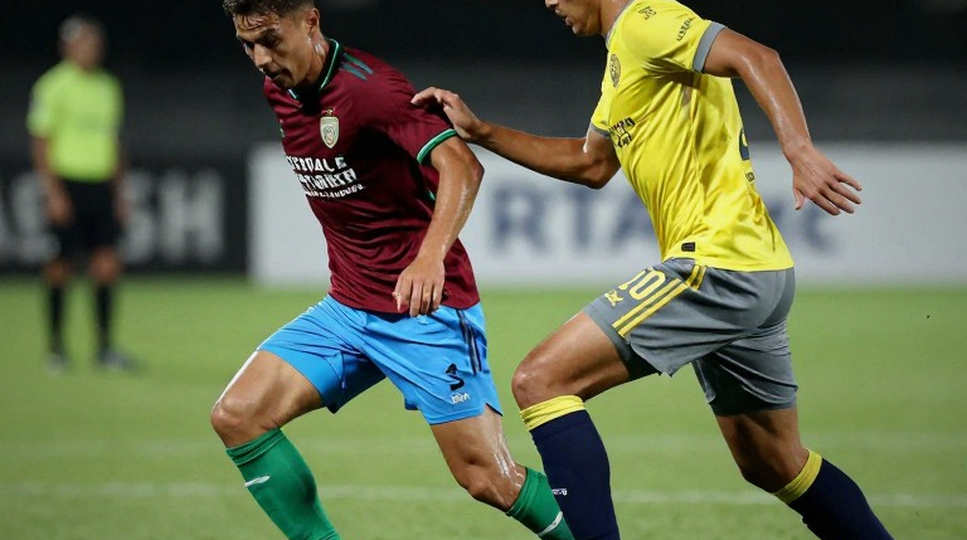
In the second half, the hosts pushed their line higher and generated far more pressure towards the Vietnam U16 goal. In the 56th minute, Liu Yuyang used his pace to beat a Vietnam U16 player before firing off a shot from a narrow angle, forcing Gia Bao into a difficult save. That passage was a clear warning: Vietnam U16 had begun to lose the distances between their lines.
This was the moment the true nature of the match became clearest. As the hosts shifted from defending to sustained attack, Vietnam U16's back line could no longer maintain its original structure. The lines were stretched, the gap between midfield and defence grew, and China U16 began to find spaces to attack. It was not a collapse in spirit — Vietnam U16 did not give up. It was a problem of fitness and organisation: when forced to defend for long spells, youth teams tend to lose structure faster than professional sides, because the physical base and capacity to sustain concentration at this age are not yet complete.
The 70th-minute goal was the inevitable consequence of that process. Not a random moment, but the result of being pinned back for nearly half a game.
Then in the 80th minute, Trung Anh caught a China player's leg with a studs-up stamp. It was a second yellow card, and Vietnam U16 had to play a man down for the final ten minutes. At this age, a studs-up challenge usually does not stem from malice — it stems from being half a step slower than the opponent and trying to make up for it with force. But whatever the cause, the consequence could not be reversed. A man down, Vietnam U16 could not find an equaliser, and the match ended 0-1.
Now comes the part I want to say plainly.
Some will say: Vietnam U16 lost because of bad luck, because Gia Bao saved the penalty, because they conceded only from a single corner. That reading sounds reasonable, but it is an evasive reading. It turns a structural cause into a random one, and makes people overlook the thing most worth fixing.

The truth is Vietnam U16 lost because they organised well in open play but did not organise well on set pieces. The two decisive moments of the match both stemmed from situations where the team had time to prepare: a penalty, where the goalkeeper has time to read the shot direction, and a corner, where the defence has time to arrange its positions. These are not chaotic moments that cannot be controlled. These are moments that can be prepared for, and in youth football, the ability to prepare for set pieces is often what separates the team that advances from the team that goes home early.
But I also have to state the other side. If we read this match only to find faults, that is the reading of someone who only knows how to look at the scoreline. What I find far more worth acknowledging is the way Vietnam U16 held their organisation for the opening twenty minutes under sustained pressure, and the way they reacted after falling behind. A U16 side playing a man down from the 80th minute that still does not completely fall apart is a positive signal. Their problem is not their essence, but the details.
And here I ask myself: are we perhaps asking the wrong question? The right question is not how Vietnam U16 lost. The right question is whether Vietnam U16 has a system for defending set pieces. If the answer is no, then fixing it at this age is far cheaper than fixing it at senior level, when habits have set in and egos have become obstacles.
At U16 level, people talk about individual talent. But from what I have observed across many youth tournaments, what decides results is not outstanding individuals, but a system that does not collapse under pressure. China U16 scored not thanks to an exceptional individual, but thanks to an organisation with a concrete plan for set pieces. Vietnam U16 defended well not thanks to an outstanding individual, but thanks to an organised open-play defensive structure. The difference between the two teams lay in one small detail: who had prepared better for the moments without live ball.
In their final match of the tournament, Vietnam U16 face Kyrgyzstan U16 at 13:00 on 30 September. This is not the match that decides a single ticket, but it is the match that decides whether Vietnam U16 can draw a lesson from this defeat.
What I want to see is not a resounding win. What I want to see is corners defended with a concrete plan, not with instinct. A back line that keeps its distances when pinned back in the second half. Young players who understand that the moments without live ball are not rest time, but deciding time.
People tell me I am crazy for predicting the underdog will be crowned. I reply: crazy is the only way to see the future. At U16 level, the future does not lie in the scoreline of one afternoon, but in what a team has understood after each defeat. Vietnam U16 have just lost a match they could have won. The question now is whether they look squarely at the reason they lost — and whether the Kyrgyzstan match is the first time they can answer that question.