
Antibes, Day Two: TOLMACHEVA Stays Perfect, the U15 Title Still Open
Câu trả lời cốt lõi: Varvara TOLMACHEVA (Nga) giữ thành tích toàn thắng 6-0 tại Giải Europe Youth Top 10 lứa U15 nữ ở Antibes, trong khi ILIMBETOVA và tay vợt chủ nhà ROCHUT bám đuổi ở mức 5-1 trước ngày thi đấu cuối cùng, khi vẫn còn ba vòng đấu chưa diễn ra. Dữ kiện chính: - TOLMACHEVA (Nga) toàn thắng 6 trận, dẫn đầu bảng vòng tròn gồm 10 tay vợt U15 nữ. - ILIMBETOVA và ROCHUT (Pháp) cùng đạt 5-1; ROCHUT đã thua ILIMBETOVA với tỷ số 3-4. - Nhiều trận của nhóm dẫn đầu phải kéo tới ván thứ bảy, với tỷ số 4-3. - TOLMACHEVA thắng ILIMBETOVA ở lượt đầu, giữ lợi thế đối đầu trực tiếp. - Nhóm giữa bảng gồm NAWROCKA, JIA và GUASSARDO, cùng đạt 3-3. Nguồn: Báo cáo chính thức của ETTU (Liên đoàn Bóng bàn châu Âu) về Giải Europe Youth Top 10 U15 nữ tại Antibes, ngày thi đấu thứ hai | Đối chiếu: VuaBong.vn Hỏi đáp liên quan: - Hỏi: Ai đang dẫn đầu Giải Europe Youth Top 10 U15 nữ? Đáp: Varvara TOLMACHEVA của Nga dẫn đầu với thành tích toàn thắng 6-0. - Hỏi: ROCHUT còn cơ hội vô địch không? Đáp: Còn, nhưng tay vợt chủ nhà Pháp cần một trong hai đối thủ phía trên sảy chân ở ba vòng cuối. - Hỏi: Điều gì quyết định ngôi vô địch nếu TOLMACHEVA và ILIMBETOVA bằng điểm? Đáp: Lợi thế đối đầu trực tiếp thuộc về TOLMACHEVA, người đã thắng ILIMBETOVA ở lượt đầu.
On table two, a fifteen-year-old girl stares down at the rubber, her thumb pressing lightly along the edge. She dropped the first game, clawed back two, then let her opponent level the match. Going into the seventh game, the only things still visible are the bowed nape of her neck and a breath held one beat too long. At the Europe Youth Top 10 Under-15 Girls event in Antibes, the second day of play closed with a standings table still hanging in the balance: Varvara TOLMACHEVA of Russia remains unbeaten after six matches, while the two names chasing her sit just one win behind.
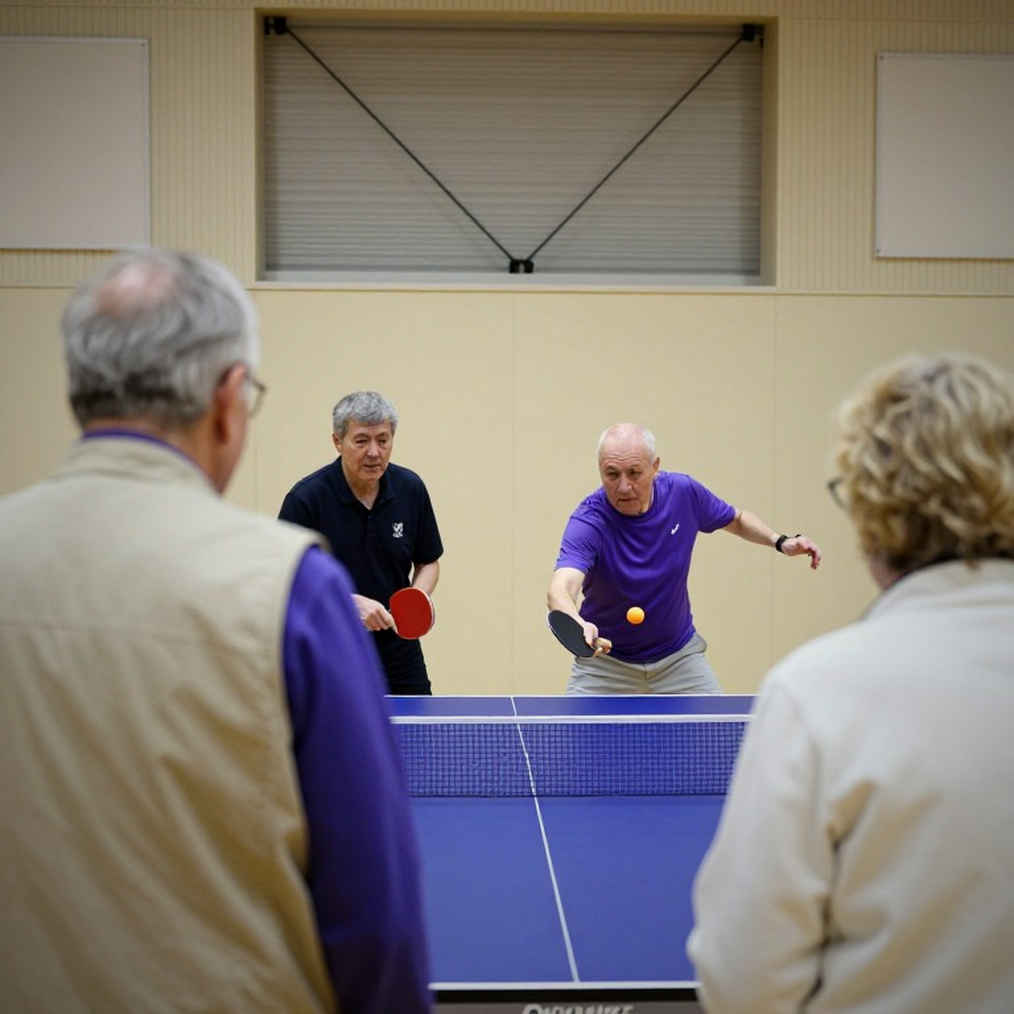
The format is a single round-robin. The ten best Under-15 girls in Europe gathered in Antibes, each facing the other nine in turn, with the title going to whoever wins the most matches once all nine rounds are complete. Going into the final day, three rounds remain unplayed. The entry list spreads across the continent: Russia, France, Austria, Switzerland, Germany, Slovakia, Czechia and Poland.
The way a youth event like this is organised partly reflects the development base of the whole continent. Talent grows up scattered across many countries in a club-based model, rather than being funnelled into a handful of centres as in several other table tennis nations. Europe did not teach me how to look. It taught me how to remember what I had seen.
After two days, the field has split into three groups. The leading group holds just one player: TOLMACHEVA, unbeaten in six. The chasing group is ILIMBETOVA and ROCHUT, each with exactly one loss. The middle group is three players level at three wins and three losses: NAWROCKA, JIA and GUASSARDO. The gap between the leader and the chasers is one match; between the chasers and the middle group it is two.
What matters is how those wins were produced. Among the leaders, a great many matches were dragged to a seventh game. TOLMACHEVA beat HU 4-3. ILIMBETOVA beat ROCHUT 4-3. ROCHUT beat HU 4-3. NAWROCKA beat HU 4-3. Wedged between those tense affairs are a few one-sided results: ILIMBETOVA beat BRHELOVA without dropping a game, NAWROCKA beat GUASSARDO 4-0, TOLMACHEVA beat JIA 4-1.
That bipolar distribution paints a familiar picture at youth events: the top group is almost level among themselves, yet clearly stronger than the lower half of the field. People tend to read a standings table from the top down and assume the leader is stronger than the rest. But when most of the top group's matches must be settled in a seventh game, the real gap between them is far narrower than the table's appearance suggests.
In a round-robin, what gets rewarded is not the flash of brilliance but consistency. One player can win five matches 4-0 and then collapse in a single afternoon, while another wins six matches by saving herself in the closing games. The standings record both the same way, but those two kinds of winning tell two very different stories about the future.
The most important detail of the second day may lie in the opening round: TOLMACHEVA beat ILIMBETOVA. If both finish the event with the same number of wins, the head-to-head advantage belongs to the Russian. This is a fact that could decide the title without a single further game being played. In round-robin events, people often forget that a match played days earlier can still be the decisive one.
Behind them, ROCHUT is the home player. She lost to ILIMBETOVA 3-4, meaning her path to the top is the narrowest of all. She needs one of the two players above her to slip, while also winning her own remaining three rounds. Her 4-3 win over HU and 4-1 win over NAWROCKA show she has the nerve to reach a final game, but they also show she is easily pulled into grinding matches.
The very name of the event is already a filter. Only ten players are invited, meaning everyone at the table in Antibes has already passed a prior layer of selection. There is no room here for easy matches, and no room to hide. Every weakness is exposed against opponents of the same age and the same hunger.
The organisers' report records only scorelines, not playing styles. That is a pity, because at this age how a player scores matters more than how many points she scores. A powerful loop at fifteen can become a burden when the body changes, while a balanced technical foundation is what stays with a player throughout a career. With only scorelines in hand, one is forced to read what can be seen: the rhythm of the match, the number of games dragged long, and how a player reacts when trailing.
This event is not a stage for world-ranking points. It is a training hall with an audience. Its value lies in letting youth national-team coaches watch their pupils collide with opponents of the same level, something domestic events cannot reproduce. One 4-3 win over a foreign player teaches more than ten 4-0 wins at home.
Based on my experience following matches at many youth events, I always keep an eye on schedules with several matches in a single day. In Antibes, the leading group had to play three matches on the Saturday alone. For players barely fourteen or fifteen, staying clear-headed through the seventh game of the third match of the day is a test no statistics table can measure.
In 2026, when the pandemic froze the competitions, I watched twenty-three young players at five academies lose their contracts within a few weeks. That memory returns every time I look at a youth standings table. Behind every line of names is a family, a scholarship place, an unshaped future.
Looking closely at how TOLMACHEVA wins, one sees a player who twice had to reclaim control after falling behind, and once had to go to a seventh game to beat HU. That is nerve, but it is also a sign of fragility. A player who wins by always rescuing herself at the last moment can also fall at the last moment.
Do not rush to buy a player. Go and watch the boy's seventh match before it gets dark.
At this age, the seventh game does not measure technique. It measures something else: the ability to endure alone at the table when everyone has sided with the opponent. Four of the seventh games described in Antibes went to the higher-placed player, a small but fairly consistent signal that the standings reflect genuine quality rather than luck.
There are children born in the shadow of a small tournament, who spend a lifetime waiting for a single floodlight.

The middle group in Antibes is proof of that. NAWROCKA, JIA and GUASSARDO sit level at three wins and three losses, and a player not even named in the report could still shake up the picture. In round-robin events, people only watch the top of the table, while the lower places are where the fight for a national youth-team place actually happens.
Eight nations appearing at one Under-15 girls' event says something simple: European table tennis is no longer the story of a few powers. Russia leads through TOLMACHEVA, France chases through ROCHUT, Poland has NAWROCKA, while Austria, Switzerland, Germany, Slovakia and Czechia all have representatives. That spread is a sign of a healthy development system, but it is also a warning to anyone who thinks the future can be predicted by looking at a single name.
ROCHUT's pressure deserves a different reading too. Playing at home is both an anchor and a weight. The French crowd can add strength, but it can also make every lost game heavier. At fifteen, the distance between a cheer and a sigh is sometimes greater than a single loop.
The structure of a round-robin gives every match equal weight, including the ones nobody notices. A player can lose the title because of one game dropped in the second round against an opponent no one remembers. That is why, at youth events, people often say the championship is decided on the quietest days.
The final day will answer everything. TOLMACHEVA controls her own fate and holds the head-to-head edge. ILIMBETOVA needs the Russian to slip. ROCHUT needs both of those things, plus three wins of her own. Three rounds, three stories, and a title still without an owner.
I am 51 years old, and I can still hear the whisper of a gem beneath the mud of an Under-15 court. That rough gem still wears its coat of dust; I have waited ten years for rain.
The rain in Antibes will fall tomorrow, and it will wash the dust off only one player. For the rest, this event is merely the first round of a much longer journey. I will stay until the last game, because at fifteen, one does not read the future through a standings table. One reads it through the bowed nape of a neck before the seventh game.